
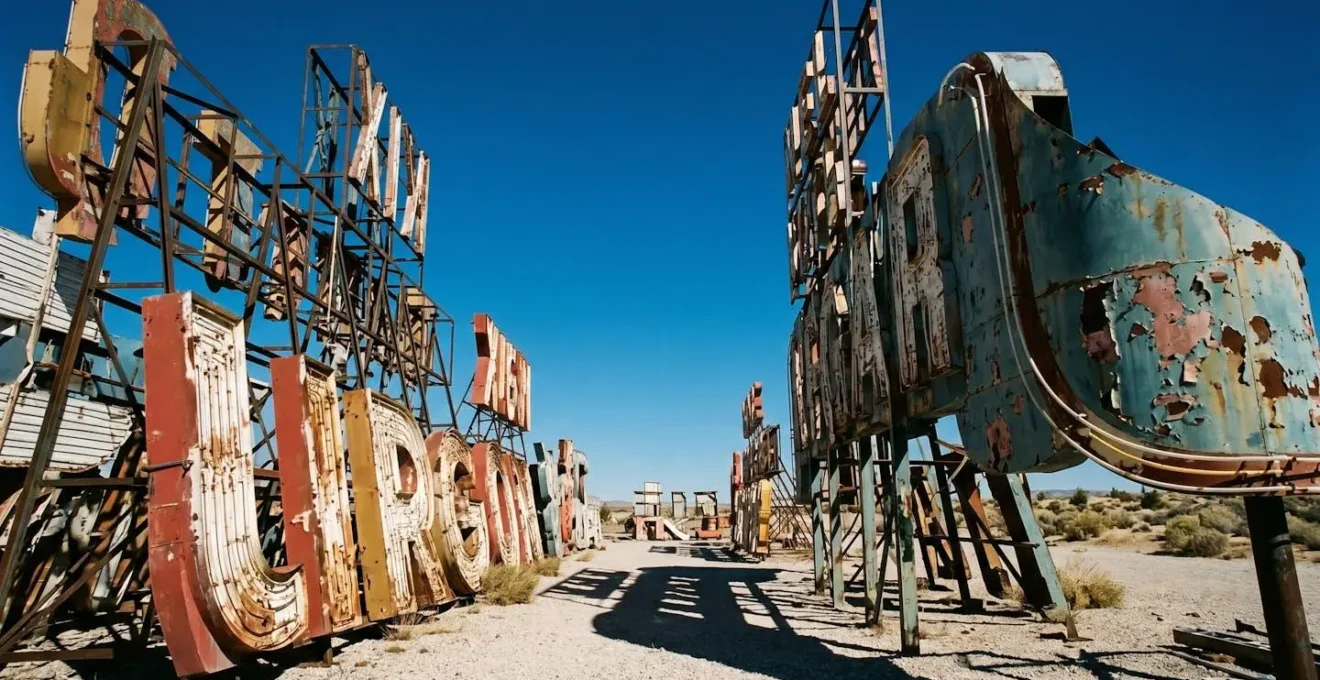
Successfully visiting the Neon Boneyard is less about sightseeing and more about strategic planning to manage the harsh desert environment and unlock its historical depth.
- The choice between a day tour (for historical detail) and a night tour (for nostalgic magic) defines your entire experience.
- Surviving the extreme heat is a non-negotiable part of the visit, requiring a specific preparation kit beyond just carrying water.
Recommendation: Treat your visit as a cultural expedition. Prioritize booking the first morning or first evening tour slot to avoid the worst of the heat and maximize your experience of the light.
The Neon Boneyard in Las Vegas is a place of pilgrimage for those who seek the soul of the city, a visual history told through the grand, discarded artifacts of its past. For culture seekers, it’s a treasure trove. Yet, many visitors arrive unprepared for the fundamental reality of its location: it is an outdoor collection of metal and glass baking under the relentless Mojave Desert sun. The common advice—book in advance, bring water—barely scratches the surface of what’s required for a truly meaningful visit. Concerns about the oppressive heat, the logistics of a sold-out tour, or the strict photography rules can easily overshadow the magic of the place.
But what if the key to a successful visit wasn’t just enduring the conditions, but mastering them? This guide approaches the Neon Museum not as a simple tourist stop, but as a curated cultural expedition. We will move beyond the basics to provide a strategic framework for your visit. This involves understanding the profound experiential differences between day and night, leveraging technology to see broken signs come alive, and implementing practical strategies to handle the environmental challenges. The goal is to equip you with the knowledge of a museum docent, allowing you to focus on the stories embedded in the rust and neon, rather than on your own discomfort. By planning with precision, you can unlock the true, vibrant history of these monumental relics.
This guide provides a detailed walkthrough of the key strategic decisions and preparations needed to fully appreciate the Neon Boneyard. From choosing the ideal tour for your interests to knowing exactly how to capture the perfect photograph, you’ll find the practical advice needed for an unforgettable experience.
Summary: A Strategic Guide to Visiting the Neon Museum Boneyard
- Day Tour or Night Tour: Which Reveals the True Soul of the Signs?
- How Projection Mapping Brings Broken Signs Back to Life?
- General Admission vs. Guided Tour: Which Sells Out Weeks in Advance?
- The « No Video » Rule That Gets Creators Kicked Out of the Museum
- When to Visit to Capture the « Golden Hour » on the Signs?
- Why the « Boneyard » is More Than Just Old Metal and Glass?
- The Signs of Heat Exhaustion That Most Tourists Ignore
- Neon Lights Tour: How to Find the Best Vintage Signage Photo Spots?
Day Tour or Night Tour: Which Reveals the True Soul of the Signs?
The first and most critical decision in planning your expedition to the Neon Boneyard is choosing between a day and a night tour. This choice is not merely about scheduling; it fundamentally alters the narrative of the artifacts you will see. It is a choice between two entirely different emotional and visual experiences: the archaeologist’s honest truth versus the nostalgic magician’s illusion. By day, the Boneyard is a place of choreographed decay. The harsh desert sun exposes every detail: the peeling paint, the intricate rust patterns, and the complex architecture of the signs. It’s an honest, almost melancholic experience where you connect with the physical history and the passage of time. By night, the museum transforms. A selection of restored signs are illuminated, and their vibrant neon glow recreates a piece of the city’s legendary nighttime ambiance.
This decision also has significant practical implications, especially regarding the Las Vegas heat. Daytime tours can be grueling, with temperatures often soaring above 100°F. In fact, the museum has a safety policy where guided tours are canceled when temperatures reach this threshold. Evening tours offer a much more comfortable climate. The following comparison breaks down the key differences to help you make a strategic choice aligned with your goals for the visit.
| Aspect | Day Tour | Night Tour |
|---|---|---|
| Visual Experience | Reveals rust, decay, weathering, and architectural details in harsh sunlight | 20-25 restored signs illuminated, neon glow recreating original Strip ambiance |
| Temperature | Extreme heat (100°F+), guided tours canceled above 100°F | Cooler evening temperatures (mid-70s°F to low 80s°F) |
| Photography | Ideal for texture, abstract compositions, blue sky contrast | Neon glow portraits, managing light flare, blue hour transition |
| Emotional Tone | Melancholic, honest decay, archaeological | Nostalgic, magical resurrection, vibrant atmosphere |
| Price (2025) | $25 general admission | Higher demand, often sells out weeks in advance |
Ultimately, the « true soul » of the signs is revealed in both settings. The question is which story you want to witness: the artifact in its current, weathered state, or the memory of its former glory brought back to life by light.
How Projection Mapping Brings Broken Signs Back to Life?
While the night tour features a number of fully restored and functional neon signs, the most magical part of the evening experience is arguably the « Brilliant! Jackpot » show. This is where the concept of digital resurrection becomes a breathtaking reality. Many of the most fragile and historically significant signs in the collection are far too damaged to ever be re-lit with electricity. Instead of leaving them dark, the museum uses advanced projection mapping technology to animate them, creating an audiovisual spectacle that brings their stories back to life without causing further harm to the delicate artifacts.
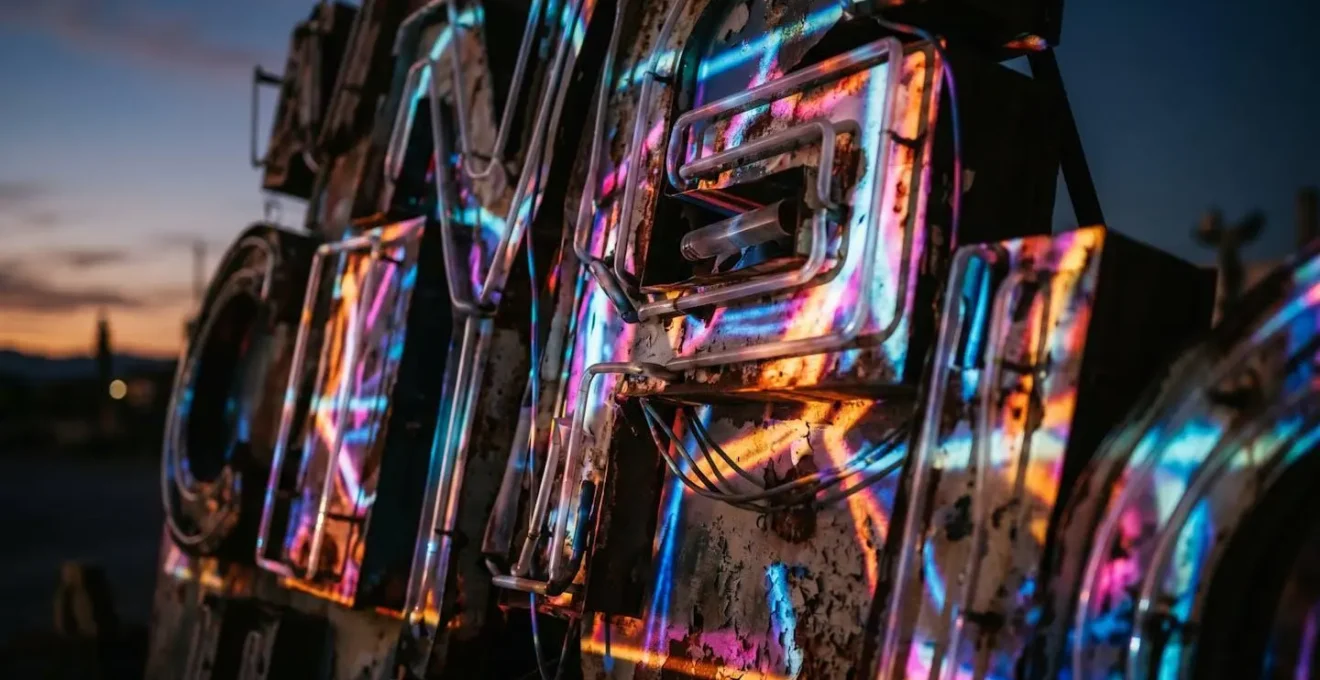
This innovative approach is a form of non-invasive restoration. It allows visitors to experience the signs as they once were—flashing, buzzing, and full of energy—while honoring their current, fragile state. The show is a carefully choreographed symphony of light and sound, synced to a soundtrack of iconic Las Vegas performers. It’s a powerful reminder that preservation in the 21st century can blend historical respect with cutting-edge technology.
Case Study: The Technology Behind « Brilliant! Jackpot »
Created by artist Craig Winslow, the Brilliant! Jackpot show is a technical marvel. It utilizes eight projectors that cast 80,000 lumens of light across more than 40 non-operational signs in the museum’s North Gallery, complemented by a 24-speaker 3D sound system. To achieve this, each sign was meticulously documented using drone footage, flat photography, and 3D photogrammetry. This data allowed Winslow’s team to digitally recreate every sign, bulb by bulb and tube by tube, in Adobe Illustrator. This digital blueprint is then used to project light with pinpoint accuracy, animating the dormant artifacts in perfect sync with a musical score, transforming the Boneyard into an immersive historical performance.
Understanding this technology is key to appreciating the night tour. You are not just seeing lights on old signs; you are witnessing a technological séance, a temporary and respectful reanimation of Las Vegas history.
General Admission vs. Guided Tour: Which Sells Out Weeks in Advance?
Your second major strategic decision involves how you will experience the Boneyard: with the freedom of General Admission (GA) or the rich context of a Guided Tour. Both options have distinct advantages, but demand is not equal. Guided tours, especially the coveted first evening slots, are notorious for selling out weeks, sometimes even months, in advance. This is because the docents provide the narrative context that breathes life into the metal carcasses, sharing stories of the casinos, the designers, and the eras the signs represent. For a culture seeker, this context is invaluable. General admission, available primarily during the day, allows you to wander at your own pace for a one-hour block, which is ideal for photographers or those who prefer a more contemplative experience.
The museum releases tickets up to 60 days in advance, and early booking is essential for guided tours. But what if you’ve missed the window and the tours are sold out? Do not despair. With a strategic approach, you can create a « hybrid » self-guided tour that delivers much of the same historical depth.
Your Action Plan: The Hybrid Self-Guided Tour Strategy
- Book Immediately: Secure a General Admission ticket as soon as the 60-day booking window opens, aiming for the earliest morning slot (e.g., 9 AM) to beat the heat.
- Download the Digital Docent: Before you arrive, download the Bloomberg Connects app. It’s a free digital guide that the museum partners with, offering audio and text-based information on many key signs.
- Access Pre-Visit Context: Listen to the museum’s official podcast or explore its online audio tour content. This provides docent-quality historical background that you can absorb before your visit.
- Map Your Route: Use the museum map available online to plan your path. Critically, identify the locations of shaded areas to use as « recovery zones » between exploring different sign clusters.
- Arrive Prepared: Come with your « digital docent » ready and your heat survival kit in hand (more on that later), prepared to spend your hour exploring with a solid foundation of knowledge.
While a live docent is an unparalleled resource, this hybrid strategy ensures that even with a General Admission ticket, your visit can be a rich and informative cultural expedition rather than a simple walk among silent relics.
The « No Video » Rule That Gets Creators Kicked Out of the Museum
For many visitors, especially content creators and photography enthusiasts, capturing the visual splendor of the Boneyard is a primary goal. However, it is absolutely critical to understand and respect the museum’s strict photography and videography policy. Misunderstanding these rules is one of the quickest ways to have a negative experience, or even be asked to leave. The cardinal rule is simple: no video recording of any kind is permitted during general admission or on guided tours. This policy is in place to ensure a good experience for all guests, prevent unauthorized commercial use, and maintain a certain reverence for the space.
The equipment rules are equally strict. For personal photography, only mobile phones and tablets are permitted. All other equipment is prohibited. The museum’s official guidelines are unambiguous on this point:
Cameras and external equipment like tripods, selfie sticks, etc. are not allowed and MUST be left in a vehicle or checked in to be held at the Front Desk
– The Neon Museum, Official Visitor Guidelines
This policy means that DSLRs, mirrorless cameras, GoPros, and any professional gear are off-limits for the casual visitor. While this may seem restrictive, it levels the playing field and encourages visitors to be present in the moment. It also forces a certain creativity, pushing photographers to master the tool they have with them—their phone. For those who require professional equipment, the museum does offer options for private photo shoots, but these must be booked separately and well in advance.
So, before you even step into the Boneyard, ensure any prohibited gear is securely stored in your vehicle. Adhering to this policy is a sign of respect for the museum, its staff, and your fellow visitors.
When to Visit to Capture the « Golden Hour » on the Signs?
For the dedicated photographer, there is a period of light so magical it can transform the Boneyard’s rusted metal into something sublime: the « golden hour » and the subsequent « blue hour. » The golden hour, the period shortly before sunset, bathes the signs in a warm, soft light, making the textures of rust and paint pop with incredible richness. This is immediately followed by the blue hour, a brief 10-15 minute window after the sun has dipped below the horizon, when the sky turns a deep, velvety blue. This cool-toned backdrop creates a stunning contrast with the first neon signs as they begin to illuminate for the evening. Capturing this transition is the holy grail for many photographers visiting the museum.
However, accessing this fleeting moment for a dedicated photoshoot is not part of a standard ticket. It requires a specific booking for a « Portrait Hour » or private shoot, which must be arranged a minimum of 90 days in advance. For those on a standard tour, the strategy is to book a ticket that straddles this transition. The ideal plan is to book the last daytime guided tour of the day or the very first night tour. This timing places you inside the Boneyard precisely as the sun is setting and the ambient light is at its most dramatic.
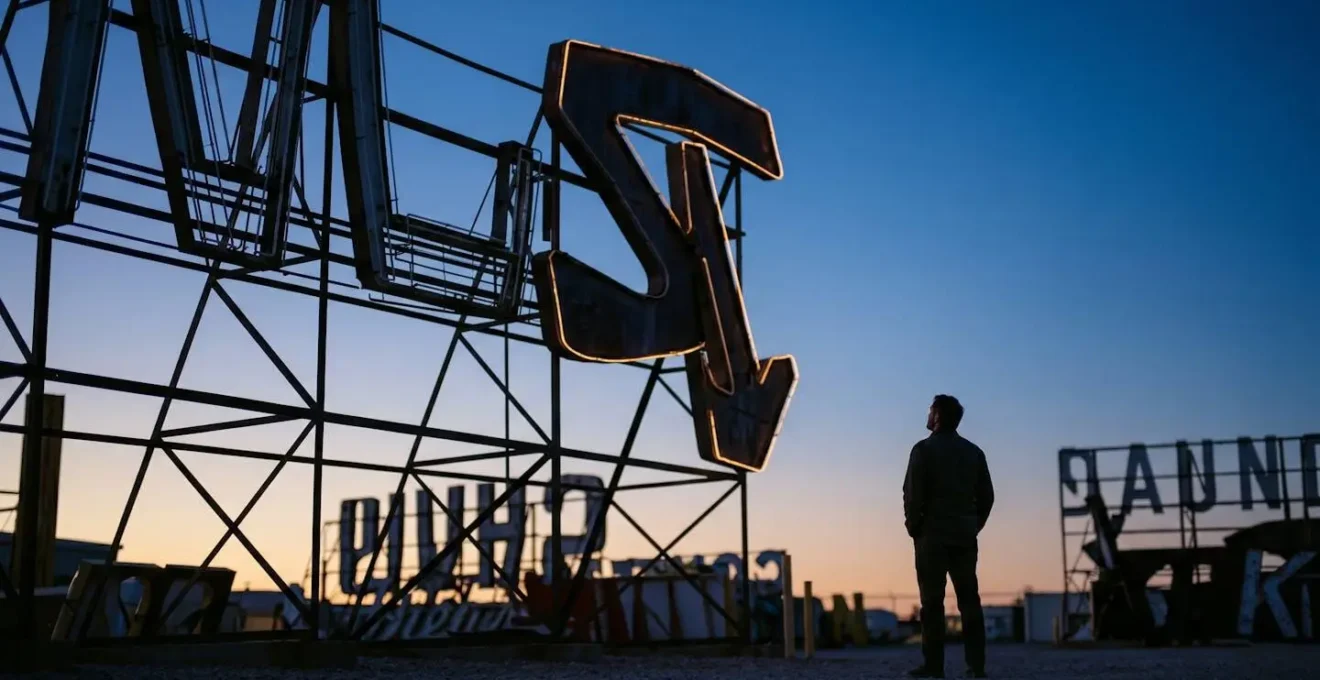
To make the most of this opportunity with your phone, focus on shooting in RAW format if your device supports it, as this gives you maximum flexibility for editing the mixed lighting later. Use the changing light to your advantage: capture the warm glow on the metal surfaces during golden hour, then pivot to capturing the silhouettes of the unlit signs against the rich blue sky. When the first neon signs flicker on, you can create powerful compositions that balance the warm, artificial light of the tubes with the cool, natural light of the twilight sky.
Why the « Boneyard » is More Than Just Old Metal and Glass?
While the visual spectacle of the Neon Boneyard is its main draw, to see it as merely a collection of old, rusty signs is to miss its profound cultural significance. Each artifact in the yard is a primary source document, a tangible piece of Las Vegas’s social, architectural, and economic history. This is not a junkyard; it is an outdoor archive. The collection documents the city’s evolution, from the early days of Fremont Street to the mega-resort era of the Strip. The collection features more than 200 signs spanning 70 years of history, chronicling shifts in design trends, typography, and technology.
Many of these monumental signs were designed and built by the Young Electric Sign Company (YESCO), the firm responsible for creating some of the most iconic visuals in the city’s history, including the famous « Welcome to Fabulous Las Vegas » sign. The Boneyard’s specimens tell the story of entertainment, from the classy script of the Moulin Rouge—the city’s first integrated casino—to the space-age optimism of the Stardust’s atomic-inspired font. They are not just advertisements; they are cultural landmarks that defined the city’s identity for generations of visitors and residents alike.
Looking at a sign’s faded paint or broken bulbs, you are seeing the physical evidence of economic booms and busts, of changing tastes, and of the relentless cycle of reinvention that defines Las Vegas. The rust is not just decay; it is a patina of history. Understanding this context elevates the visit from a photo opportunity to a genuine engagement with urban archaeology. You are walking through a graveyard of giants, and each one has a story to tell about the city it once served.
Key takeaways
- Strategic timing is everything: Choose a day tour for archaeological detail or a night tour for resurrected magic, but always book the earliest or latest slots to mitigate heat.
- Respect the rules: The « no video » and « no professional cameras » policy is strictly enforced. Plan to shoot with your phone only.
- The heat is a serious threat: A successful visit requires a dedicated « heat survival kit, » not just a bottle of water, to avoid exhaustion during the 60-minute outdoor tour.
The Signs of Heat Exhaustion That Most Tourists Ignore
Of all the challenges in visiting the Neon Boneyard, the most serious and most frequently underestimated is the heat. Las Vegas is in the Mojave Desert, and the Boneyard is an outdoor space with limited shade. The 60-minute tour duration can be dangerous for those unaccustomed to the dry, intense heat, which can quickly lead to heat exhaustion or even heatstroke. The problem is so significant that the Southern Nevada Health District reported more than 3,500 heat-related emergency room visits in 2024 alone. Many tourists ignore the early warning signs—such as dizziness, headache, or profuse sweating—attributing them to simple fatigue.
As a matter of policy, the museum will not run guided tours if the temperature exceeds 100°F, but even at 95°F, the radiant heat from the ground and the metal signs can create a much more intense environment. To safely enjoy your cultural expedition, you must come prepared with more than just a single bottle of water. Assembling a small « Boneyard Heat Survival Kit » is a non-negotiable part of your strategic plan.
Your Action Plan: Boneyard Heat Survival Kit Essentials
- The Frozen Bottle: Freeze a water bottle the night before. It will melt slowly throughout the tour, providing you with genuinely ice-cold water instead of lukewarm liquid.
- Electrolyte Reinforcements: Pack electrolyte packets or a sports drink. In dry heat, you lose essential salts through sweat, and water alone won’t replace them.
- Personal Air-Conditioning: A small, portable, battery-operated handheld fan can make a world of difference by creating a personal breeze and aiding evaporative cooling.
- Reflective Headwear: A wide-brimmed, light-colored hat (preferably white or tan) is far more effective than a dark baseball cap, as it reflects solar radiation.
- Aggressive Sunscreen Use: Apply SPF 50+ sunscreen before you arrive. Studies show most people use only about 25% of the amount needed for effective protection.
- UPF-Rated Clothing: A standard cotton T-shirt offers minimal protection (around SPF 5-8). Lightweight, loose-fitting clothing with a UPF (Ultraviolet Protection Factor) rating is a superior choice.
Treating the heat with this level of seriousness is not an overreaction; it is a fundamental prerequisite for being able to focus on the history around you instead of on your own physical distress.
Neon Lights Tour: How to Find the Best Vintage Signage Photo Spots?
Your journey into the history of Las Vegas’s iconic signage shouldn’t end when you exit the Boneyard. The museum is the anchor of a larger, living exhibition scattered throughout Downtown Las Vegas. The Las Vegas Signs Project, a partnership between the museum and the city, has placed 16 restored signs as public art installations along Las Vegas Boulevard, creating a designated Federal Scenic Byway. After your tour, you can embark on a « neon pilgrimage » to see these restored artifacts in their natural urban habitat, contrasting the « caged » relics in the Boneyard with their « living » counterparts.
This self-guided walking tour is the perfect way to conclude your day, especially during the blue hour when the twilight sky balances perfectly with the glow of the neon. Here is a suggested route for finding some of the best photo opportunities:
- Stop 1: El Cortez Hotel & Casino: Stand across the street from this historic, still-operating establishment. By using a slow shutter speed on your phone (if it has a manual mode), you can capture light trails from passing cars, framing the vintage sign with a sense of modern energy.
- Stop 2: Vegas Vic at the Fremont Street Experience: This 40-foot neon cowboy is one of the most famous signs in the world. Shoot him from a low angle to create a heroic perspective against the massive LED canopy of the Fremont Street Experience.
- Stop 3: Fremont East Entertainment District: Walk this restored corridor to see a fantastic collection of working vintage signs from businesses like the El Cortez and classic motels. It provides the context of how these signs worked together to create a streetscape.
- Stop 4: The Scenic Byway Route: Explore the public art installations along Las Vegas Boulevard between Sahara and Washington Avenues to see signs like the Silver Slipper and the Bow & Arrow Motel sign, fully restored and integrated into the cityscape.
This post-museum tour completes the narrative. You have seen the artifacts at rest in the Boneyard, and now you can witness their resurrected brethren shining brightly in the city they helped build. It reinforces the idea that this history is not entirely in the past; it is still a vibrant part of Las Vegas’s identity.
Now that you are equipped with a strategic plan, you are ready to embark on your own cultural expedition to the Neon Boneyard and experience this unique piece of American history with the respect and preparation it deserves.