
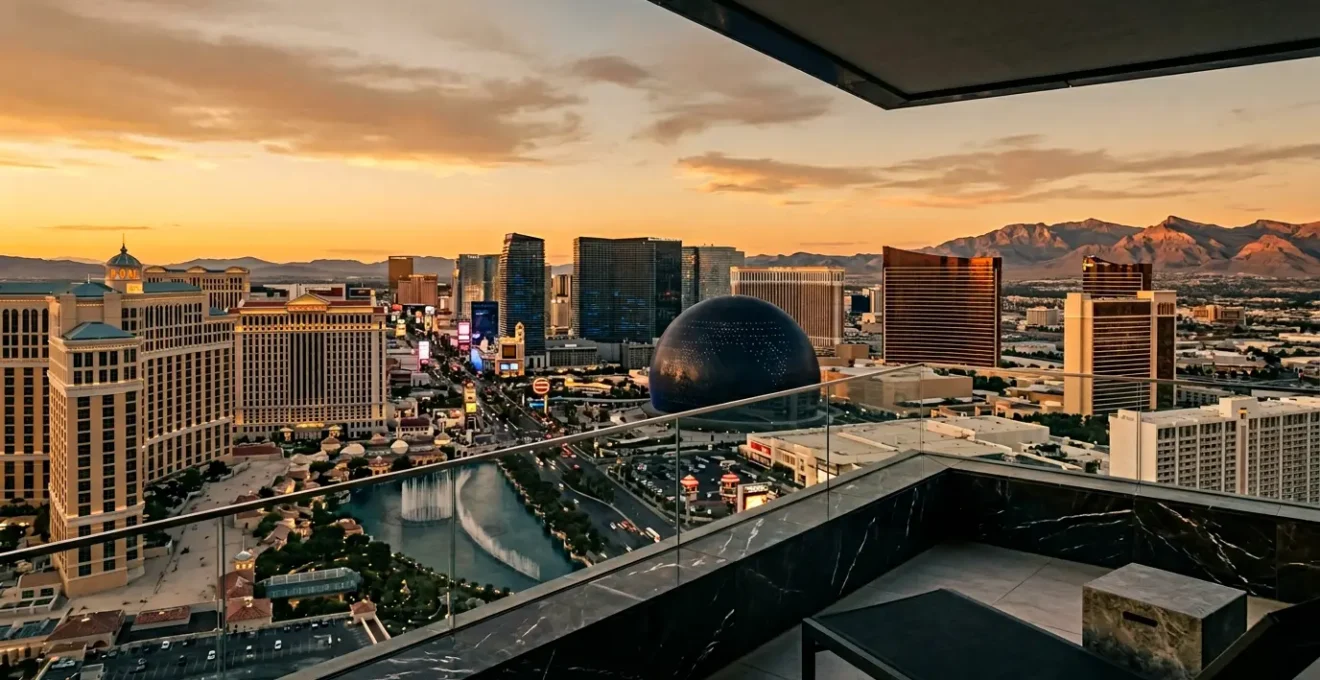
Securing true VIP status in Las Vegas isn’t about outspending everyone; it’s about mastering the city’s internal economy of recognition and access.
- The key to unlocking upgrades and comps lies in establishing a relationship with a casino host, making your total resort spend visible.
- Small, strategic gestures, like the « $20 trick, » are not bribes but signals that you understand the unspoken rules of the service industry.
Recommendation: Shift your focus from third-party booking sites to direct engagement. Consolidate your spending and initiate contact with casino marketing to transform your travel budget into a tool for genuine VIP treatment.
For the discerning traveler, Las Vegas presents a paradox. It’s a city built on the promise of unparalleled luxury, yet spending a significant sum doesn’t automatically guarantee a commensurate experience. You book a five-star hotel through a popular travel website, arrive with high expectations, and receive the standard room with the standard view. You find that your premium budget has simply bought you a ticket to the same crowded experience as everyone else. This common frustration stems from a misunderstanding of how the city truly operates.
The conventional wisdom—book early, be polite, look for package deals—barely scratches the surface. The real currency of Las Vegas isn’t just the money you spend, but the strategic visibility of that spending within the casino’s intricate ecosystem. The true path to VIP perks, suite upgrades, and exclusive access doesn’t lie in simply having a larger budget. It lies in understanding the unwritten rules, the internal economies, and the human psychology that powers the Strip’s hospitality machine. What if the key wasn’t spending more, but spending smarter?
This guide demystifies the process. We will move beyond the tourist-level tips and delve into the operational logic of Las Vegas luxury. From leveraging casino hosts and timing your visit to perfection, to understanding the subtle art of the tip and reframing the value of a premium cocktail, you will learn to navigate the system like an insider. The goal is to make every dollar you spend work harder, transforming your existing budget into a powerful tool for unlocking the exclusive experiences you deserve.
To navigate the intricate world of Las Vegas luxury, it is essential to understand the distinct strategies that separate the average visitor from the seasoned insider. This article breaks down the key tactics and foundational knowledge required to elevate your experience from premium to truly VIP.
Summary: The Insider’s Playbook for Mastering Las Vegas Luxury
- Why Booking Through a Host Yields Better Suites Than Expedia?
- How to Use the « $20 Trick » Successfully at 5-Star Resorts?
- Skylofts or Villas: Which Offers Better Privacy for High-Profile Guests?
- The « All-Inclusive » Myth That Disappoints International Luxury Travelers
- When to Visit to Avoid the « Whale » Crowds During Major Conventions?
- Why a $20 Tip to the Front Desk Works Better Than Politeness?
- Why a $25 Cocktail is Worth It for the Skyline View?
- Exclusive Entertainment: How to Get Past the Velvet Rope Without Buying a Bottle?
Why Booking Through a Host Yields Better Suites Than Expedia?
Booking through a third-party site like Expedia is a purely transactional act. You pay a set price for a set product, and the hotel fulfills its obligation. There is no relationship and no incentive for them to offer more. A casino host, however, operates on an entirely different principle: relationship and potential. A host’s primary role is to identify and cultivate valuable guests. By booking directly and establishing contact, you transition from an anonymous transaction to a valued asset within the casino ecosystem.
The host has discretionary power that a reservation algorithm lacks. They can see your total spend across the resort—from fine dining and spa treatments to retail—and use that data to justify « comping » (providing complimentary) a suite upgrade, show tickets, or a food and beverage credit. For the casino, a high-value guest in a premium suite is a better long-term investment than the marginal profit from selling that suite on Expedia. They are betting on your loyalty and future spend. This « pre-trip audition » strategy, where you concentrate play or spending on an initial visit, is the fastest way to get on a host’s radar and unlock a level of personalization that online travel agencies can never offer.
Action Plan: Getting a Casino Host’s Attention
- Rated Play Foundation: Complete a solid session of rated play. Track your game, average bet, and time played to have clear data points for your request.
- Direct Approach: After your session, find a host or floorperson. State your activity clearly: « I’d like to speak with a host about my play today. I’ve been at the blackjack tables for 3 hours at about $100 a hand. »
- Consolidate Non-Gaming Spend: For non-gamblers, charge every single expense (spa, restaurants, shows, shopping) to your room. Then, contact casino marketing to review your « valuable non-gaming profile. »
- Negotiate Beyond the Room: Ask your host about resort credits or food and beverage allowances. These are often easier for them to approve for mid-tier players than a fully comped room.
- Cultivate the Relationship: Building a connection over multiple trips is key. Once a host codes you to their portfolio, future benefits and personalized service become significantly more accessible.
Ultimately, a host acts as your internal advocate. They are your single point of contact for reservations, problem-solving, and unlocking the bespoke experiences that define true luxury travel in Las Vegas.
How to Use the « $20 Trick » Successfully at 5-Star Resorts?
The infamous « $20 trick » is one of the most discussed yet misunderstood tactics in Las Vegas. It is not a bribe. It is a form of value-signaling—a subtle communication that you understand the city’s service-based economy and you value the agent’s power to enhance your stay. When done correctly, it is a sophisticated gesture of mutual respect. The key is discretion and timing. The money should be neatly folded between your credit card and ID when you present them at check-in. This is not a back-alley deal; it’s a professional and silent acknowledgment of the agent’s role.
This gesture works because it breaks the monotony of a front desk agent’s day. They process hundreds of polite guests. The tangible act of the tip focuses their attention and creates a micro-objective: « How can I help this guest? » It empowers them to use the tools at their disposal—tools that a standard polite request may not activate. Success is not guaranteed, but its likelihood is surprisingly high. In fact, travelers report getting some kind of upgrade roughly 75% of the time in Las Vegas. Success rates vary by property; a little research can dramatically improve your odds.
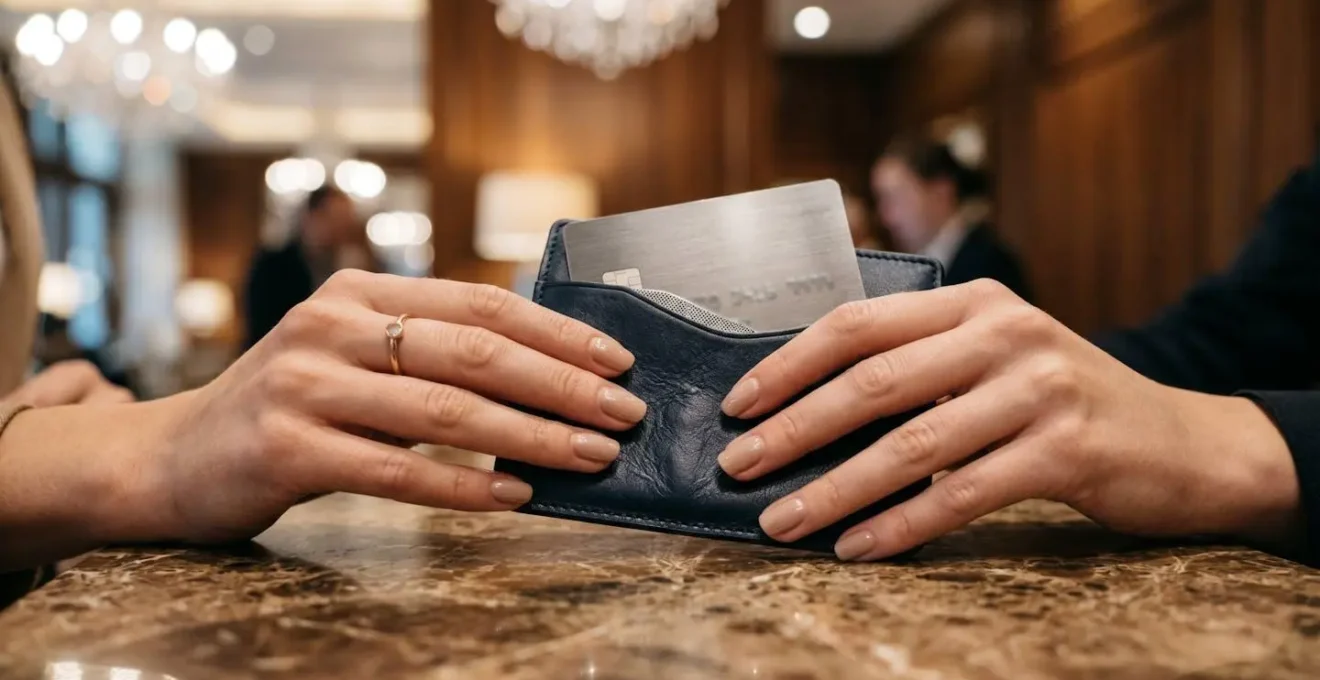
For instance, some of the larger, more established resorts have a higher success rate than newer, boutique-style properties. According to crowdsourced data, properties like Caesars Palace and The Palazzo often have upgrade rates over 90%, while others might hover closer to 50%. The best times to try are during lulls, such as mid-morning (9-11 AM) or late evening (9-10 PM), when agents have more time and flexibility. Avoiding the 3-5 PM check-in rush is crucial, as agents are under pressure to process guests quickly and have less latitude for creative solutions.
Skylofts or Villas: Which Offers Better Privacy for High-Profile Guests?
For guests where privacy is paramount, the choice between a top-floor Skyloft and a secluded Villa is a critical one. While both offer exceptional luxury, they cater to different philosophies of privacy. It’s a distinction between vertical seclusion and horizontal isolation. Skylofts, perched atop massive resorts like MGM Grand, offer privacy through elevation and controlled access. Key-card restricted elevators and dedicated floors create a secure « hotel within a hotel, » isolating guests from the general public below.
Villas, often tucked away in discreet corners of properties like the Bellagio or Mirage, provide privacy through a separate physical footprint. They typically feature private entrances, dedicated valet services, and enclosed courtyards, eliminating any need to traverse public spaces. An experienced guest of the Skylofts once noted the unique type of security this provides:
Being on a key card restricted floor at the top of the hotel where you have to walk past people who know who you are, with cameras in the halls provides the level of security and privacy I like.
– Experienced Skylofts Guest, TripAdvisor Forum Discussion
This highlights a key difference: Skylofts provide a sense of secure, observable privacy, where staff are present but discreet. Villas aim for absolute anonymity, where the goal is to see and be seen by no one. The choice depends on the guest’s specific needs: the perceived security of a controlled high-rise environment versus the true solitude of a private compound. The following comparison breaks down these nuanced factors.
To make an informed decision, a detailed look at the path of travel, acoustic isolation, and service footprint is essential, as this community-driven comparison illustrates.
| Privacy Factor | Skylofts at MGM Grand | Mirage/Bellagio Villas |
|---|---|---|
| Path of Travel | Dedicated elevator from VIP lounge, key-card restricted floors (29th-30th), passage through semi-public MGM VIP area | Private valet entrance, separate check-in, no shared public spaces |
| Acoustic Privacy | Nearly soundproofed walls, minimal bleed-through except emergency sirens; high-floor isolation from street noise | Lower floors subject to pool/grounds noise; thicker walls but more ambient sound from property activity |
| Service Footprint | Butler + concierge team (fewer guests per butler); staff desk on floor, visible presence | Dedicated butler team per villa; larger staff footprint (butler, housekeeping, private pool attendants) |
| Guest Anonymity | Shared elevator bank (key-card access); staff recognize all floor guests; cameras in hallways | Completely private entry; no shared corridors; villa-specific staff only |
| Autonomous Privacy | High—guests can decline butler service entirely; ‘Do Not Disturb’ fully respected | Moderate—larger service team expects regular interaction; harder to achieve true solitude |
The « All-Inclusive » Myth That Disappoints International Luxury Travelers
International luxury travelers, accustomed to all-inclusive resorts in the Caribbean or Mexico, often arrive in Las Vegas seeking a similar offering and are met with profound disappointment. The concept is almost non-existent on the Strip, and for a very strategic reason. The entire Las Vegas casino ecosystem is fundamentally designed to do one thing: entice you *out* of your hotel room. It is a world of infinite, competing choices, from a celebrity chef’s restaurant in a neighboring resort to a world-class show across the street. An all-inclusive package would create a closed loop, directly contradicting the city’s core business model of boundless options and cross-property spending.
This structural reality leads to a common pitfall for the uninitiated, who find themselves confined to a limited set of options within their own resort, feeling cheated of the true Vegas experience. The savvy traveler, however, understands this system and negotiates for a superior alternative: the « curated resort credit. » This is an amount of money, pre-loaded onto your room account, that you can spend anywhere on the property. It is often secured through a casino host or as part of a high-end booking package.

This strategy provides the budget certainty of an all-inclusive plan but with the complete freedom of choice that defines Las Vegas. You can dine at the Michelin-starred restaurant, indulge in a spa day, or enjoy cocktails at the rooftop bar, all while your expenses are covered up to a pre-determined limit. It transforms a restrictive model into a liberating one, functioning as the intelligent traveler’s all-inclusive. It’s about controlling your budget without limiting your experience, which is the essence of smart luxury in this unique city.
When to Visit to Avoid the « Whale » Crowds During Major Conventions?
The common advice to « visit during the off-season » is nearly useless in Las Vegas, a city with a perpetually packed event calendar. A more sophisticated approach involves understanding the *type* of crowd, not just the volume. The goal for a luxury traveler is to avoid the « whale » crowds of massive city-wide conventions, which not only clog every public space but also bring in high-spending attendees who absorb all available premium inventory, from suites to top restaurant reservations. These are not the times to seek upgrades or personalized attention.
The scale of these events is staggering. For example, the Las Vegas convention calendar shows that CES in January brings over 140,000 attendees, while the SEMA show in November attracts over 160,000. Trying to compete for resources during these peak weeks is a losing battle. The intelligent strategy is to target « shoulder weeks » and « compete-to-comp » periods. A shoulder week is the 3-4 day window immediately following a major convention. Hotels experience a dramatic « occupancy cliff » and become extremely motivated to fill rooms, making them far more receptive to upgrade requests and special offers.
Furthermore, an even more nuanced approach is the « Dead Sport » strategy. A weekend with a Raiders home game against a team with a small or non-traveling fanbase can create the illusion of a busy city while lacking the critical mass of high-spending visitors. The most advanced tactic is mapping the « Compete-to-Comp » calendar. When two huge but unrelated conventions occur back-to-back at different convention centers (e.g., Las Vegas Convention Center vs. Mandalay Bay), the hotels situated between them become a competitive « no man’s land, » often resulting in exceptional offers to lure guests. Mastering this calendar is the ultimate insider move for maximizing value and experience.
Why a $20 Tip to the Front Desk Works Better Than Politeness?
To understand why a tangible tip often outperforms simple politeness, one must grasp the psychological environment of a five-star resort’s front desk. Politeness is not a differentiator; it is the expected baseline of interaction. A front desk agent processes hundreds of polite, smiling guests during a single shift. Over time, politeness becomes background noise—pleasant but unremarkable. An agent at a major Strip property is managing a high-stress, high-volume environment, and their cognitive resources are finite.
A crisp bill presented discreetly is a sensory event. It’s a pattern interrupt that cuts through the monotony. As one hospitality analysis points out, this gesture signals a deeper understanding of the service industry’s unwritten rules. It is a non-verbal cue that you are a discerning guest who recognizes their agency and power.
Politeness is the expected baseline in a 5-star resort; it makes you a pleasant guest. The tip is what signals you as a discerning guest who understands and values the agent’s power to enhance the experience.
– Las Vegas Hospitality Industry Analysis, Vegas Food and Fun Guide
The tip doesn’t buy a guaranteed outcome; it buys focused attention. It creates a micro-challenge for the agent: « This guest has acknowledged me; how can I acknowledge them in return? » It shifts the dynamic from a procedural check-in to a collaborative problem-solving exercise. The agent is now incentivized to actively look for opportunities—a corner room, a higher floor, a suite that just became available due to a last-minute cancellation. In an industry where many frontline employees work for tips and « game respects game, » this small gesture of understanding can yield disproportionate returns, earning a level of respect and proactive service that politeness alone can rarely achieve.
Why a $25 Cocktail is Worth It for the Skyline View?
The sticker shock of a $25 cocktail in a Las Vegas skyline bar is a common reaction. However, the savvy luxury traveler understands that they are not merely purchasing a beverage; they are engaging in an « access fee reframe. » The $25 is not for the gin and tonic; it’s the most cost-effective ticket to a multi-million-dollar view, an exclusive ambiance, and a moment of quintessential Las Vegas glamour. When you reframe the cost this way, its value becomes immediately apparent.
Consider the alternatives. A ticket for an observation deck like the High Roller or the Eiffel Tower Viewing Experience can easily run from $25 to $40 per person. These experiences offer a similar view but come with crowds, lines, and none of the luxurious comfort, personalized service, or sophisticated atmosphere of a high-end lounge. The cocktail, therefore, is not a drink; it is your admission to a superior experience. You are paying for the plush seating, the climate control, the curated music, and the feeling of being an insider, looking down on the city’s glittering expanse.
The Investment in Social Reconnaissance
That single cocktail serves another strategic purpose: it is an investment in « social reconnaissance. » Before committing to a much larger expense, like a $500 dinner at the adjoining restaurant, you are observing the operational flow. You can assess the crowd, the attentiveness of the staff, and the overall energy of the venue. This small initial investment can save you from a disappointing and costly evening. To maximize the return on this « access fee, » timing your visit for the golden hour before sunset yields a disproportionate ROI in pure experiential quality and, for those inclined, spectacular social media value.
This mental shift from cost to investment is a hallmark of the intelligent traveler. It’s about recognizing that in a city built on spectacle, sometimes the most valuable experiences are purchased one sophisticated, strategically-priced cocktail at a time.
Key Takeaways
- True VIP status is unlocked through relationships with casino hosts, not anonymous online bookings. Consolidate your spending and make it visible.
- Strategic gestures like the « $20 trick » and targeted tips are not bribes but sophisticated signals that you understand and respect the service economy.
- Maximize value by understanding the « access fee reframe »—viewing a premium cocktail or experience not as a cost, but as an investment in exclusive access and ambiance.
Exclusive Entertainment: How to Get Past the Velvet Rope Without Buying a Bottle?
The velvet rope of a premier Las Vegas nightclub is a powerful symbol of exclusivity, and the default assumption is that the only way past it is by purchasing expensive bottle service. While that is certainly the most direct route, it is far from the only one. For the strategic traveler, several insider tactics can provide access to the same elite environments without the four-figure commitment. These methods rely on leveraging other parts of the casino ecosystem and understanding the club’s operational needs.
The key is to approach the problem from a different angle. Instead of a direct, transactional approach at the front door, you use a collaborative or indirect method. These strategies transform you from just another person in line into a valued guest or a low-risk, high-value addition to the club’s atmosphere. Here are three proven strategies:
- The Concierge « Pre-Grease » Strategy: Early in your stay, visit your hotel concierge. Present them with a generous tip ($50-$100) upfront and state your goal clearly: « We’re here for the week and want to have a great time. We’d love your expert help getting into [Club Name] on Friday. » This changes the dynamic from a simple request to a collaborative mission. The concierge, now personally invested, will leverage their direct relationships with club management on your behalf.
- The Dinner-to-Club Pipeline: Many top-tier nightclubs are co-located with high-end restaurants (e.g., TAO, Lavo, Catch). Book a late dinner reservation (around 9:30 or 10:00 PM). By establishing a rapport with your server or the maître d’, you can often leverage that relationship to be « walked over » to the club, bypassing the general admission line entirely.
- Reverse-Engineer the Guest List: Club promoters are constantly searching for the « right » people to fill the club early in the night. Find specific promoters for your target club on social media platforms like Instagram. Message them directly, presenting your group as a « low-risk, high-value » asset (e.g., « a well-dressed couple looking to have a great night and buy drinks at the bar »). This often secures you a spot on the guest list, which grants complimentary or reduced-price entry.
These tactics work because they align with the club’s interests. A concierge’s recommendation carries weight, a dinner guest is already a vetted patron, and a promoter-approved group enhances the club’s atmosphere. It’s about playing the game smarter, not harder.
Now that you are armed with these insider strategies, the next logical step is to begin outlining your trip with this new framework in mind. Start by identifying your target properties and initiating contact with their casino marketing departments to lay the groundwork for your truly VIP experience.