
In summary:
- The famous « green water » effect is a fleeting morning phenomenon; timing your arrival is crucial to witness the light physics at play.
- The river below Hoover Dam is a constant, shockingly cold 54°F, making Lake Mohave’s conditions vastly different from the warmer, wind-chopped Lake Mead.
- Don’t fight the river’s current. Learn to read its language—using eddies and understanding flow—to conserve energy and paddle smarter.
- For a serene kayaking experience, a weekday paddle is non-negotiable to avoid the chaotic « washing machine » effect created by weekend motorboat wakes in the narrow canyon.
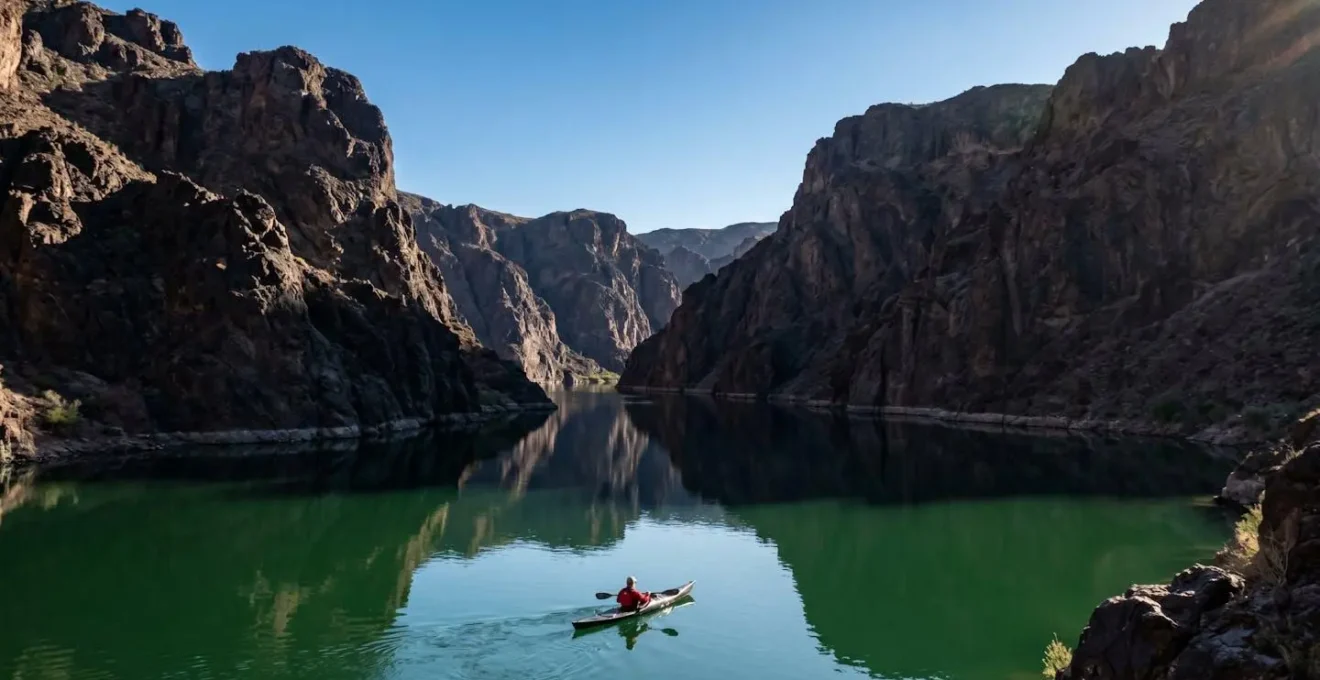
The stark Mojave Desert doesn’t exactly scream « water sports. » Yet, just a short drive from the neon chaos of Las Vegas lies a deep, dark gash in the earth where the Colorado River flows, cool and clear. This is the Black Canyon, a paddler’s paradise carved from volcanic rock. Many guides and websites will give you the basic logistics: where to rent a kayak, which tour to book. They’ll tell you to bring sunscreen and water, the universal mantra of any desert outing.
But paddling the Black Canyon isn’t just about checking a box or getting a selfie in Emerald Cave. It’s a conversation with the river itself, a powerful, living system governed by the colossal concrete giant upstream, the Hoover Dam. To truly experience it, you need to learn its language. You need to understand the rhythm of the dam’s releases, the physics of light that turn the water an impossible green, and the subtle cues of the current that dictate your every paddle stroke. The standard advice only gets you on the water; it doesn’t teach you how to flow with it.
This guide is different. Think of me as your river guide, here to translate the water’s secrets. We’ll move beyond the basics and dive into the ‘why’ behind the ‘what.’ You’ll learn not just how to get to the photogenic spots, but how to time your arrival for peak magic. You’ll understand the critical differences in water conditions that define your safety and comfort. By the end, you won’t just be a tourist in a kayak; you’ll be an informed adventurer, moving in harmony with one of the world’s most dramatic landscapes.
This article will guide you through the essential knowledge for a successful trip, from the visual phenomena of the canyon to the practicalities of navigating its waters and structures. Explore the sections below to prepare for your adventure.
Table of Contents: A Paddler’s Guide to the Black Canyon
- Why You Need to Arrive Early to See the Green Water Effect?
- How to Rent a Boat at Willow Beach for a Self-Guided Tour?
- Lake Mohave vs. Lake Mead: Which Has Better Water Conditions?
- The Risk of Swimming Against the Current Near the Dam Release
- When to Visit to Avoid the Jet Ski Crowds on Weekends?
- ATV vs. Dune Buggy: Which Offers the Best Adrenaline Rush?
- Hemenway Harbor vs. Callville Bay: Which Boat Ramp is Still Open?
- Hoover Dam: How to Tour the Inside of the Concrete Giant?
Why You Need to Arrive Early to See the Green Water Effect?
The legendary « green water » of Black Canyon’s coves, particularly Emerald Cave, isn’t a constant state. It’s a fleeting light show, a perfect marriage of physics and timing. The phenomenon occurs when low-angle sunlight penetrates the crystal-clear water and refracts off mineral particles suspended from the canyon walls. It’s not the water itself that’s green, but the light playing within it. This requires the sun to be at a very specific angle—not too high, not too low—to illuminate the caves without washing out the effect with direct glare. This magical window is typically between 7:00 AM and 9:00 AM.
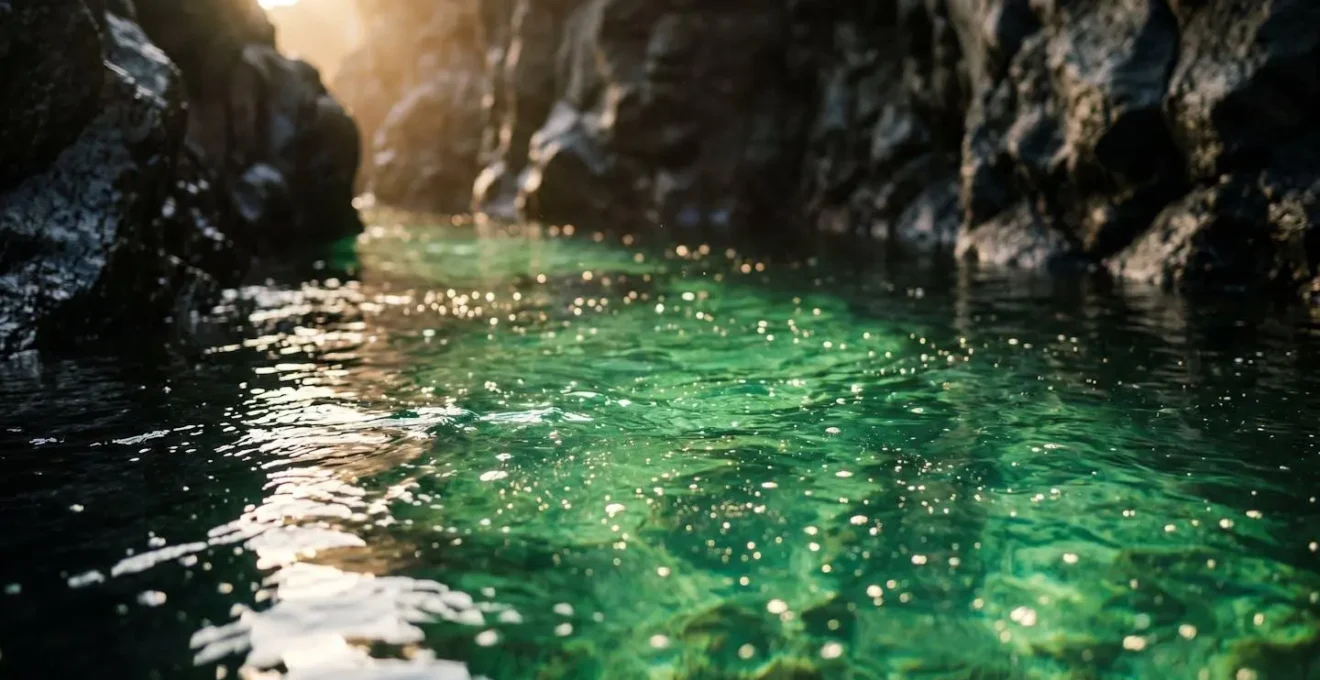
Arriving early isn’t just about beating the crowds; it’s about aligning your visit with the sun’s journey across the sky. By mid-day, the sun is too high and overhead. The angle is too steep, and the light simply reflects off the water’s surface, shattering the illusion. The water returns to its normal, clear state. To truly capture this natural spectacle, you must treat it like an appointment with the sun. This means launching from your starting point well before sunrise to give you enough paddling time to reach the key locations during that optimal two-hour window. For photographers and sightseers alike, timing is everything.
Your Action Plan: Photographer’s Gear Checklist for Capturing the Green Water Effect
- Arrive at the launch point before sunrise to reach Emerald Cave during the optimal 7:00-9:00 AM window when low-angle light creates the green glow.
- Use a polarizing filter to cut water surface glare and enhance the emerald color saturation, as explained in detailed photography guides.
- Set your camera to a low ISO (100-400) for maximum clarity in the bright morning conditions and minimal digital noise.
- Choose an aperture range of f/5.6-f/8 to balance sharpness across the scene, keeping both glowing water and dark canyon walls in detail.
- Compose using the dark volcanic canyon walls as natural framing elements to emphasize the vibrant contrast with the illuminated emerald water.
- Protect your gear with a waterproof camera bag or dry bag, as kayak splashes and humidity inside caves can damage electronics.
How to Rent a Boat at Willow Beach for a Self-Guided Tour?
Willow Beach Marina is the primary hub for self-guided adventures into the heart of the Black Canyon. It serves as the main takeout point for paddlers coming down from the Hoover Dam and the launch point for those wanting to explore upstream toward the dam. The process is straightforward: you can book rentals on-site, though calling ahead is always wise, especially on weekends. You’ll find options for single and tandem kayaks, canoes, and even small motorboats. According to current marina rates, you can expect to pay around $90 for a single kayak for three hours.
However, the most important decision isn’t just about securing a boat, but choosing the *right* boat for your desired experience. This choice will fundamentally shape your day, dictating your pace, effort, and connection to the canyon. A kayak offers an intimate, silent glide, allowing you to slip into narrow coves inaccessible to larger craft. A motorboat lets you cover vast distances with ease, but its engine noise shatters the canyon’s profound tranquility. Your choice is a trade-off between serenity and speed, effort and ease.
Before you make a decision, consult this breakdown to align your vessel with your adventure goals. This isn’t just a rental; it’s a strategic choice about how you want to meet the river.
| Criteria | Kayak (Single/Tandem) | Canoe | Motorboat |
|---|---|---|---|
| Serenity Score | Highest – Silent paddling, intimate connection with nature | High – Quiet but slightly more conversation noise | Low – Engine noise disrupts canyon tranquility |
| Effort & Skill Level | Moderate – Requires basic paddling technique, solo control | Moderate-High – Coordination needed for tandem paddling | Low – Minimal physical effort, basic navigation skills |
| Photography Stability | Medium – Narrow hull wobbles but low profile protects gear | High – Wide, stable platform ideal for camera equipment | Highest – Stable deck but engine vibration can blur shots |
| Upstream Progress Difficulty | High – Fighting 1-2 mph current is exhausting over distance | Very High – Larger surface area catches more current resistance | Minimal – Engine power easily overcomes current flow |
| Access to Narrow Coves | Excellent – Fits into tight slots, caves, and hot spring areas | Good – Can navigate most areas except narrowest passages | Limited – Size and draft restrict access to shallow coves |
Lake Mohave vs. Lake Mead: Which Has Better Water Conditions?
The first thing a river guide will tell you about the Black Canyon is to respect the water temperature. This isn’t the warm, sun-baked water of a typical lake. The water in the canyon section of the Colorado River is released from the deep intakes of Hoover Dam. Because of this deep-water source, a phenomenon known as hypolimnetic release, the river stays at a constant 54°F (12°C) year-round. This is shockingly cold, even on a 110°F summer day. A brief swim is invigorating, but prolonged immersion without proper gear carries a serious risk of hypothermia. This single factor creates an entirely different ecosystem, one where cold-water rainbow trout thrive, making it a world-class fishery.
Lake Mead, on the other hand, is a classic warm-water reservoir. Its surface is exposed to the desert sun, creating stratified temperatures with a pleasant warm layer in the summer. However, its vast, open expanse makes it highly susceptible to wind. Afternoon winds regularly whip up 2-4 foot waves and whitecaps, creating dangerous conditions for small craft like kayaks. Lake Mohave, protected by the narrow canyon walls, is largely shielded from this wind. Its challenge isn’t waves, but a persistent 1-2 mph downstream current.
Essentially, your choice comes down to facing a predictable, cold flow (Mohave/Black Canyon) versus an unpredictable, warm chop (Mead). For paddlers seeking calm surfaces and exceptional clarity, the Black Canyon is unparalleled, as detailed in this comparison from paddling experts.
| Water Characteristic | Lake Mohave (Black Canyon Section) | Lake Mead |
|---|---|---|
| Water Movement Type | Consistent downstream flow from Hoover Dam release (predictable 1-2 mph current) | Wind-driven surface ‘chop’ with unpredictable direction and intensity |
| Surface Conditions | Generally calm with gentle ripples; current is main challenge, not waves | Frequent whitecaps and 2-4 foot waves during afternoon winds, dangerous for small craft |
| Water Clarity | Exceptionally clear (50+ feet visibility) due to dam filtration and cold temperature | Variable clarity; more algae and sediment due to warmer, layered water temperatures |
| Temperature Profile | Constant 54°F (12°C) year-round from deep-dam release; hypothermia risk even in summer heat | Stratified temperatures: warm surface layer (70-80°F summer) over colder depths |
| Fishery Ecosystem | Cold-water species: rainbow trout thrive in oxygen-rich 54°F water (world-class trout fishing) | Warm-water species: largemouth bass, striped bass, catfish dominate warmer layered waters |
| Kayaker Safety Gear | Neoprene booties or splash top mandatory for cold-water immersion protection | Standard water shoes sufficient in summer; focus on wind/wave safety equipment |
The Risk of Swimming Against the Current Near the Dam Release
The title implies a swimmer, but the principle is universal for any paddler: you cannot fight the Colorado River’s main current head-on. The dam’s release creates a steady flow that, while not appearing fast, represents an immense and relentless force. Attempting to paddle directly upstream in the center channel is a lesson in futility; you will exhaust your energy budget in minutes, making little to no progress. The key is not to overpower the river, but to outsmart it by learning to read its language.
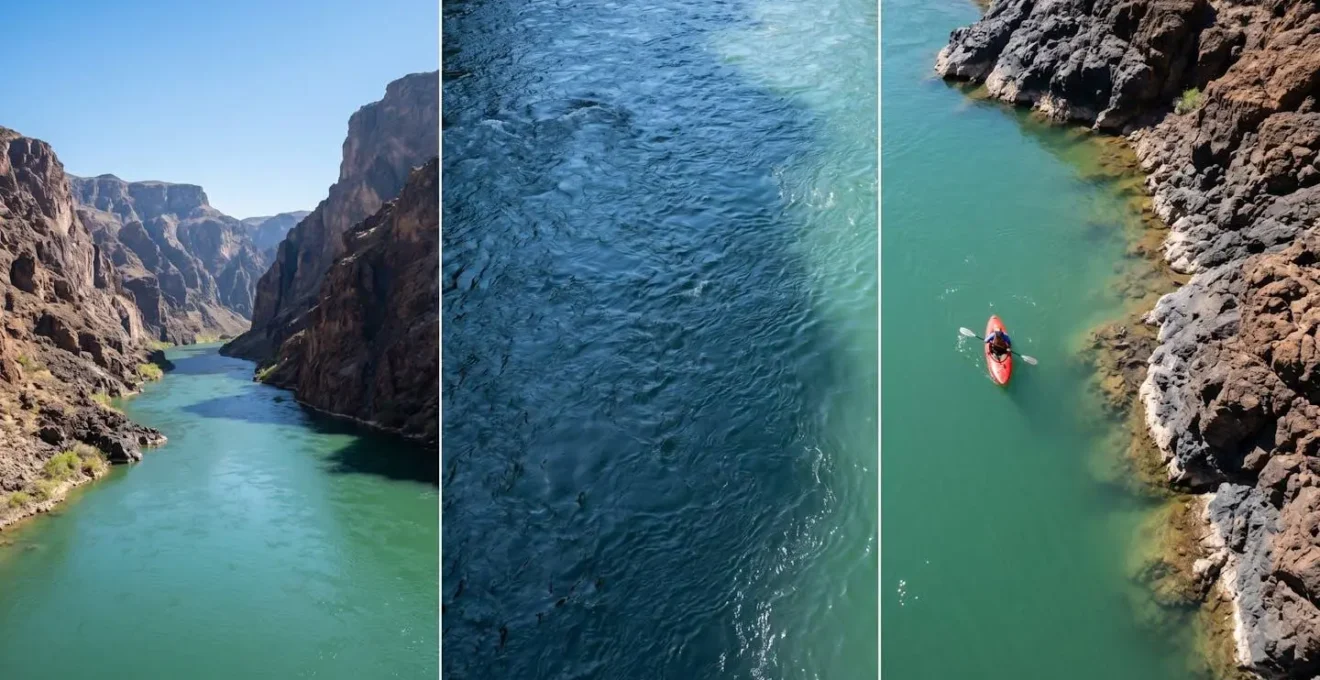
The river’s surface is a map of the forces below. The fastest water flows in the center, often showing a slightly textured surface. Along the shorelines, especially behind points of land or inside bends, the water slows down or even flows gently upstream. These calm pockets are called ‘eddies’. The boundary between the fast main current and the slow eddy is a visible seam on the water, the ‘eddy line’. Your entire upstream strategy is to hop from one eddy to the next, hugging the shoreline and using these zones of slack water as a ‘paddler’s highway’. You only cross the main current quickly and at an angle when you need to get to an eddy on the other side. This is how you manage your energy budget and travel upstream effectively.
When to Visit to Avoid the Jet Ski Crowds on Weekends?
The answer is simple and absolute: if you are in a human-powered craft like a kayak, canoe, or paddleboard, you must visit on a weekday. A Monday through Thursday paddle, especially in the morning, offers a completely different universe of experience than one on a crowded Saturday. On a weekday, the canyon belongs to you, the birds, and the bighorn sheep. The silence is profound, broken only by the dip of your paddle and the whisper of the wind. You can hold a conversation with your companion in a normal voice from 50 feet away. The water is a sheet of glass.
On a weekend, that tranquility is shattered by the constant roar of motorboats and jet skis. But the issue is far more than just noise pollution; it’s a matter of physics and safety. The Black Canyon’s narrow, vertical rock walls act like mirrors for boat wakes. In open water, a wake dissipates. Here, it hits one wall and reflects back, colliding with the incoming wake from the other side, creating a chaotic, unpredictable state of water. Paddlers call this the « washing machine effect, » and it can be incredibly destabilizing and dangerous.
The Wake Effect Physics: How Motorboat Waves Create Washing Machine Conditions for Kayakers
A kayaker’s account illustrates the compounding wake effect in narrow Black Canyon passages. When a motorboat passed at moderate speed, its wake created 2-foot waves that propagated across the 200-foot-wide canyon section. These waves struck the vertical volcanic walls and reflected back at angles, meeting incoming waves from the opposite wall. The result: a chaotic ‘washing machine’ effect where waves came from multiple directions simultaneously, making the kayak rock unpredictably and forcing the paddler to brace repeatedly to avoid capsizing. The turbulence persisted for 3-5 minutes after the boat passed. In contrast, during a quiet weekday morning paddle, the same kayaker navigated the identical section in completely flat water, requiring minimal bracing and allowing stable photography. This demonstrates why the issue for kayakers isn’t just noise pollution—it’s the physical instability created when wakes bounce within confined canyon geometry, a problem absent in open-water kayaking.
ATV vs. Dune Buggy: Which Offers the Best Adrenaline Rush?
Once you’ve conquered the water, the surrounding desert offers a different kind of thrill. The question of ATV versus dune buggy isn’t about which is « better, » but what *type* of adrenaline you’re chasing. It’s a choice between a raw, solo connection with the terrain and a shared, high-speed social adventure.
The ATV (All-Terrain Vehicle) puts you directly in touch with the trail. You feel every bump and rock through the handlebars, engaging your entire body to steer and balance. It’s a visceral, ‘you and the machine’ experience that demands constant input, shifting your weight (‘body English’) to navigate tight turns and technical, rocky sections. The adrenaline here comes from the challenge of maneuver and the immediate, tactile feedback from the ground beneath you.
The dune buggy, by contrast, offers a more familiar, car-like experience with a steering wheel and foot pedals. Its lower center of gravity and robust suspension provide a feeling of go-kart-like stability, filtering out the smaller bumps for a smoother ride. The thrill isn’t in the technical maneuvering, but in the speed and G-forces. Dune buggies are built for wide-open desert washes, where you can hit higher speeds and execute power slides in a shared experience with your passengers. It’s less about a dialogue with the terrain and more about the exhilarating rush of velocity in a dramatic landscape.
Hemenway Harbor vs. Callville Bay: Which Boat Ramp is Still Open?
For those bringing their own motorboat to explore the larger Lake Mead area, the choice of launch ramp has become a critical strategic decision due to historically low water levels. While many ramps have closed, Hemenway Harbor and Callville Bay remain the two primary access points on the western side of the lake. The question of « which is open » often has a more nuanced answer: « which is better for my plan? »
Hemenway Harbor is your go-to for anything related to the Hoover Dam and the entrance to the Black Canyon. It’s significantly closer, saving you considerable fuel and time. It also provides the best access to the popular Boulder Islands area. However, its ramp is shorter, making it more vulnerable to closure during periods of rapid water level decline. It’s the high-risk, high-reward choice for dam-focused trips.
Callville Bay, located further north, offers a more robust and reliable launch experience. Its longer ramp and more extensive pipe-mat extensions mean it can often remain open when Hemenway is struggling. It’s the superior starting point for trips to the northern Overton Arm of the lake. The trade-off is its distance from the dam; a trip to the Black Canyon from Callville is a long and fuel-intensive run. Your choice should be dictated by your destination and your tolerance for risk regarding water levels.
Key takeaways
- The iconic green water of Emerald Cave is a morning-specific event, dictated by the physics of low-angle sunlight and mineral refraction.
- The river’s water is a constant 54°F (12°C) year-round due to its deep-dam source, a critical factor for both safety (hypothermia risk) and the unique cold-water ecosystem.
- Paddling upstream against the Colorado’s current is a fool’s errand; the expert technique is to use the slower « eddy » currents near the shore to conserve energy.
Hoover Dam: How to Tour the Inside of the Concrete Giant?
No trip to the Black Canyon is complete without acknowledging the master of the river: the Hoover Dam. This colossal wedge of concrete dictates the water’s temperature, flow, and very existence. Touring its interior is like visiting the river’s brain. However, visitors are often faced with a choice between two main experiences: the « Power Plant Tour » and the more comprehensive « Guided Dam Tour. » Understanding the difference is key to avoiding disappointment.
The Power Plant Tour is the more accessible option, bookable online and fully wheelchair accessible. It’s a 30-minute experience focused on the massive generator room, offering a fantastic look at the engineering heart of the dam. It’s perfect for those with limited time or a specific interest in power generation mechanics.
The Guided Dam Tour, often called the « Hard Hat Tour, » is a much more immersive, one-hour journey into the dam’s soul. Crucially, tickets can only be bought on-site on a first-come, first-served basis, and they often sell out by mid-morning. This tour includes the generator room but also takes you through the original 1930s construction tunnels, lets you peer down a ventilation shaft to the river below, and uses the original elevators. It is not wheelchair accessible. As Travel Nevada points out, this is the definitive experience for history buffs wanting the full story of this concrete giant.
| Tour Feature | Guided Dam Tour (‘Hard Hat’ Experience) | Power Plant Tour |
|---|---|---|
| Duration | 60 minutes (in-depth exploration) | 30 minutes (focused generator viewing) |
| Ticket Price | $40 adults (must purchase on-site, first-come basis) | $25 adults, $15 ages 4-16 (bookable online in advance) |
| Access to Historic Tunnels | YES – Original 1930s construction tunnels and diversion passages | NO – Limited to power plant generator room only |
| Elevator Experience | YES – Ride in original construction elevator to dam’s crest (700+ feet) | NO – Standard modern elevator to generator level only |
| Ventilation Shaft View | YES – Peer through shaft down to Colorado River below (vertiginous perspective) | NO – No access to shaft viewing areas |
| Generator Room Tour | YES – Included as part of comprehensive tour | YES – Primary focus with detailed generator explanations |
| Ideal For | History enthusiasts, architecture buffs, visitors wanting full dam story | Time-limited visitors, engineering fans focused on power generation mechanics |
| Physical Requirements | NOT wheelchair accessible – includes steep stairs and narrow passages | Fully wheelchair accessible – elevator and flat walkways throughout |
| Availability | Limited capacity – tours sell out by mid-morning on busy days | Higher capacity – generally available throughout the day |
Now that you speak the river’s language, from the physics of its light to the rhythm of its current, you’re ready to plan an adventure, not just a trip. Use these insights to craft an experience that flows with the canyon’s spirit.