
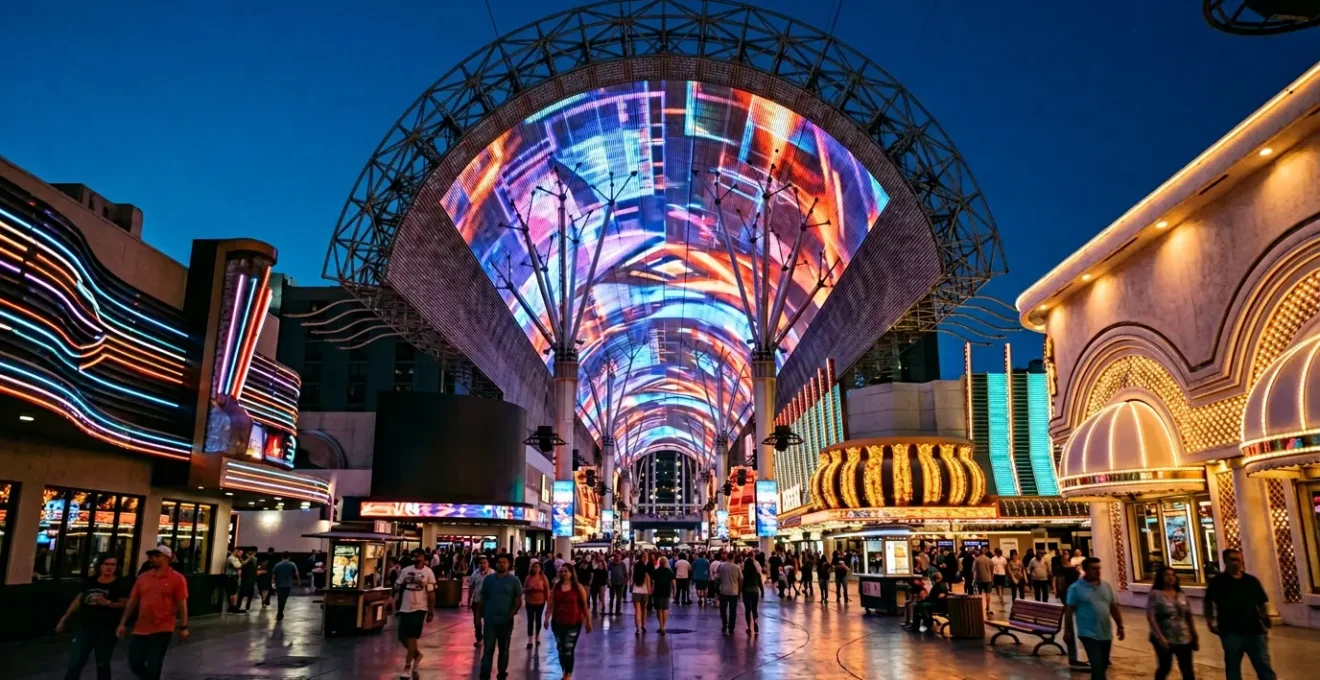
Forget what you’ve heard: Fremont Street isn’t just a cheaper version of the Strip; it’s a completely different operating system for experiencing Las Vegas.
- Success here isn’t about spending more, but about knowing the « hacks » for gambling, entertainment, and safety that tourists miss.
- The sensory overload is a feature, not a bug—if you know how to navigate it, it leads to a more authentic, interactive, and memorable Vegas adventure.
Recommendation: Treat your visit like an authenticity quest. Use this guide to move beyond the surface-level chaos and tap into the real, gritty, and incredibly fun soul of Downtown.
Let’s be real. The Strip is a spectacle. It’s a polished, choreographed, and fantastically expensive runway of curated experiences. But after a while, you might feel like you’re watching a movie instead of living in it. You hear about « Old Vegas, » a place with more grit, better odds, and a « real » vibe. That place is the Fremont Street Experience. But showing up unprepared is the fastest way to get overwhelmed, miss the magic, and retreat back to the familiar comfort of a $30 cocktail on Las Vegas Boulevard. Most guides will tell you the obvious: « see the light show, » « it’s cheaper. » That’s like saying the ocean is « wet. » It’s true, but it doesn’t help you learn to swim.
The truth? Fremont Street and the Strip are two different operating systems. One is a sleek, closed-off iOS ecosystem; the other is a chaotic, customizable, and infinitely more rewarding Android. Trying to use your Strip tactics here will just leave you frustrated. The sensory overload—the clashing music from three stages, the street performers, the zipliners screaming overhead, the neon glow of classic casinos—isn’t a flaw. It’s the whole point. But you need a local’s playbook to navigate it, to hack the system for maximum value and fun while sidestepping the classic rookie traps.
This isn’t a list of things to see. This is a survival guide. We’re going to break down the strategies for making your money last longer, skipping the worst lines, finding the best entertainment, and understanding the unwritten rules of the street. Forget being a tourist for a night; let’s make you a temporary local.
This guide provides a strategic playbook for navigating Downtown’s unique ecosystem. From financial hacks to cultural deep dives, the following sections offer a local’s perspective on how to truly conquer the Fremont Street Experience.
Summary: A Local’s Playbook for the Fremont Street Experience
- Why Your Gambling Budget Lasts 2x Longer on Fremont Street?
- How to Ride the SlotZilla Zipline Without Waiting in Line for 2 Hours?
- The Strip vs. Fremont Street: Which Offers the Best People-Watching?
- The Safety Mistake of Wandering East of Fremont East Entertainment District
- When to Arrive on Fremont to Catch the Best Live Bands Free?
- Headliner Theater vs. Dingy Club Showcase: Which is Funnier?
- Brewery Row vs. Strip Bars: Which Offers Better Craft Beer?
- Arts District Lifestyle: How to Experience the Local Hipster Scene of Vegas?
Why Your Gambling Budget Lasts 2x Longer on Fremont Street?
The most common praise for Downtown is that it’s « cheaper, » but that word doesn’t capture the strategic advantage you have here. It’s not just about lower prices; it’s about fundamentally better value and longer playtime. On the Strip, a $25 minimum bet at a blackjack table is standard. That’s a quick way to burn through a casual gambling budget. Here, the entire financial ecosystem is built on accessibility. You’re not just saving money; you’re buying time and experience.
The real difference is in the odds and the rules, a detail most tourists overlook. Downtown casinos are a living museum of player-friendly games that have been systematically phased out of the corporate-run Strip. A prime example is « full-pay » video poker. Finding a 9/6 Jacks or Better machine, which offers a 99.54% return-to-player (RTP), is like finding a unicorn on the Strip. Downtown, casinos like the California and El Cortez still proudly feature them. Playing on these machines means your money drains significantly slower, effectively doubling your entertainment time for the same bankroll.
For table games, the difference is just as stark. According to a 2024 survey, it’s common to find $3 to $10 table minimums at Downtown casinos. This allows you to sit down, learn a game, interact with the dealer and other players, and enjoy the thrill of gambling without the high-stakes pressure. It transforms gambling from a purely financial transaction into a social, entertaining experience. Your budget lasts longer not just because the numbers are smaller, but because the system is designed to let you play, not just pay.
How to Ride the SlotZilla Zipline Without Waiting in Line for 2 Hours?
The SlotZilla zipline is an iconic part of the Fremont sensory assault. Flying under the massive Viva Vision canopy is a must-do for many, but the biggest mistake tourists make is treating it like a walk-up attraction. Simply showing up at 8 PM on a Saturday night guarantees you a multi-hour wait in a slow-moving queue, killing your momentum and wasting precious time. The local’s approach is about strategic timing and understanding the crowd dynamics.
The single best hack is to book the first time slot of the day online. SlotZilla opens around noon, and by being in that first group, you bypass any pre-existing lines. You also get a unique view of Fremont before the evening chaos fully erupts. If you can’t make the first slot, the next best window is the mid-week « dead zone » between 2 PM and 4 PM. This is the awkward time after hotel check-ins but before the evening rush truly begins, resulting in the shortest walk-up wait times.
This image captures the nervous excitement just before the launch, a moment of calm before soaring over the chaos below.
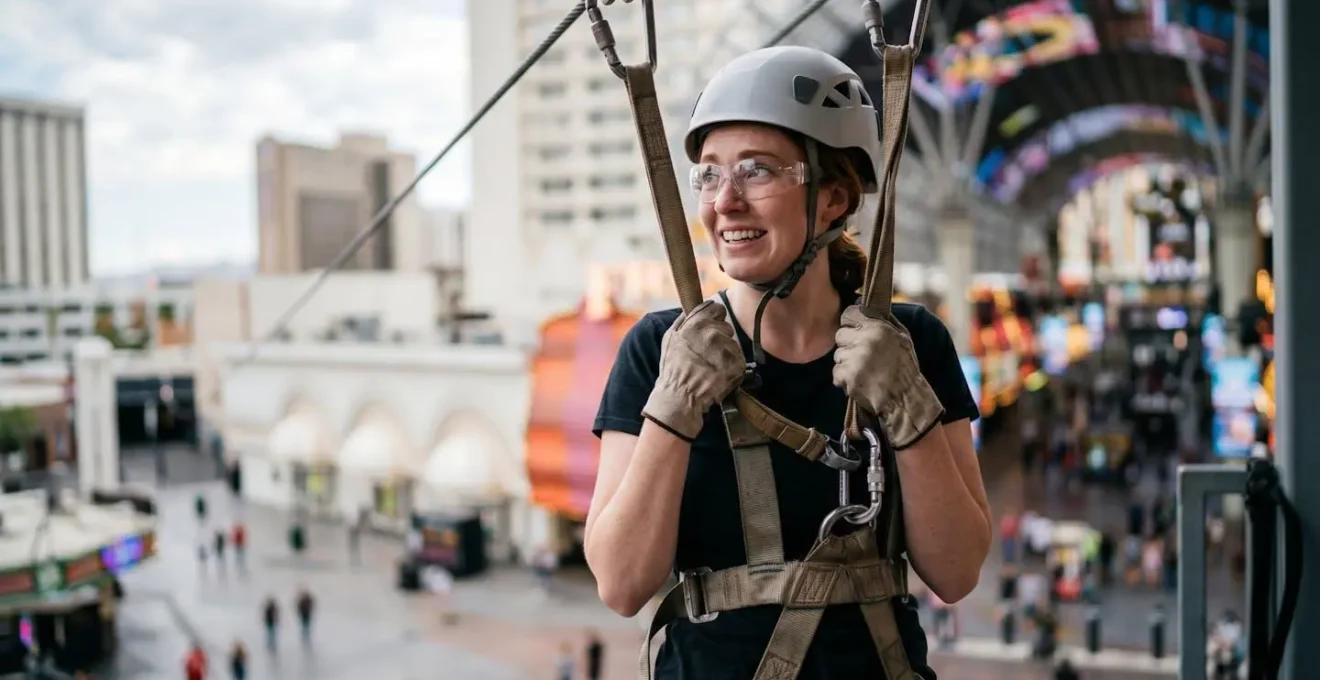
Another crucial choice is which line to take. Most visitors want the higher, « Superman-style » Zoomline, creating significantly longer queues for it. Opting for the lower, seated Zipline often means you can get on with a fraction of the wait. It’s still a thrilling ride over the crowds, and you’ll be back on the ground with a drink in your hand while others are still waiting to be harnessed up. The final pro-tip is a bit of a gamble: monitor the weather. Brief high-wind periods can temporarily shut down the ride, clearing out the lines. SlotZilla often re-opens faster than the crowds return, creating a golden window for immediate access if you’re nearby.
The Strip vs. Fremont Street: Which Offers the Best People-Watching?
People-watching is a prime Vegas sport, but the Strip and Fremont offer fundamentally different arenas. The Strip is a passive experience, like watching a fashion show from a distance. You’re on pedestrian bridges or behind velvet ropes, observing high-rollers, polished influencers, and tourists dressed for the club. It’s a visual spectacle of wealth and curated appearances. You are an observer, separated from the action.
Fremont Street is the opposite. It’s an interactive, immersive theater where the line between audience and performer is constantly blurred. You’re not watching from a safe distance; you are part of the show. The characters here are more eclectic and raw: professional cosplayers who pose for tips next to street magicians, gritty local bands, bachelorette parties navigating the chaos, and genuine vintage Vegas characters who look like they stepped out of the 1970s. The sensory input is multi-dimensional—you’re catching snippets of a dozen languages, hearing the overlap of three different live bands, and navigating the energy of the crowd.
This table breaks down the key differences in the experience, highlighting why Fremont is a superior ground for those seeking authentic, unscripted human interaction.
| Aspect | Las Vegas Strip | Fremont Street |
|---|---|---|
| Atmosphere | Passive runway – observe wealth and fashion from distance | Interactive theater – become part of the show |
| Character Types | High-rollers, tourists, club-goers, polished performers | Professional cosplayers, street magicians, locals, bachelorette parties, vintage Vegas characters |
| Sensory Engagement | Visual-focused, curated scenes | Multi-sensory: snippets of languages, music from 3 stages, street preachers, crowd energy |
| Best Vantage Points | Casino terraces, pedestrian bridges, Bellagio fountain area | D Casino 2nd-floor balcony, SlotZilla landing platform, stage areas |
| Interaction Level | Low – observe from safe distance | High – line between audience and performer constantly blurred |
To truly excel at Fremont people-watching, you need to find a good vantage point. The second-floor balcony of The D Casino offers a perfect bird’s-eye view of the chaos. Grabbing a spot near one of the stage areas or the SlotZilla landing platform puts you right in the flow of traffic. The key is to embrace the interaction. Here, a conversation with a costumed street performer or a shared laugh with a fellow tourist at a magic trick gone wrong isn’t an interruption; it’s the main event.
The Safety Mistake of Wandering East of Fremont East Entertainment District
Fremont Street is a bubble of light, security, and activity. Within its core pedestrian mall, from Main Street to about 8th Street, the area is heavily policed and populated, making it generally safe. The critical mistake tourists make is assuming this safety bubble extends indefinitely. It doesn’t. As a local, this is the most important piece of advice I can give: know your boundaries.
The Fremont East Entertainment District officially ends around 8th Street. Beyond this point, the tourist infrastructure—the open-front bars, the bright lights, the heavy foot traffic, and the visible police presence—abruptly decreases. The environment changes block by block. This isn’t to say there’s nothing of value further east, but you must navigate it with awareness, not naive curiosity. As one seasoned traveler on a forum aptly put it:
Fremont Street from Main to South Las Vegas is quite safe; but with few exceptions, a block either way, and things change rapidly.
– Travel forum community consensus, Fodor’s Travel Forum
This visual shows the transition, where the vibrant entertainment district gives way to a quieter, more residential and less-trafficked urban landscape at dusk.
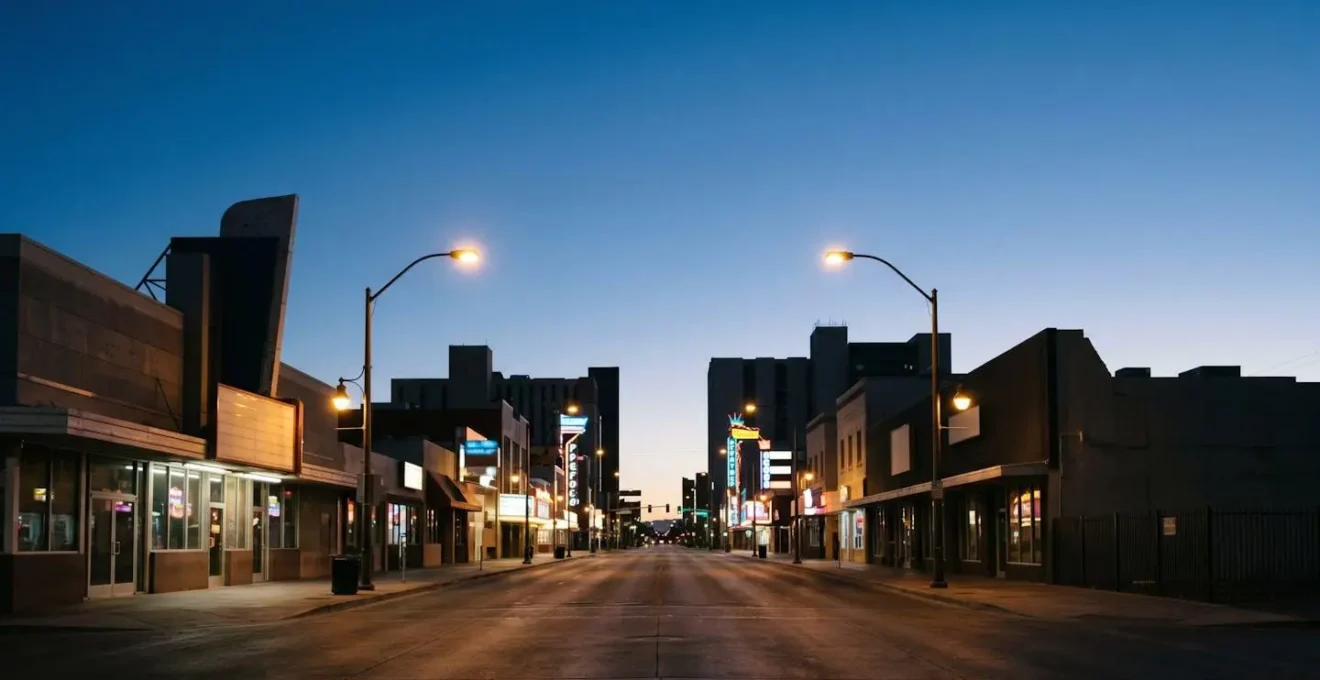
Navigating this area safely isn’t about fear; it’s about strategy. During daylight hours, exploring further east is generally fine. But as night falls, especially after 10 PM, the predictability drops. If you want to visit a specific dive bar or venue further east, don’t walk. Use a rideshare. This « rideshare bridge » tactic allows you to bypass the transitional zones completely. It’s about being smart, not scared. Being aware of your surroundings and learning to differentiate between benign local activity and potentially predatory behavior is a crucial urban skill, and it’s especially important here.
Your DTLV East-Side Safety Checklist
- Boundary Awareness: Recognize that the main tourist zone ends at 8th Street. Beyond this, police patrols and open businesses become sparse.
- Time-Based Risk Assessment: The area east of 7th Street is generally safe before 2 PM, but becomes unpredictable after 10 PM. Avoid walking there after midnight unless you are a local.
- Rideshare Bridge Tactic: Use Uber or Lyft to travel to specific destinations further east, completely avoiding walking through the unlit, transitional zones.
- Behavioral Recognition: Differentiate normal street life from predatory signs like individuals trying to isolate tourists or aggressively offering unsolicited « help. »
When to Arrive on Fremont to Catch the Best Live Bands Free?
The free live music is the beating heart of Fremont Street’s energy. With live music from 6:00 PM to 1:00 AM nightly across three stages, you’re guaranteed a show. But the difference between catching a forgettable cover band from the back of a crowd and getting a front-row spot for an amazing 90s rock act is, once again, all about timing and strategy.
The number one local secret is the soundcheck window. Arrive between 5:00 PM and 6:00 PM. The headlining bands are often on stage doing their soundchecks. You get a mini-concert with a fraction of the people, and more importantly, you can stake out a prime viewing spot for their actual set later. You can grab a drink from a nearby bar and relax while the crowds slowly build around you.
Next, you need to decode the stages. While the schedule can vary, there’s a general hierarchy. The 1st Street Stage often features generic cover bands. The Main Street Stage has more variety. But the 3rd Street Stage, located near The D Casino, is typically where the biggest and best throwback bands perform, especially for their later, primetime sets. If you only have time for one band, make it one on this stage. Use the official Fremont Street Experience app or website to see the schedule, and plan a stage-hopping route. You can create your own mini-festival by catching 30 minutes of a rock band, then moving to a pop tribute act, then to a country group.
A final pro-tip is to use the Viva Vision light show to your advantage. The massive crowds on the street often stop dead in their tracks and look up during the hourly show. Immediately after it ends, there’s a 10-minute window of dispersal and confusion. Use this moment to reposition yourself and move closer to the stage before the next band’s set begins and the crowd solidifies again.
Headliner Theater vs. Dingy Club Showcase: Which is Funnier?
Vegas is a comedy town, but like everything else, there’s the Strip version and the Downtown version. On the Strip, you’ll pay $100+ to see a famous headliner in a massive, plush theater. The show will be polished, professional, and designed to please a broad audience. The material will be safe. You know exactly what you’re getting: a high-quality entertainment product.
Downtown offers a completely different proposition: the comedy showcase. Found in the back of a bar or a small, dedicated club in the Fremont East district, these shows feature 5-7 working comedians for a fraction of the price—often just a $20 ticket or a two-drink minimum. This isn’t about seeing someone you already know from a Netflix special; it’s about discovery. This is where you might see the « next big thing » before they’re famous, honing their craft in front of a volatile, unpredictable audience of locals, punks, tourists, and gamblers.
The comedy itself is sharper, more original, and higher risk. A comedian might try out new, edgy material that could be brilliantly funny or bomb spectacularly. That risk is part of the appeal. You’re not just a passive consumer of entertainment; you’re a participant in the creative process. This table breaks down the fundamental choice you’re making:
| Factor | Strip Headliner Theater | Downtown Comedy Showcase |
|---|---|---|
| Ticket Cost | $60-150+ per person | $20-40 for full showcase (often 2-drink minimum instead) |
| Comedians | 1 established headliner | 5-7 working comedians per showcase |
| Audience Mix | Homogenous theater crowd, tourists | Volatile mix: locals, punks, tourists, gamblers creating unpredictable energy |
| Comedy Style | Polished, crowd-pleasing, safe material | Sharper, more original, higher risk – could be brilliant or bomb |
| Experience Type | Professional entertainment consumption | Micro-adventure and authentic culture quest |
| Discovery Potential | See established act you already know | Find ‘next big thing’ before they’re famous |
Choosing a Downtown comedy show is choosing a micro-adventure. It’s an authentic culture quest. It might be the funniest night of your trip, or it might be memorably awkward. Either way, it will be a real, unpolished experience that you can’t get in a 2,000-seat theater on the Strip. It’s a vote for raw talent and the thrilling uncertainty of live art.
Brewery Row vs. Strip Bars: Which Offers Better Craft Beer?
If you’re a craft beer fan, the Strip is a desert. The casino bars are locked into corporate distribution contracts with major beverage companies. You’ll find the same handful of national craft brands and a lot of macro lagers, all at inflated prices. To find Vegas’s real beer scene, you have to go Downtown, specifically to the Brewery Row in the adjacent Arts District.
This is not just about finding different beer; it’s about a different culture. Here, you can embark on a walkable ale trail and taste beer that was brewed 50 feet from where you’re sitting. You can talk to the brewers, see the tanks, and experience a passion for craft that is impossible to find in a casino bar. The experience is tactile and authentic, a world away from having a bartender pull a generic tap handle.
A tasting flight in the Arts District is a visual and flavorful journey, showcasing the creativity of local brewers, from hazy IPAs to rich stouts.
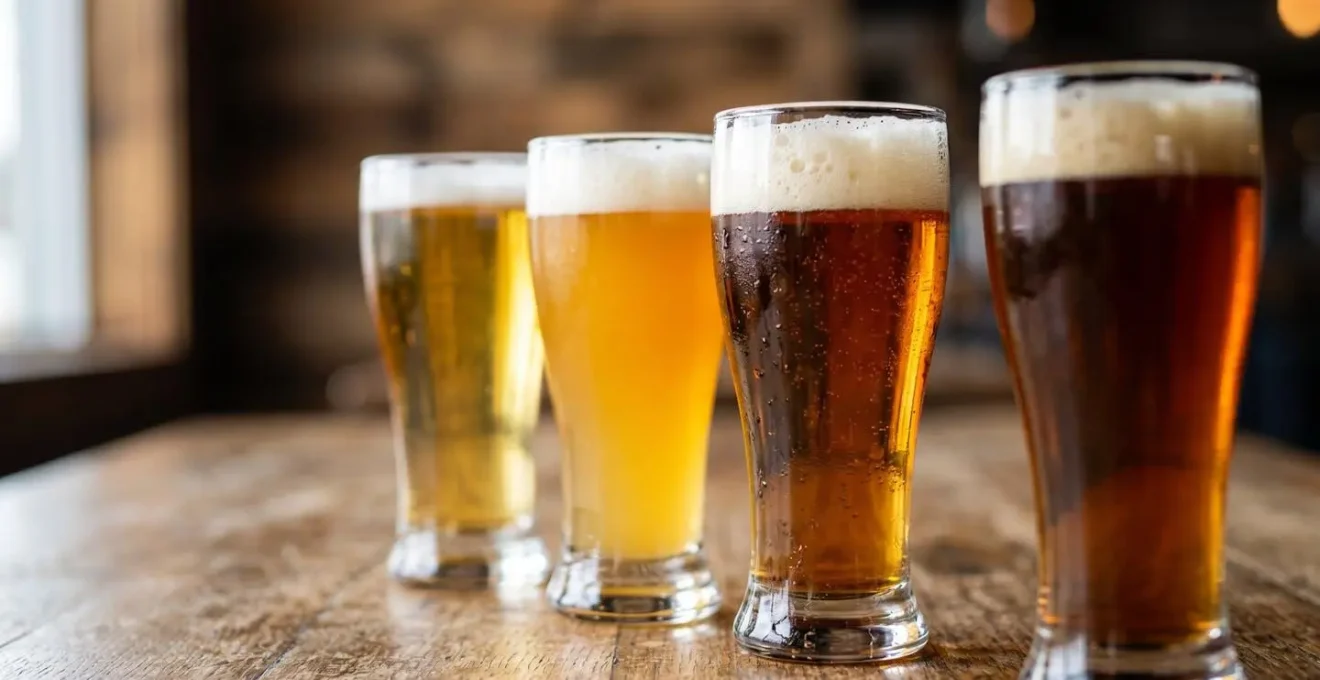
A perfect walking tour starts at HUDL Brewing for their experimental sours, moves to the hop-forward IPAs at Able Baker Brewing, and then finishes with the classic, approachable styles at Nevada Brew Works. Each stop offers a different philosophy and flavor profile. These breweries often use hyper-local ingredients, like desert herbs or local honey, creating beers that are a true taste of Nevada. This journey is a tangible connection to the local community and its creators. It’s choosing to support local artisans over multinational corporations, and your palate will be rewarded for it.
Walkable Ale Trail: Your Arts District Itinerary
- Start North: Begin at HUDL Brewing to sample their specialty sour beers and unique experimental brews, challenging your palate from the start.
- Move South: Head to Able Baker Brewing, known for its bold, hop-forward IPAs and classic West Coast styles—a perfect contrast.
- Progress to the Core: Visit Nevada Brew Works for well-crafted American styles like pale ales and traditional lagers, offering a comforting and familiar reset.
- Strategic Framework: This route allows you to taste beers directly from the source, meet the makers, and discuss local ingredients, an experience the Strip simply cannot offer.
Key Takeaways
- Value is More Than Price: Your gambling budget lasts longer Downtown due to better odds and lower minimums, not just cheaper drinks.
- Timing is Everything: Hacking Fremont Street means knowing when to show up—for the zipline, for the best bands, and for gallery browsing—to avoid crowds and get a better experience.
- Embrace the Interactive Theater: Unlike the passive observation of the Strip, Fremont’s best feature is its immersive chaos. The goal is to participate, not just watch.
Arts District Lifestyle: How to Experience the Local Hipster Scene of Vegas?
The final piece of the Downtown puzzle lies just south of Fremont: the Arts District. This is the heart of local, « hipster » Vegas, and experiencing it correctly is the ultimate graduation from tourist to insider. This isn’t a place you « see »; it’s a place you « do. » It requires shedding the passive observer role and adopting the rhythm of the neighborhood.
The perfect day-to-night immersion starts in the afternoon. Settle into a coffee shop like Makers & Finders around 2 PM. This isn’t just about caffeine; it’s an observation post. You’ll see local artists, remote workers, and neighborhood residents. You absorb the relaxed pace, a stark contrast to Fremont’s frantic energy. From there, it’s time for gallery browsing, but with a new approach. Instead of asking « How much is this? » which flags you as a transactional tourist, ask the gallery owner, « What’s the story behind this piece? » This simple question transforms you from a customer into a curious participant and opens up genuine conversation.
As evening approaches, the experience continues with food and drink. Have dinner at a locally-owned, farm-to-table spot like Esther’s Kitchen. This reinforces the connection to community and craft that defines the area. Finally, cap the night with a cocktail at a speakeasy-style venue. By staying within the Arts District for the entire evening, you achieve a full, immersive experience in an authentic neighborhood, miles away from the Strip’s manufactured reality. For a true pro move, aim for « Preview Thursday, » the night before the massive « First Friday » street festival. This is when serious collectors and locals browse the new gallery shows in relative peace before the tourist hordes descend.
By following this playbook—from the gambling tables to the art galleries—you are no longer just a visitor passing through. You are actively participating in the vibrant, gritty, and authentic culture of Downtown Las Vegas. The next step is to get out there and write your own story.