
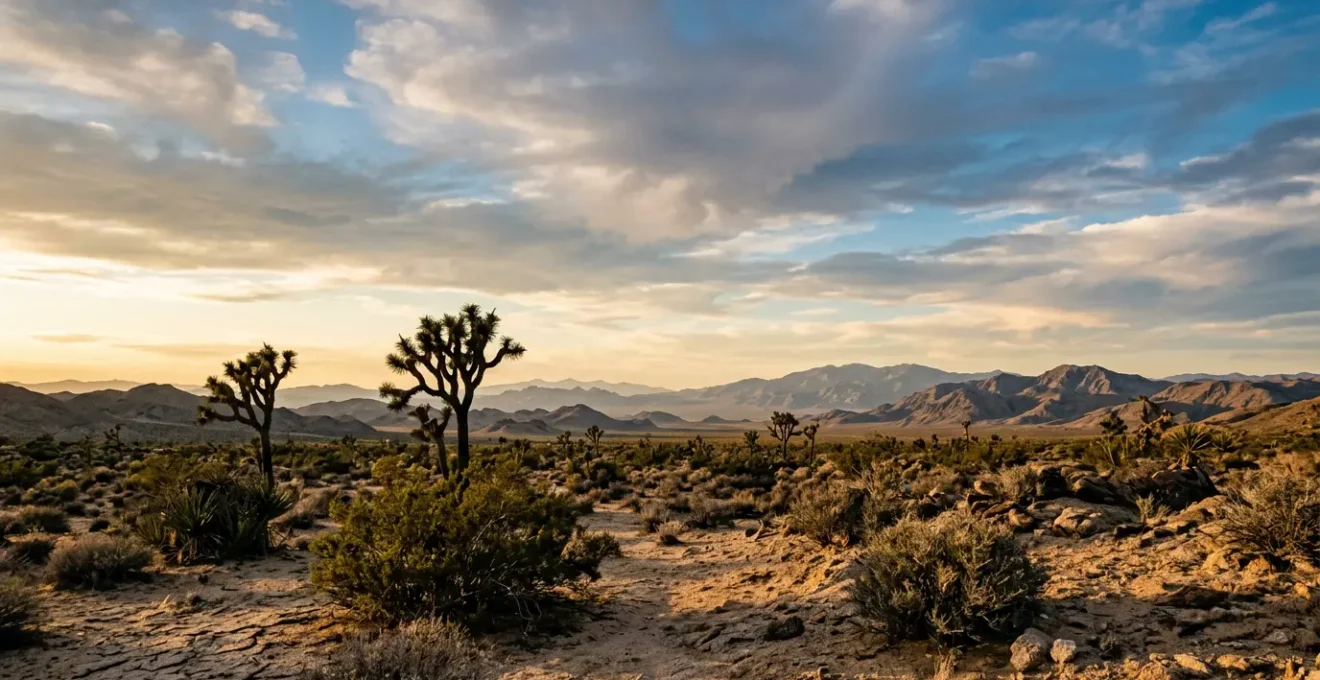
Successfully navigating the Mojave isn’t just about having a 4×4; it’s about shifting your mindset from tourist to tactician.
- Vehicle choice and setup (clearance, tires) are a direct response to the desert’s unforgiving terrain, not just a matter of preference.
- Seemingly empty landscapes are governed by powerful forces—from flash floods in dry washes to the hidden life that emerges at night.
Recommendation: Before you go, learn to read the landscape, understand the sky, and develop mechanical empathy for your rig. That’s the real key to both survival and adventure.
The Mojave Desert is not a park. It’s a vast, untamed expanse that challenges you, changes you, and demands your respect. Many adventurers arrive with a powerful rig and a thirst for excitement, thinking that’s enough. They follow the common advice: pack extra water, tell someone your route, and stay on the trail. While that’s a start, it’s surface-level thinking. It’s a checklist for tourists, not a mindset for true explorers.
This approach often misses the fundamental truth of the wilderness: the rules aren’t arbitrary. They are written by the land itself. But what if the key to a successful, and responsible, expedition wasn’t just following rules, but understanding the deep, ecological and physical logic behind them? What if you could learn to read the desert’s subtle warnings and appreciate its hidden complexities?
This guide is built on that principle. We’ll move beyond the basics to give you an instructor’s perspective on what it truly means to be prepared. We’ll cover the mechanical necessities dictated by the terrain, the environmental signs you must learn to interpret, the critical timing for both safety and spectacle, and the ethical considerations that separate a respectful explorer from a careless visitor. This is your briefing on how to engage with the Mojave on its own terms.
This article breaks down the essential knowledge every responsible off-roader needs to master. From vehicle requirements to understanding the desert’s most subtle and deadly threats, the following sections will equip you with a deeper level of preparedness.
Summary: A Tactical Guide to the Mojave Wilderness
- Why You Need High Clearance to Drive the Mojave Road?
- How to Find Scorpions with UV Light at Night?
- ATV vs. Dune Buggy: Which Offers the Best Adrenaline Rush?
- The Deadly Risk of Camping in Dry Washes During Monsoon Season
- When to Drive Out for the Darkest Skies and Milky Way Views?
- Reno vs. Las Vegas: Which City Holds the True Soul of the State?
- When to Visit to Avoid the Jet Ski Crowds on Weekends?
- Aztec Sandstone: How to Photograph the Valley of Fire’s Colors?
Why You Need High Clearance to Drive the Mojave Road?
Out here, the trail dictates the vehicle, not the other way around. Talk of « high clearance » isn’t about looking tough; it’s a direct conversation with the terrain. The Mojave Road is littered with embedded rocks, deep sand ruts, and unpredictable washouts that will tear the underbelly out of a standard SUV. This is where mechanical empathy begins—understanding that your vehicle has vulnerable parts like the oil pan, transfer case, and fuel tank that need protection. Think of skid plates not as an upgrade, but as essential armor.
While some tour operators suggest a minimum of 8 inches of ground clearance is required, that’s the bare minimum for entry. The real-world capability comes from a combination of factors. Your tire size is critical; a minimum 33-inch all-terrain tire does more than just lift you up. It increases your contact patch for better flotation on sand and allows you to roll over obstacles that would halt a smaller wheel. For more aggressive sections, especially with deep sand or water crossings like the one at Afton Canyon, you need to think bigger—35-inch tires and a full recovery kit are not overkill, they are your insurance policy against a very long, expensive walk.
Don’t be the person who thinks their all-wheel-drive crossover can handle it. Low-clearance vehicles are a liability to themselves and to others who may have to pull them out. Respect the road by bringing a capable rig, and the road might just respect you back.
How to Find Scorpions with UV Light at Night?
The desert that seems dormant during the day comes alive at night, and one of its most fascinating displays is the otherworldly glow of a scorpion under ultraviolet light. This isn’t magic; it’s a feature of their biology. A chemical in their exoskeleton’s hyaline layer fluoresces, turning them into glowing specters. To witness this, you need the right tool. A cheap purple party light won’t cut it. You need a UV-A flashlight, as research shows the optimal glow is triggered around the 365 nm wavelength. This specific frequency makes their armor pop with a brilliant cyan-green against the dark sand.
Finding them is a game of patience. Walk slowly, scanning the ground a few feet ahead of you. Check around the base of bushes, near rocks, and in small depressions where they might be hunting or waiting in ambush for prey. The experience is a powerful lesson in the ecosystem logic of the desert—what seems like an empty patch of sand is a bustling hunting ground for these ancient predators.

However, observing comes with a responsibility. Remember you’re a visitor in their home. The UV light can be stressful and potentially harmful to them with prolonged exposure. The goal is to observe, not to harass. A quick look to appreciate their alien beauty is fine, but don’t linger. Acknowledge their presence, appreciate the sight, and move on, leaving them to their nightly business. It’s about respect for the life that thrives in this harsh environment.
ATV vs. Dune Buggy: Which Offers the Best Adrenaline Rush?
The question of « which is better » for a thrill is asking the wrong question. An instructor asks, « What’s the right tool for the job? » Both an All-Terrain Vehicle (ATV) and a dune buggy will get your heart pounding, but they offer fundamentally different experiences tailored to different terrains and mindsets. It’s about matching the machine to the mission and understanding the « Zone of Respect » you’re operating in.
An ATV is a nimble, aggressive machine. It puts you in direct contact with the trail—you feel every bump and shift. It’s built for agility, excelling on narrow, winding paths and mixed rocky terrain where its smaller size is a huge advantage. The adrenaline rush comes from active control; you’re using your body weight to balance and steer, making you a part of the machine. It’s a solo, high-intensity experience. The dune buggy, by contrast, prioritizes stability and group enjoyment. With its wider base, roll cage, and seatbelts, it’s designed for the wide-open sand dunes. It lets you power through deep sand and climb steep faces with more confidence and safety, making it a better choice for beginners or families.
The choice ultimately reveals your mission’s profile. Are you seeking a raw, one-on-one challenge with the terrain, or a powerful, stable ride through vast landscapes? As the following breakdown shows, each has its place.
| Criteria | ATV | Dune Buggy |
|---|---|---|
| Best Terrain | Narrow trails, rocky paths, mixed terrain | Open desert dunes, wide sand stretches |
| Stability | Requires rider balance and control | Wider base provides superior stability |
| Environmental Impact | Lighter, less fuel consumption, but more frequent dune damage due to sharp turns | Heavier, more fuel consumption overall |
| Safety Features | Minimal protection, requires skill | Roll cages, seatbelts, stable frame |
| Rider Experience | Solo thrill-seekers, adrenaline junkies | Families, beginners, group rides |
| Speed & Agility | Faster, more agile on desert terrain | Prioritizes stability and comfort over top speed |
As this comparative analysis for desert tours shows, the best adrenaline rush comes from using the right vehicle for the right environment, pushing its capabilities responsibly.
The Deadly Risk of Camping in Dry Washes During Monsoon Season
Of all the mistakes a newcomer can make, this is the one that can get you killed the fastest. A dry wash, or arroyo, looks like a perfect campsite: it’s flat, sandy, and sheltered from the wind. This is a deadly illusion. A wash is not a campsite; it’s a riverbed that just happens to be dry. During monsoon season—typically July through September—the sky can be clear above you while a storm miles away is dumping a torrential amount of rain into the same drainage system. That water travels fast, and it comes as a wall of debris, mud, and power.
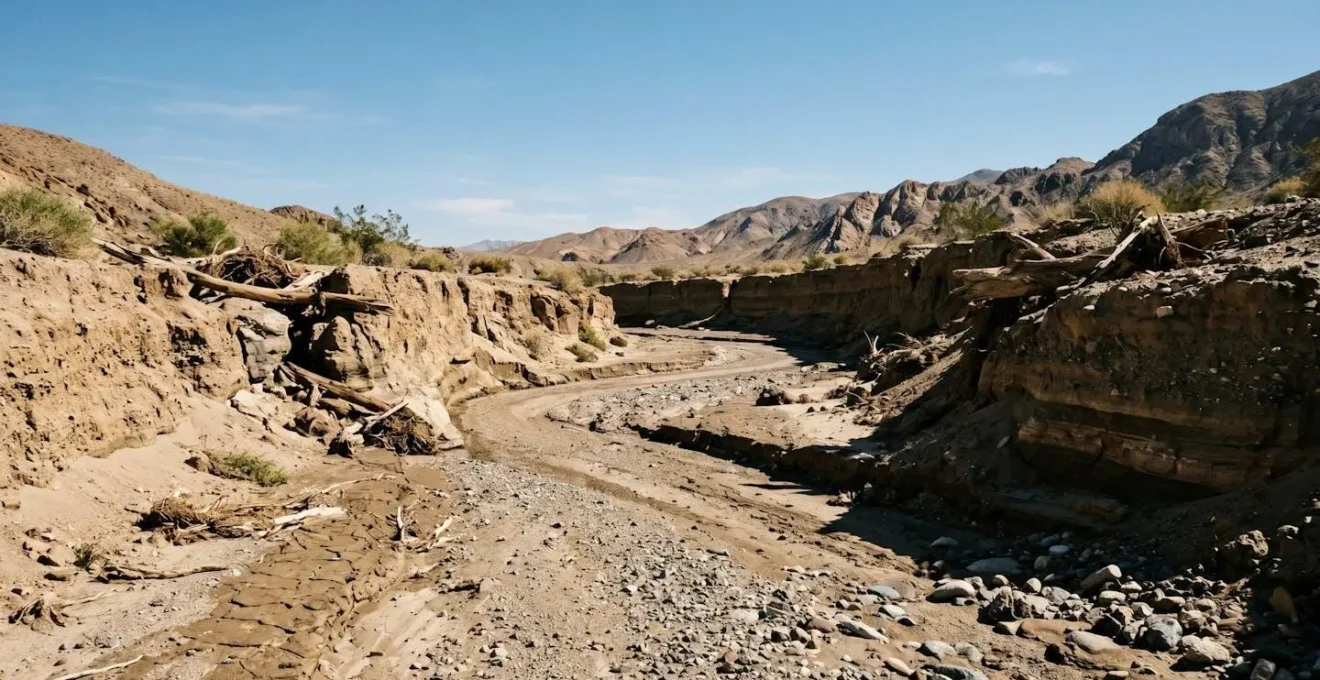
This isn’t a rare phenomenon; flash floods are a primary shaper of the desert landscape and a consistent threat. The U.S. National Weather Service reports that an average of 127 people die yearly in floods, many of them in situations just like this. Your first line of defense is sky discipline—constantly monitoring weather conditions and understanding that a distant cloud can mean immediate danger. Your second, and more important, line of defense is learning to read the land. A wash gives you all the clues you need to know its power: look for debris like logs caught high up on the banks, notice the scoured sides, and see how the vegetation has been stripped away. These are the high-water marks of a force you do not want to challenge.
Action Plan: Reading the Landscape for Flash Flood Danger
- Identify the Flow Path: Look for bald, sandy swaths that cut across the desert floor. This is where water has scoured away all plant life, clearly marking its territory.
- Check for High-Water Marks: Scan the steep sides of washes for lodged logs, boulders, or piles of organic debris. Their height on the canyon wall tells you exactly how deep the water has been.
- Assess Escape Routes: Recognize that slot canyons are river beds with no easy way out. Before entering any wash, even for a short hike, always identify multiple high-ground escape routes.
- Park High, Camp Higher: Never park your vehicle or set up camp inside a wash, no matter how clear the sky. The convenience is not worth the risk. Always choose higher ground.
- Monitor the Monsoon Clock: Be hyper-vigilant during monsoon season (July-September). Most flash floods are triggered by intense afternoon thunderstorms, so plan your activities accordingly.
Never, under any circumstances, camp in a dry wash. It is the single most dangerous gamble you can take in the desert.
When to Drive Out for the Darkest Skies and Milky Way Views?
Part of the Mojave’s allure is its profound emptiness, and nowhere is that more apparent than when you look up at night. The desert offers some of the last truly dark skies in the country, a world away from the light-polluted domes of Las Vegas and Los Angeles. To get the most out of this celestial theater, timing is everything. It’s an exercise in sky discipline that involves planning around both natural and man-made light.
First, you need to defeat the moon. A full moon is like a giant flashlight in the sky, washing out all but the brightest stars and completely obscuring the faint, delicate structure of the Milky Way. Plan your trip for the week surrounding the new moon. Use a lunar calendar and aim for nights when the moon sets early or rises late. Second, you need to understand the Milky Way’s own schedule. The brilliant, dense core of our galaxy is a summer object. For the most dramatic views, you’ll want to be out from late spring through early fall. In the spring, the core rises in the early morning hours, while by late summer, it’s visible right after dusk.
Finally, location is key. Even within the desert, some spots are better than others. The Mojave National Preserve is a designated dark sky area, intentionally protected from artificial light. Getting deep into its interior, far from the distant glow of towns like Barstow, is your goal. This is where you can witness not just the Milky Way, but also faint nebulae, meteor showers, and the elusive Zodiacal Light—a faint cone of light visible after sunset or before sunrise, a phenomenon only visible in the darkest, clearest of skies.
Reno vs. Las Vegas: Which City Holds the True Soul of the State?
When people think of Nevada, they picture the neon canyons of Las Vegas or the faded charm of Reno. But for the desert explorer, the true soul of this state isn’t in the casinos; it’s in the dusty, resilient outposts that cling to the edges of the vast wilderness. Towns like Baker in California, or Bullhead City and Yermo on the periphery, are the real heart of the Mojave. They are the logistical backbone of every successful expedition.
These aren’t tourist destinations. They are working towns that provide the essential trinity of desert travel: fuel, water, and provisions. An off-roader doesn’t see a run-down gas station; they see a critical refueling point that extends their range by a hundred miles. A small general store isn’t a quaint relic; it’s a lifeline for ice, food, and maybe a spare part you didn’t know you needed. According to guides, travelers on the Mojave Road rely on these towns, with Baker being a common departure point for a crucial mid-trip refuel.
Supporting these communities is a core part of responsible exploration. Spending your money here—filling your tank, buying supplies, grabbing a meal—is a direct investment in the infrastructure that makes your adventure possible. It acknowledges a symbiotic relationship. They provide the support; you provide the economic reason for them to exist. The soul of Nevada, for those who truly know the land, is found in the handshake with a mechanic in a one-garage town, not at a poker table on the Strip.
When to Visit to Avoid the Jet Ski Crowds on Weekends?
There are no jet skis on the Mojave Road, but the sentiment behind the question is one every serious explorer understands. « Jet ski crowds » is code for the casual, fair-weather masses that descend on any beautiful place during peak times, transforming solitude into a traffic jam. Avoiding them in the Mojave isn’t about being antisocial; it’s about preserving the very essence of the desert experience: silence, space, and self-reliance.
The first and most effective strategy is timing your visit by season. The Mojave is a place of brutal extremes. Summer temperatures regularly soar past 110°F, making travel dangerous and miserable. This natural barrier keeps most people away. As experienced overlanders recommend, the prime visiting season is from October to May. This, however, is also when the « crowds » are largest. October through April is the most popular period, so simply showing up on a Saturday is a recipe for company.
To find solitude during peak season, you need to be strategic. Mid-week trips are your best friend. A Tuesday in the desert feels a world away from a Saturday. Long holiday weekends, especially Thanksgiving and Memorial Day, are the absolute peak times and should be avoided if you’re seeking quiet. These weekends see large convoys of side-by-sides and other off-road vehicles. If you must travel during these times, venture onto the lesser-known, more challenging spur trails. The more technical the trail, the fewer people you’ll find on it. The ultimate goal is to find that sweet spot—good weather, but not so perfect that everyone else had the same idea.
Key Takeaways
- Your Vehicle is Your Lifeline: High clearance, all-terrain tires, and skid plates aren’t luxuries; they are a direct response to the Mojave’s terrain.
- Read the Unseen Dangers: A dry wash is a riverbed in waiting. Learn to read the signs of flash floods and never make your camp there.
- Respect the Inhabitants: The desert is full of life. Whether it’s a scorpion at night or a fragile plant, observe with respect and minimize your impact.
Aztec Sandstone: How to Photograph the Valley of Fire’s Colors?
The Aztec Sandstone of the Valley of Fire presents a unique challenge for photographers. It’s not just about capturing a picture; it’s about capturing a feeling—the ancient, fiery glow of rock forged over millennia. The secret isn’t in your camera’s settings, but in your timing and understanding of light. The harsh midday sun will bleach the colors, flattening the landscape into a washed-out scene. You are hunting for the « golden hours. »
Arrive before sunrise or stay until sunset. This is when the low-angle light ignites the iron oxide in the sandstone, bringing out the deep reds, oranges, and pinks. The light interacts with the rock’s texture, creating dramatic shadows that define its contours and give it depth. Look for compositions that use these leading lines and shapes to guide the eye. A wide-angle lens can capture the sweeping scale, but don’t forget a telephoto lens to isolate and compress distant layers of colored rock, creating abstract, painterly images.
But the most important part of photographing the desert has nothing to do with a camera. It’s about your footprint. As you seek the perfect shot, you are a guest in a fragile environment. The goal is to leave with nothing but photos and to leave behind no trace of your presence. This principle of preservation is the final, most crucial piece of gear you can bring.
Leave primitive campsites better than you found them: pack out all trash, even toilet paper.
– AllTrails guidance for Mojave preservation, Mojave Road OHV Trail regulations and etiquette
This ethos applies everywhere, not just at campsites. The perfect photograph is worthless if its creation scarred the landscape for the next generation.
Now that you understand the mindset, the next step is to apply it. Plan your trip, prepare your vehicle, and head out into the vast, beautiful, and demanding wilderness of the Mojave with the confidence of a seasoned explorer.