
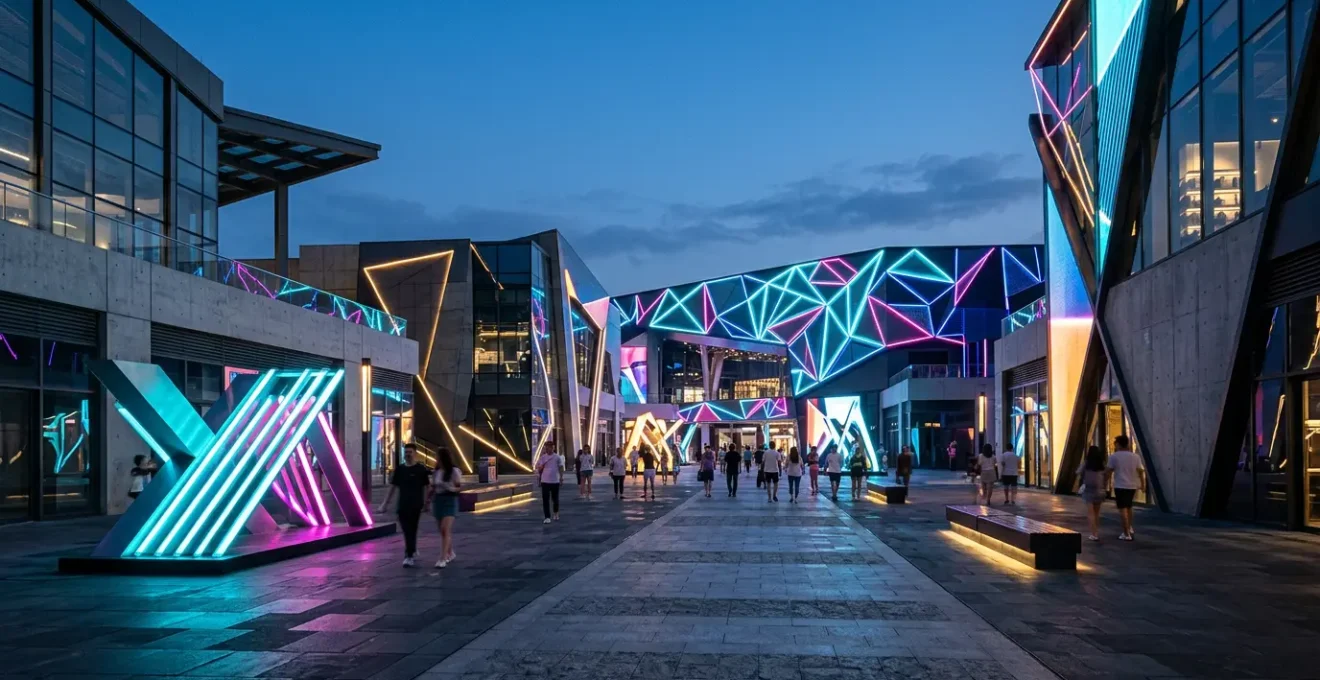
Navigating Las Vegas’s new immersive attractions like Area15 and The Sphere can be as confusing as it is intriguing.
- Success requires active participation, not just passive viewing—from decoding Omega Mart’s hidden story to managing vertigo in The Sphere’s steep seats.
- Choosing the right time, ticket, and experience type (VR vs. Escape Room) for your group is critical to avoid disappointment and wasted money.
Recommendation: Use this guide’s tactical tips to transform your visit from a chaotic sensory overload into a meaningful, unforgettable adventure.
You’ve seen the viral videos: a surreal supermarket where lemons are not what they seem, or a colossal eyeball-like structure dominating the Las Vegas skyline. Attractions like Area15, Meow Wolf’s Omega Mart, and the Sphere promise « immersive entertainment, » a buzzword that conjures images of futuristic wonder. Yet for many intrigued visitors, that promise is clouded by a fundamental question: « What am I actually supposed to *do* there? » The official descriptions are often abstract, leaving you to wonder if you’re walking into an art gallery, a theme park, or something else entirely.
The common advice to « buy tickets online » or « go with an open mind » is true, but it’s table stakes. It doesn’t prepare you for the sensory onslaught or the hidden layers of narrative waiting to be discovered. The real key to conquering these next-generation experiences isn’t just to see them, but to develop a strategy for engaging with them. The difference between a confusing, overwhelming visit and a mind-blowing one lies in shifting from a passive observer to an active participant.
This guide provides that strategy. We will break down how to approach each major experience, not as a tourist, but as an explorer. We’ll cover how to decode the deep story of Omega Mart, manage the physical challenges of The Sphere, choose the right activity for your group, and avoid the common pitfalls that can derail your meticulously planned itinerary. It’s time to turn confusion into a tactical advantage.
This article breaks down the essential strategies you need to navigate Las Vegas’s most advanced immersive worlds. From understanding hidden narratives to choosing the right experience for your group, the following sections provide a clear roadmap.
Summary: A Visitor’s Guide to Las Vegas’s Immersive Worlds
- Why You Need 3 Hours to Understand the Story of Omega Mart?
- How to Watch a Show at The Sphere if You Have Vertigo?
- VR Experience vs. Escape Room: Which Offers Better Group Engagement?
- The Risk of Buying Resale Tickets for Time-Slotted Attractions
- When to Visit Area15 to Avoid the « After Dark » Rave Crowd?
- 360-Degree Stage vs. Traditional: Which Offers the More Immersive Experience?
- Luxor Esports Arena or sphere-based events: Which Fits Your Game Style?
- Futuristic Worlds: How to Experience the Sci-Fi Side of Las Vegas?
Why You Need 3 Hours to Understand the Story of Omega Mart?
The biggest misconception about Meow Wolf’s Omega Mart is thinking of it as a walk-through art installation. It’s not. It’s an escape room, a live-action video game, and a piece of environmental theater all disguised as a bizarre grocery store. The « art » is just the surface level; beneath it lies a deep, satirical science fiction story about a megacorporation, Dramcorp, and a mysterious energy source. To simply wander through is to miss 90% of the experience. The real goal is a form of narrative archaeology: digging through the layers to uncover the plot.
Engaging with this story takes time. While a casual walk-through can be done in 90 minutes, fully grasping the central conflict requires a commitment of at least three hours. This is because the narrative isn’t presented to you; it must be actively pieced together by interacting with the environment. According to Area15’s official recommendations, visit durations can range from a quick look to a deep dive of several hours, depending on your level of engagement. To truly « complete » the story, you’ll need to read emails on employee computers, watch training videos, and connect clues between the physical and digital worlds.
Your Action Plan: The Narrative Archaeologist’s Strategy
- Obtain a ‘Boop’ card ($3) from an Omega Mart employee at the entrance to unlock the interactive narrative system.
- Find employee computer terminals throughout the installation and read emails and files to discover clues about Dramcorp and ‘The Source’.
- Use your Boop card at designated terminals to unlock specific content and create a ‘breadcrumb trail’ tracking your story progress.
- Follow clues to find physical objects or locations mentioned in the digital files, creating a loop between virtual and physical exploration.
- Interact with discovered objects to unlock the next piece of the story, progressively peeling back layers from surreal supermarket to deep sci-fi lore.
- Allocate at least 90 minutes for passive exploration, or 3-4 hours if you want to follow the central mystery to its resolution.
Think of your visit not as a tour, but as a quest. The time investment is directly proportional to the narrative payoff. Rushing through Omega Mart is like speed-reading the last page of a mystery novel—you might know the ending, but you’ll have missed the entire journey.
How to Watch a Show at The Sphere if You Have Vertigo?
The Sphere is an architectural and technological marvel, designed to overwhelm the senses with its 16K wraparound screen and beamforming audio. However, this same design creates a significant challenge for many visitors: vertigo. The seating is incredibly steep, creating a dramatic sense of height and scale that can be disorienting or even frightening for those sensitive to heights or motion sickness.
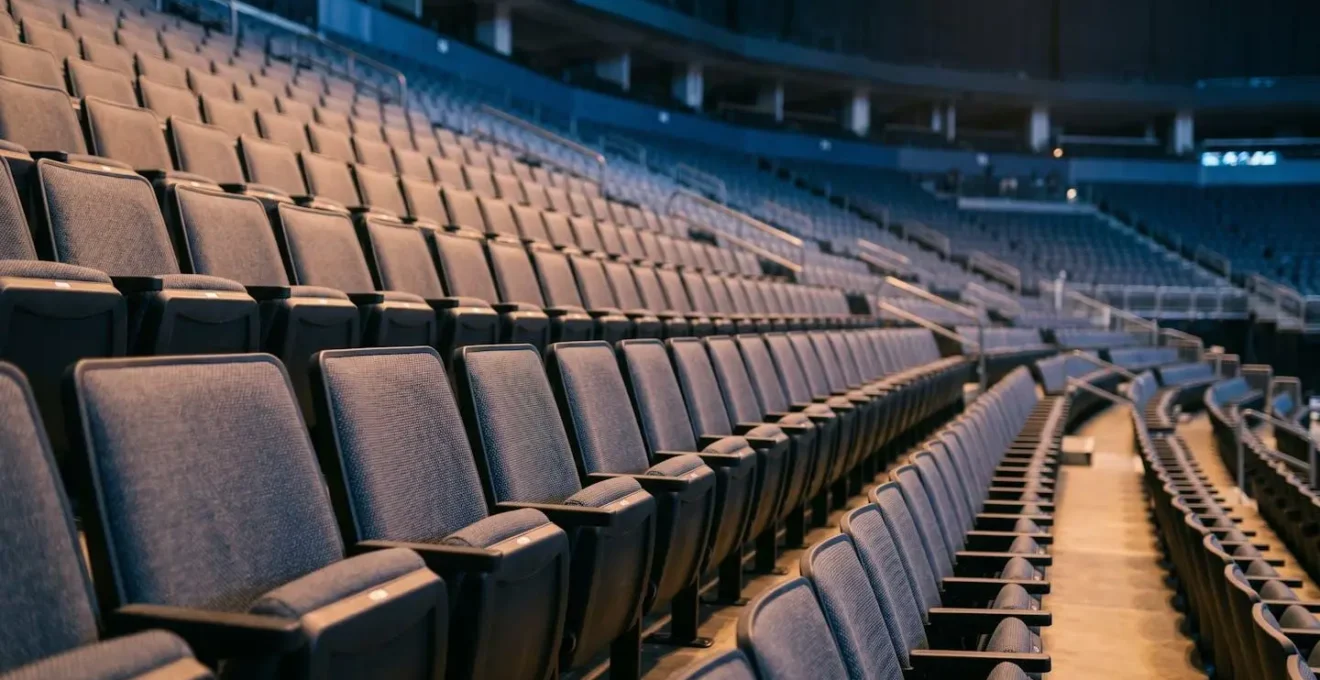
As the Las Vegas Wonders venue review team bluntly states in their seating guide for The Sphere, when discussing the upper levels, « The incline is very steep—if you have vertigo, you should definitely skip this level. » This isn’t just about comfort; it’s about being able to enjoy the show without anxiety. Fortunately, achieving sensory sovereignty—taking control of your experience—is possible with strategic planning. Your seat selection and pre-show preparation are the most powerful tools you have.
Your Action Plan: The Vertigo Management Checklist
- Book Smart: Choose seats in the 200 Level sections, which are less steep than the 300s and 400s. Opt for side sections (like 203 or 208) to reduce the overwhelming ‘wrap-around’ visual effect.
- Find Your Anchor: Practice the ‘Anchor Point’ technique. If the motion becomes disorienting, consciously focus on a fixed physical point like the stage edge or your own hands for 10 seconds to ground yourself.
- Prep Your Body: Avoid heavy meals, caffeine, or alcohol for at least two hours before the show, as they can significantly worsen motion sickness symptoms.
- Arrive Early & Ground Yourself: Use the time before the show starts to perform simple grounding exercises in your seat. Press your feet firmly into the floor and focus on slow, deep breathing.
- Know Your Show: For a film like ‘Postcard from Earth’ with constant full-screen motion, sticking to the 200 Level is crucial. For concerts, where performers provide a stable focal point, the 300 Level may be more manageable.
Managing vertigo at The Sphere isn’t about avoiding the immersion but about controlling its intensity. By choosing your seat wisely and preparing your body and mind, you can transform a potentially dizzying ordeal into the awe-inspiring experience it’s meant to be.
VR Experience vs. Escape Room: Which Offers Better Group Engagement?
Area15 and other modern attractions offer a dizzying array of group activities, but two of the most popular are Virtual Reality (VR) experiences and traditional escape rooms. While both promise « immersive fun, » they offer fundamentally different types of group engagement. Choosing the wrong one for your group’s dynamic can lead to a disjointed, frustrating experience. The key is to understand the engagement modality of each format: are you looking for convergent problem-solving or divergent individual discovery?
A traditional escape room forces convergent engagement. Everyone is in the same physical space, focused on solving a single, unified set of puzzles. Communication is constant, chaotic, and crucial. In contrast, most VR experiences foster divergent engagement. Each person is in their own virtual world, experiencing it in parallel with others. They share discoveries through headsets, but the core experience is individual. This distinction is critical for setting expectations.
The following table, adapted from an analysis of escape room dynamics, breaks down this framework to help you choose the right path for your team.
| Engagement Factor | Escape Rooms | VR Experiences |
|---|---|---|
| Interaction Type | Convergent engagement: working together on one unified problem with real-time face-to-face communication | Divergent engagement: experiencing a virtual world in parallel, sharing individual discoveries through avatars |
| Communication Style | Heavy communication during gameplay; essential for puzzle-solving; picks up on body language and subtle cues | Reduced spontaneous interaction; communication happens through headsets; limited non-verbal cues |
| Post-Experience Story | Procedural stories: ‘Then you found the key…’; focuses on shared problem-solving journey | Anecdotal stories: ‘Did you see the dragon!?’; focuses on individual awe moments and discoveries |
| Less-Active Participant Role | Risk of feeling left out if not contributing to puzzle solutions; no spectator mode | Can watch others’ gameplay on external screens; offers different form of shared engagement for spectators |
| Best For | Highly competitive groups; those who want continuous talking during activity; corporate team-building | Tech-forward groups; those prone to motion sickness can opt out; gaming enthusiasts |
| Group Size | Typically 4-8 players; larger groups possible | Usually 2-6 players; smaller optimal group size |
Academic Insight: Collaboration Boosts VR Engagement
Don’t discount VR for team building entirely. A 2025 research study published in the journal Future Internet explored collaboration in VR escape rooms. The findings were clear: learners working in pairs showed significantly higher engagement and active participation compared to those playing alone. Participants reported a deeper sense of social connection and motivation, proving that when designed for it, VR can create powerful collaborative moments. One participant noted, « I had so much fun. It is actually the first time ever that I was so motivated, » highlighting VR’s potential for shared joy.
Ultimately, the « better » option depends entirely on your group’s goal. If the aim is a shared, tangible victory achieved through constant interaction, an escape room is likely the superior choice. If the goal is to experience individual wonder and share those « wow » moments afterward, VR delivers an unparalleled futuristic thrill.
The Risk of Buying Resale Tickets for Time-Slotted Attractions
In the world of sold-out shows and experiences, the resale market can seem like a convenient backdoor. However, for time-slotted, technology-driven attractions like Omega Mart or The Sphere, buying from a third-party reseller is one of the biggest gambles you can take on your vacation. The risk isn’t just financial; it’s logistical. A fake ticket doesn’t just cost you money; it can trigger a catastrophic itinerary domino effect, derailing an entire day’s worth of plans and reservations.
Modern venues have moved far beyond simple paper tickets. They employ sophisticated digital systems designed to combat fraud, which unfortunately makes many well-intentioned resale purchases invalid. As a Wikipedia overview on the topic notes, a common issue is dealing with scam artists selling fake tickets to unsuspecting buyers or, even worse, selling a valid ticket that has already been scanned. Understanding the technology is your best defense.
One common concern with resale is with scam artists selling fake tickets to unsuspecting buyers. Another common scalping practice is to sell tickets that have already been scanned at the venue gate.
– Wikipedia contributors, Ticket resale overview article
Before you even consider a resale site, be aware of these technology-based red flags that could turn your must-see experience into a no-entry disaster:
- Static vs. Dynamic QR Codes: Many venues, including those using Ticketmaster, now use dynamic QR codes that refresh every few seconds within their official app. A screenshot or PDF of a QR code from a reseller is often a dead giveaway that the ticket is fake or will be invalid.
- ‘Name on Ticket’ Policies: For high-demand events, especially « After Dark » parties at Area15, venues may perform ID checks. If the name on the ID doesn’t match the original purchaser’s name on the ticket, you will be denied entry, regardless of how much you paid the reseller.
- Pre-Listed Tickets: A common practice among brokers is to sell tickets they don’t even own yet, speculating on demand. This can leave you with a confirmation for a ticket that never materializes or one with an invalid code.
- The True Opportunity Cost: The real loss of a fake 2 PM Omega Mart ticket isn’t the $50 you spent. It’s the irretrievably lost experience and the chaos it causes for your subsequent 5 PM dinner reservation and 8 PM show. Your entire day’s itinerary architecture collapses.
The cardinal rule for these attractions is simple and absolute: buy directly from the venue (Area15.com, TheSphere.com) or their official primary ticketing partner (like Ticketmaster). The potential savings from a resale site are never worth the risk of being turned away at the gate.
When to Visit Area15 to Avoid the « After Dark » Rave Crowd?
Area15 markets itself as an « experiential retail and entertainment complex, » a description that brilliantly obscures a key fact: the venue has two distinct personalities. By day, it’s a family-friendly wonderland of art, VR, and exploration. But after 9 PM, particularly on weekends, it transforms into « After Dark, » a 21+ nightlife hub with DJs, cocktails, and a high-energy party atmosphere. Misunderstanding this transition is the easiest way to have a jarring experience. Choosing the right time to visit is a crucial act of itinerary architecture.
The vibe shift is not subtle. The music gets louder, the lighting becomes more intense, and the crowd’s energy changes completely. For visitors seeking a relaxed, sensory-friendly exploration or families with children, arriving after the transition can be overwhelming and inappropriate. Conversely, for those seeking a futuristic rave, arriving too early will feel disappointingly tame. The key is to align your visit with the venue’s atmospheric schedule.
The following breakdown, based on Area15’s typical programming, can help you strategically select your ideal time window.
| Time Window | Crowd Vibe | Best For | Energy Level | Sensory Intensity |
|---|---|---|---|---|
| Weekdays 12 PM – 5 PM | Family Explorer | Families with children, photography enthusiasts, those seeking relaxed exploration | Low to Moderate | Low (natural lighting, minimal music volume) |
| Weekends 6 PM – 9 PM | Date Night & Friends | Couples, small friend groups, dinner + entertainment combo visitors | Moderate to High | Moderate (enhanced lighting, curated music) |
| After 9 PM (After Dark) | Party & Music | 21+ nightlife seekers, electronic music fans, high-energy social experiences | Very High | Very High (strobe lights, loud bass, crowd density) |
| Friday 4 PM – 7 PM (Shoulder Hours) | Savvy Transition | Those wanting main attractions without extreme crowds or nightlife intensity | Moderate | Moderate (transitioning from day to night atmosphere) |
| Tuesday/Wednesday 2 PM – 6 PM | Sensory-Friendly | Neurodivergent visitors, those with anxiety, sensory processing sensitivities | Low | Lowest (least aggressive volume and light) |
Your Action Plan: The Crowd Management Checklist
- Check the Calendar First: Before booking anything, visit the official Area15 events calendar 1-2 weeks in advance. Look for major DJ sets or corporate buyouts that will dramatically increase crowd density.
- Identify Nightlife Events: Specifically look for « Oddyssey Noir » or other named late-night events on Fridays and Saturdays (10 PM – 3 AM). These are premium, ticketed parties that transform the venue.
- Target Off-Peak Days: Consider Tuesday through Thursday as your prime « exploration » days, as major events are less frequent and the family-friendly atmosphere persists longer.
- Book Attractions Early: If your main goal is Omega Mart or a specific VR experience, book your time slot for the early afternoon (12 PM – 2 PM) on a weekday to ensure the calmest environment.
- Avoid Headliner Nights: If you see a major electronic music artist scheduled to play in The Portal, avoid that entire evening unless you are specifically going for that high-energy concert experience.
- Subscribe for Intel: Sign up for Area15’s email newsletter for advance notice of surprise events that could impact crowd dynamics during your planned visit.
Your Area15 experience will be defined by when you go. By treating the time of day as a strategic choice, you can ensure the vibe you encounter is the one you were hoping for.
360-Degree Stage vs. Traditional: Which Offers the More Immersive Experience?
The term « immersive » is often associated with 360-degree visuals, but this only scratches the surface of what creates a truly engaging experience. While a traditional proscenium stage creates a clear « fourth wall » between the audience and the performance, venues like The Sphere are designed to dissolve it. The debate isn’t just about what you can see, but about the fundamental shift in the relationship between the audience, the performer, and the environment itself.
A 360-degree environment does more than just expand the canvas; it changes the nature of perception. Instead of a single focal point, your senses are engaged from all directions. This is where technology like The Sphere’s audio system becomes a more powerful driver of immersion than the screen itself.
The Unseen Immersion: The Sphere’s Beamforming Audio
The Sphere’s true innovation isn’t just its giant screen, but its revolutionary spatial audio system. It uses « beamforming » technology, which can direct sound with pinpoint accuracy. This means the system can send different audio, even different languages, to specific seating sections simultaneously without interference. As a guide to The Sphere on Westgate Events explains, this creates a profound sense of immersion that visuals alone cannot match. Sound can feel like it’s whispering right next to you, transforming you from a passive viewer into an active sensory participant in a way a traditional theater’s omnidirectional sound system never could.
However, the most overlooked aspect of 360-degree immersion is the audience itself. In a dark, traditional theater, the audience is anonymous. In a fully lit, wraparound venue, you are part of the show.
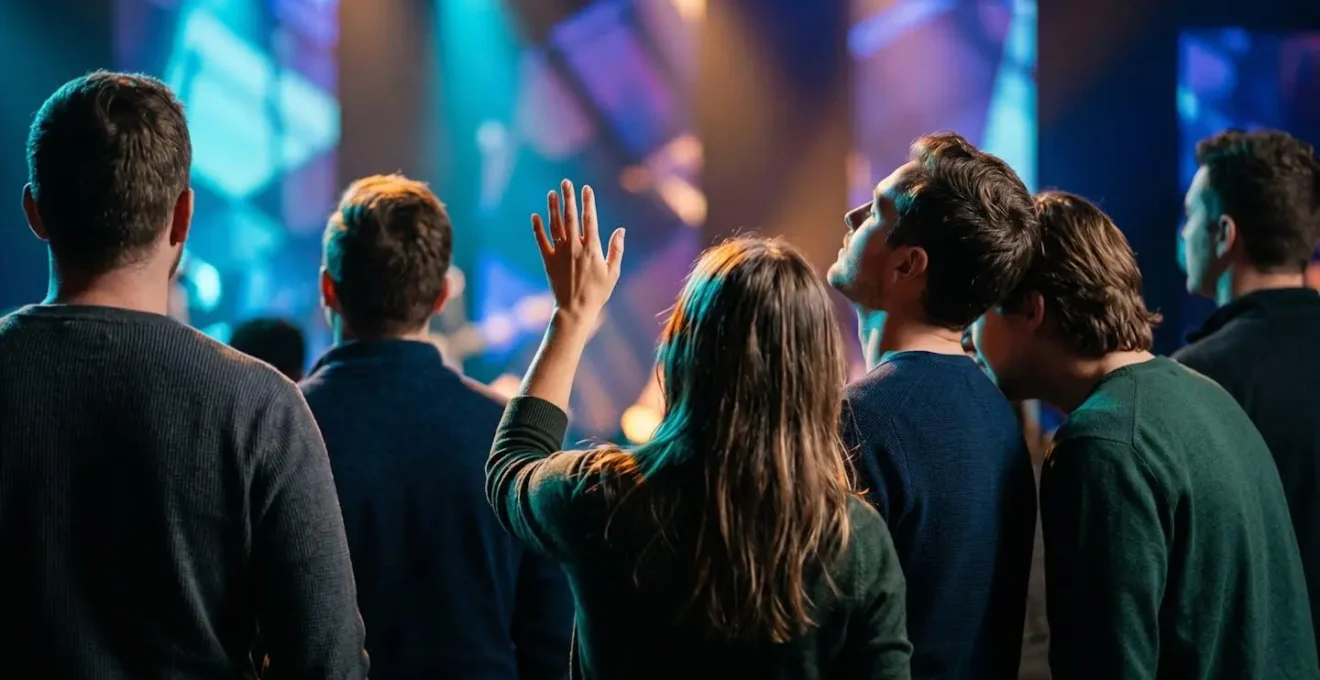
This creates a powerful sense of communal energy. You’re not just watching the show; you are visibly sharing the experience with thousands of other people, their reactions feeding into your own. As one venue analysis puts it, « In a 360-degree setting, the audience is visible to each other and becomes part of the spectacle. You’re not just watching the show; you’re visibly in it with 18,000 other people. » A traditional stage offers a focused, curated story. A 360-degree stage offers a shared, communal spectacle. The « more immersive » experience depends on whether you seek narrative control or sensory surrender.
Luxor Esports Arena or sphere-based events: Which Fits Your Game Style?
The rise of esports in Las Vegas presents a new choice for gamers and fans: where to watch the action? On the surface, venues like the Luxor Esports Arena and the prospect of massive tournaments at The Sphere seem to offer a similar product. However, they cater to two fundamentally different gamer identities, and choosing the right one depends on your preferred engagement style: Are you a ‘lean-in’ player who wants to be part of the action, or a ‘lean-back’ spectator who wants to witness a cinematic spectacle?
The Luxor Esports Arena is built for the ‘lean-in’ experience. It’s a dedicated, permanent space designed for community and competition. With its own gaming stations for public play, regular amateur tournaments, and a tight-knit atmosphere during finals, it’s a place for players who want to participate, network, and feel the grassroots energy of the competitive scene. It’s about being close to the action and the community.
An esports event at The Sphere, on the other hand, would represent the ultimate ‘lean-back’ experience. It’s not about personal participation; it’s about pure, epic-scale spectatorship. It’s the gaming equivalent of watching the Super Bowl. The focus would be on the monumental cinematic visuals, the celebrity players, and the history-making moments broadcast on an unprecedented scale. The choice comes down to what you value more: participation or production.
This table breaks down the decision factors to help you match the venue to your personal gaming style.
| Decision Factor | Luxor Esports Arena | Sphere Esports Events |
|---|---|---|
| Primary Experience | Player & Community: Meet-and-greets, amateur tournaments, hands-on gaming stations | Spectator: Epic cinematic visuals, celebrity players, massive prize pool tournaments |
| Engagement Style | ‘Lean-In’ experience: Dedicated gaming stations for public play, tight-knit crowd atmosphere during finals | ‘Lean-Back’ experience: Akin to watching Super Bowl, high-production broadcast spectacle |
| Interactivity Level | High: Personal hands-on participation, meet professional players, feel part of the competitive scene | Low: Pure observation, focus on world-class production and massive screen immersion |
| Ideal Game Genres | FPS and Fighting Games: Intense, focused atmosphere matches fast-paced competitive action | MOBAs (League of Legends) or World Finals: Grand cinematic scale perfect for strategic team battles |
| Cost Structure | Day pass offers hours of personal gameplay + social interaction for fixed price; high time-per-dollar ratio | High-cost single event ticket, limited duration, but maximum visual impact per minute |
| Best For | Players who want to improve skills, network with community, experience grassroots competitive culture | Fans seeking monumental viewing experience, witnessing history-making matches on unprecedented scale |
There’s no wrong answer, only a wrong fit for your expectations. Before you buy a ticket to either, ask yourself a simple question: Do you want to play the game, or do you want to watch the movie?
Key takeaways
- True immersion in places like Omega Mart requires active participation and narrative discovery, not just passive viewing.
- Sensory management is key; plan for vertigo at The Sphere and choose your visit time at Area15 wisely to match your desired vibe.
- The greatest risk isn’t overpaying, but trip-ruining fake tickets; always buy from primary sources for time-slotted events.
Futuristic Worlds: How to Experience the Sci-Fi Side of Las Vegas?
Las Vegas has always been a city of fantasy, but today, that fantasy is increasingly science fiction. Beyond the classic Vegas themes, a new layer of futuristic, technology-driven experiences has emerged, turning the city into a playground for fans of cyberpunk, utopian futures, and interactive tech. For those in the know, it’s possible to craft an entire vacation around this sci-fi ethos. The key is itinerary architecture—stringing together these disparate locations into a cohesive narrative journey.
This isn’t just about visiting one or two spots. It’s about seeing how the neon-drenched dystopia of Omega Mart contrasts with the sleek, sustainable vision of CityCenter, or how the hands-on VR of Area15 complements the passive spectacle of The Sphere. The city itself becomes the story, and you are the protagonist exploring its different futures. With over 15 million visitors since opening, Area15 has become the epicenter of this movement, but it’s just the beginning.
Instead of a random collection of activities, think of your trip as a curated tour through different sci-fi subgenres. Here are a few sample itineraries to inspire your own futuristic adventure in Las Vegas.
Your Action Plan: Curated Sci-Fi Themed Itineraries
- The Cyberpunk Tour (4-6 hours): Start with the neon-lit art cars outside Area15 (2 PM), then dive into Omega Mart’s corporate dystopia narrative (2:30-5:30 PM). Grab a drink from the Tipsy Robot automated cocktail bar (6 PM) and end the night in Downtown’s vintage Fremont Street district for a retro-futuristic contrast.
- The Utopian Future Tour (6-8 hours): Begin with architectural photography of The Sphere’s exosphere (11 AM). Explore CityCenter’s sustainable technology and modern art (12-2 PM). Experience an evening show at The Sphere for the ultimate immersive spectacle (7 PM).
- The Interactive Technology Tour (5-7 hours): Start at Resorts World to see its advanced robotics and digital art (1 PM). Then head to Area15 for hands-on VR experiences like Virtualis or Birdly (2-4 PM). Finish with the Illuminarium’s multisensory projection experience (5 PM).
- The Hidden Sci-Fi Discovery: This is for the detail-oriented explorer. Seek out the Mechan9 robot sculpture at Area15 and solve its hidden code puzzle. Then, ride the Vegas Loop underground transit system for a taste of futuristic transport.
- From Immersion to Creation: For the aspiring world-builder. Book a VR creation workshop at an Area15 tenant, attend a Meow Wolf artist talk about their creative process, and spend time at interactive art installations where your input alters the environment.
By treating Las Vegas not as a list of attractions but as a collection of interconnected worlds, you can craft a unique and deeply personal sci-fi adventure. The future is already here; you just need a map to explore it.
Now that you have the tactical knowledge to navigate these complex environments, the final step is to design the experience that is right for you and your group. Start building your immersive Las Vegas itinerary today.