
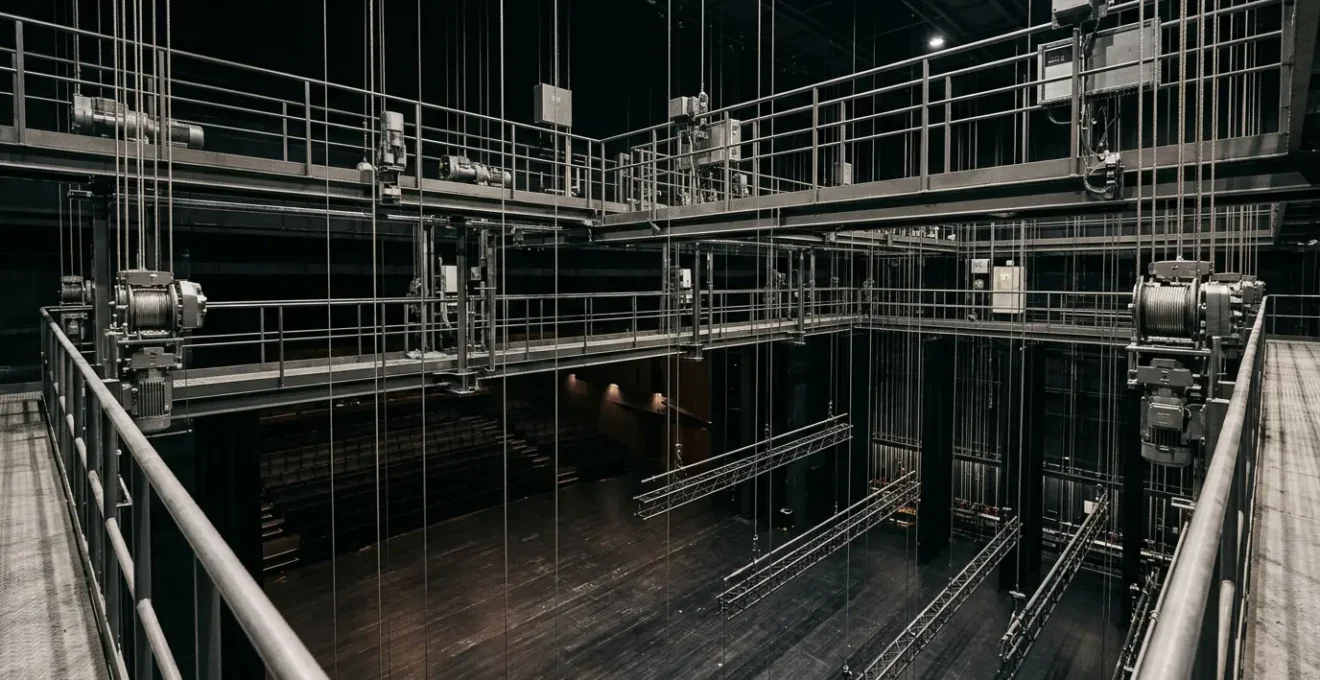
The spectacle on a modern stage is not magic; it’s a precisely choreographed dialogue between artistic ambition and extreme engineering.
- The most breathtaking moments—like a solid stage dissolving into a pool—are born from solving immense physical constraints with custom technology.
- Performer safety in high-flying acts is guaranteed not by hope, but by layers of computer-monitored, redundant mechanical systems that predict and prevent failure.
Recommendation: When you next watch a show, look past the performance to see the hidden stagecraft. The true marvel is often in the machinery moving silently in the dark, enabling the art you see in the light.
As a stage automation director, I live in a world that exists between an artist’s wildest dream and the laws of physics. When an audience gasps as a performer soars 50 feet above them or a car appears from a stage that was solid ground seconds before, they are witnessing the final, polished result of an intense conversation. It’s a conversation where choreographers ask, « What if we could fly? » and engineers respond, « Here is how we can do it safely, 1,000 times in a row, with a margin of error measured in millimeters. » Most people see the spectacle and assume it’s just advanced technology at play.
The common perception is that with enough money, you can just buy high-tech winches, powerful hydraulics, and giant LED screens. But that misses the point entirely. The true genius of modern productions, particularly the engineering marvels you find in Las Vegas, isn’t about the off-the-shelf hardware. It’s about the custom-built solutions designed to answer questions no one has ever had to solve before. It’s about constraint-driven innovation. The artist’s vision creates an impossible problem, and the engineering team’s job is to make it possible, reliable, and safe.
But what if the key to understanding these shows isn’t just looking at the technology, but understanding the engineering dialogue behind it? This isn’t just a guide to the tech; it’s an inside look at how specific artistic demands force the creation of groundbreaking mechanical solutions. We’ll deconstruct the spectacle, not to ruin the magic, but to reveal a deeper, more impressive magic: the one built of steel, code, and uncompromising precision. We will explore how a massive pool contains its water, how artists trust their lives to machines, and how the very definition of a « stage » is being rewritten.
This article breaks down the engineering marvels that power the world’s most ambitious productions. From the aquatic stages of Cirque du Soleil to the immersive digital worlds of Area15, we’ll explore the technology and the thinking that turns a show into a true spectacle.
Summary: The Engineering That Crafts a Spectacle
- Why the 1.5 Million Gallon Pool in « O » Doesn’t Leak?
- How Performers Trust Their Lives to Computer-Controlled Winches?
- 360-Degree Stage vs. Traditional: Which Offers the More Immersive Experience?
- The Risk of Motion Sickness in Immersive Sphere-Based Shows
- What Happened to the Animstronics of the 90s in Modern Shows?
- Dam Tour vs. Power Plant Tour: Which Goes Deeper?
- Why Elon Musk’s Tesla Tunnel is the Future of Convention Transport?
- Immersive Experiences: How to Participate in Area15 Without Confusion?
Why the 1.5 Million Gallon Pool in « O » Doesn’t Leak?
The central question of Cirque du Soleil’s « O » is how a solid stage can vanish into a pool deep enough for high-diving. The answer isn’t just about a hole in the floor; it’s a masterpiece of hydraulic engineering and water management. The stage itself is a dynamic surface sitting atop a purpose-built tank holding over 1.5 million gallons of water, kept at a constant 88°F for the performers. The « stage » is actually four massive, hydraulically-actuated lifts that can raise, lower, and tilt independently or in unison. When they are up, their surfaces interlock to create a seemingly dry floor. When they descend, the pool is revealed.
The « doesn’t leak » part is a triumph of materials science and precision mechanics. The system, a feat of engineering from Handling Specialty that earned a Guinness World Record, uses stainless steel for its underwater components to resist corrosion. The entire pool is a sealed, self-contained vessel, much like a submarine hull. The true challenge is managing the water. It is filtered and chemically treated constantly, recirculating three times daily, to maintain perfect clarity and safety for the 14 scuba divers and technicians working beneath the surface during every single performance. It is a living, breathing aquatic machine masquerading as a stage.
How Performers Trust Their Lives to Computer-Controlled Winches?
When you see an acrobat flying through the air, their life is tethered to a computer-controlled winch system. This isn’t a simple motor on a rope; it’s an intelligent system built on a principle engineers live by: calculated redundancy. Trust isn’t an emotion here; it’s a guarantee born from layers of fail-safes. The primary system is constantly monitored by a secondary system, which is often watched by a tertiary system. If any single component shows the slightest anomaly—a fractional change in load, a snag in the line—the entire apparatus can halt in a fraction of a second.
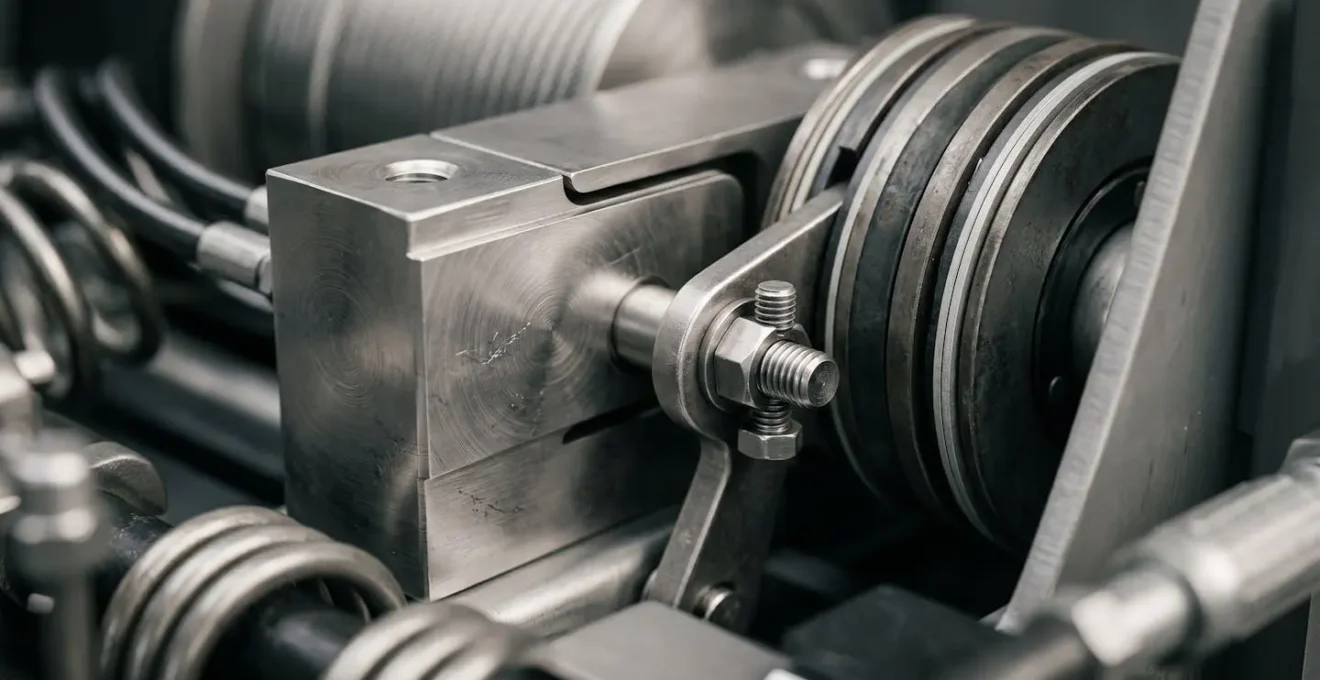
This is achieved through a suite of integrated safety features. As rigging system manufacturers have developed these technologies, they’ve created a safety net of data. These systems include slack line detection to prevent tangles, load cells that act as constant scales to ensure weight limits are never exceeded, and absolute encoders that know the precise position of a performer down to the millimeter at all times. All of this is governed by internal diagnostic monitoring that checks the health of the system thousands of times per second. Performers don’t just « trust » the machine; they trust the meticulous, multi-layered engineering philosophy that leaves absolutely nothing to chance.
360-Degree Stage vs. Traditional: Which Offers the More Immersive Experience?
The traditional proscenium stage creates a window into another world. The 360-degree stage, or « in the round » concept, aims to demolish that window entirely and place the audience inside that world. As Karen Malone, a museum curator, describes it, this approach « puts guests inside the story. Instead of merely being a viewer of show, the film is all around them ». While traditional stages have a single focal point, a 360-degree environment surrounds the audience, making them a part of the set. This fundamentally changes the relationship between the viewer and the performance.
The 360-degree experience puts guests inside the story. Instead of merely being a viewer of show, the film is all around them
– Karen Malone, Ruby C. Strickland curator of education for the Evansville Museum
Technologically, this creates immense challenges that traditional stages don’t face. Visually, there’s no « backstage » to hide equipment. But the biggest challenge is auditory. To solve this, these venues employ advanced spatial audio systems. These aren’t just surround sound; they are arrays of speakers precisely calibrated to deliver clear, localized sound to every seat, eliminating the dead zones common in arenas. This allows directors to guide audience attention with audio cues—a whisper from behind, a roar from above. This « sensory architecture, » combining targeted audio with synchronized lighting and even environmental effects like wind or temperature changes, crafts a far more deeply immersive experience than a traditional stage can offer, moving from observation to participation.
The Risk of Motion Sickness in Immersive Sphere-Based Shows
The rise of hyper-immersive venues like the Las Vegas Sphere, with its wraparound 16K LED screen, pushes the boundaries of sensory experience. However, this level of immersion comes with a biological cost for some: motion sickness. The phenomenon, known as visually induced motion sickness, occurs when your eyes perceive massive, fast-moving visuals while your inner ear’s vestibular system—which governs balance—tells your brain you are sitting still. This sensory conflict can trigger nausea, dizziness, and disorientation. It’s a very real effect, with some research on visually-induced sickness finding that up to 78% of participants reporting symptoms in certain test conditions.
Show creators are aware of this and use filmmaking techniques—like keeping the horizon stable or using slower camera pans—to mitigate the effect. However, for those who are particularly sensitive, the experience can still be overwhelming. Fortunately, there are several practical, science-backed strategies you can employ to enjoy the show without discomfort. The key is to provide your brain with stable reference points and to manage nausea proactively if it begins.
Here are some effective methods to reduce the risk of motion sickness:
- Choose seats in the upper sections to keep more of the screen’s static edge within your peripheral vision.
- If you feel disoriented, look away from the screen to the floor or your hands for a moment to reground your senses.
- Bring along ginger, peppermint, or cinnamon candies, which are known to help alleviate feelings of nausea.
- Stay well-hydrated by drinking plenty of water before and during the event.
- During intense motion sequences, focus on taking slow, deep breaths to calm your nervous system.
If symptoms persist, don’t hesitate to step out into the hallways. A short break in a stable environment can make all the difference, allowing you to return and enjoy the rest of the visual spectacle.
What Happened to the Animstronics of the 90s in Modern Shows?
The animatronics of the 1990s were marvels of their time, but they were largely puppets with a pre-programmed set of movements. They were characters, but they weren’t performers. The biggest shift in modern stagecraft is the evolution from these animatronics to the use of high-precision industrial robots. These are not character-driven creations; they are powerful, fast, and incredibly accurate robotic arms, the same kind found in advanced manufacturing facilities. Instead of being confined to a single role, they have become a form of kinetic partnership on stage.
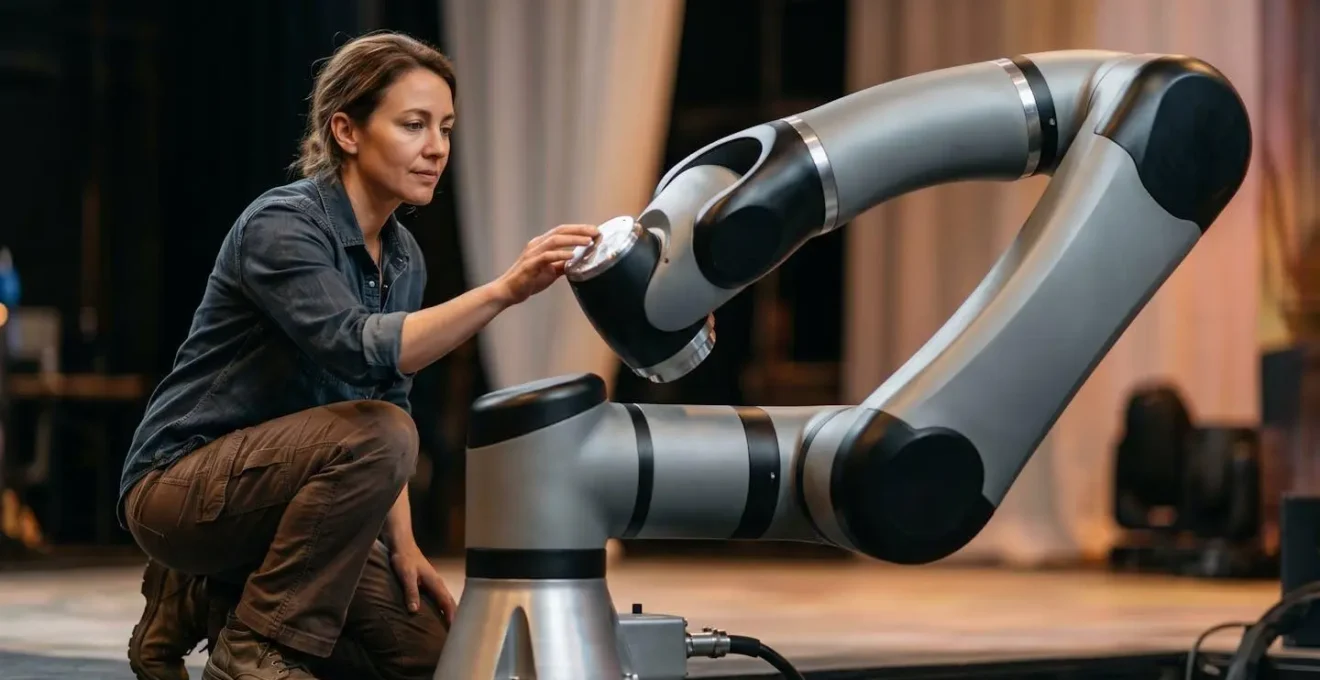
A modern stage robot, like a KUKA arm, can be a piece of moving scenery in one act, a dynamic lighting rig in the next, and a platform for an acrobat in the third. Their movements are not canned; they are programmed as part of the overall show choreography, synchronized with music, lights, and human performers down to the millisecond. This allows for a level of dynamic interaction that was impossible with old animatronics. The robot becomes a dance partner, a moving landscape, or an extension of the performer’s own body. This transition marks a fundamental change in philosophy: from creating artificial life to integrating industrial-grade tools as partners in artistic expression.
Dam Tour vs. Power Plant Tour: Which Goes Deeper?
When visiting an engineering marvel like the Hoover Dam, two main tours are typically offered: the Dam Tour and the Power Plant Tour. The question of which goes « deeper » depends entirely on your definition of the word. They explore two distinct but connected disciplines of engineering. Choosing the right one comes down to whether you are more fascinated by massive civil structures or the electromechanical hearts that power them. There is no better or worse option, only the one that aligns with your curiosity.
The Power Plant Tour takes you deeper into the operational core of the dam. You’ll descend into the canyon walls to see the massive penstocks—the pipes that carry water to the turbines—and stand in a gallery overlooking the generators. This tour is for the enthusiast of mechanical and electrical engineering. The focus is on the conversion of potential energy (water) into kinetic energy (spinning turbines) and finally into electrical energy. You witness the machinery, feel the vibration, and grasp the immense scale of power generation. The Dam Tour, conversely, focuses on the civil engineering aspect. It takes you into the inspection tunnels and passageways within the concrete structure itself. This tour is about the sheer scale of construction, the geological challenges, and the architectural brilliance required to hold back the force of a massive lake. You are literally deeper inside the physical dam, understanding the forces at play and the human effort it took to build it.
Why Elon Musk’s Tesla Tunnel is the Future of Convention Transport?
Large convention centers, like the one in Las Vegas, face a unique transportation problem: massive, sprawling campuses that can take over 20 minutes to walk from end to end. Traditional solutions like monorails or shuttle buses are often inefficient, with long wait times and fixed routes. Elon Musk’s Boring Company proposes a different future with its Las Vegas Convention Center (LVCC) Loop. It’s not mass transit in the traditional sense; it’s a high-efficiency, point-to-point system using electric vehicles in dedicated tunnels.
The « why » behind its potential lies in its on-demand nature and scalability. Instead of waiting for a large train to fill up, passengers board one of the 70 Tesla vehicles in the system and are taken directly to their desired station without intermediate stops. This direct-to-destination model dramatically cuts travel time across the campus from a 25-minute walk to a 2-minute ride. The current system, operating through 2.2 miles of tunnels, already demonstrates impressive throughput, moving over 4,400 passengers per hour. This is the core of its promise for the future: it avoids the bottlenecks of surface traffic and the inefficiencies of scheduled mass transit, offering a personalized, high-speed solution perfectly tailored to the stop-and-go needs of a convention-goer.
Key Takeaways
- True stagecraft innovation is not about buying technology, but about inventing solutions to unique artistic problems.
- Performer safety in automated shows is achieved through « calculated redundancy, » where multiple, overlapping systems eliminate single points of failure.
- Immersive experiences go beyond 360-degree visuals, relying on « sensory architecture » like spatial audio and environmental effects to fully engage the audience.
Immersive Experiences: How to Participate in Area15 Without Confusion?
Venues like Area15 are not traditional attractions; they are sprawling complexes of disconnected, high-intensity immersive experiences. The primary challenge for a first-time visitor isn’t a lack of things to do, but rather choice paralysis and the risk of sensory overload. Approaching it without a plan can lead to a confusing and exhausting day. The key to navigating it successfully is to treat it not as a theme park to be conquered, but as a gallery to be curated according to your own sensory preferences and endurance.
Before you even begin, it’s crucial to understand the different flavors of immersion on offer. Each experience uses technology in a distinct way to achieve a different goal. Some are narrative-driven explorations, while others are purely for sensory stimulation or aesthetic wonder. Understanding this allows you to build a sequence that matches your mood and energy levels.
| Experience | Primary Technology | Immersion Type | Best For |
|---|---|---|---|
| Meow Wolf Omega Mart | Narrative-driven interactivity, practical effects, physical sets | Story-based exploration | Those who want puzzles and narrative discovery |
| Wink World | Light installations, sound design, sensory stimulation | Pure sensory experience | Visitors seeking Instagram moments and ambient wonder |
| Museum Fiasco | Projection mapping, spatial audio, digital illusions | Tech-forward visual spectacle | Technology enthusiasts and visual arts fans |
| The Beast (ride) | Motion simulation, VR integration | Physical thrill experience | Adrenaline seekers comfortable with motion |
To avoid confusion and burnout, a strategic approach is essential. Instead of wandering aimlessly, you can design your visit to maximize enjoyment and minimize stress. By planning your path and giving yourself time to decompress, you can fully engage with each world without getting lost in the chaos.
Your Action Plan for Navigating Area15
- Define your sensory profile: Use the central hub to consult the experience guide and match attractions to your primary interest, whether it’s narrative puzzles, pure sensory wonder, or physical thrills.
- Pre-plan your sequence: Utilize the centralized ticketing system to book a logical path in advance, ideally starting with lower-intensity experiences and building up to more overwhelming ones.
- Use the hub as a reset zone: Intentionally schedule 15-20 minute buffer times in the main neon-lit spine. Use this space to decompress and recalibrate your senses between high-intensity shows.
- Leverage integrated technology: Make full use of the RFID wristband and mobile app to streamline transitions, access lockers, and make payments, reducing on-the-ground friction and decision-making.
- Audit your endurance: Listen to your limits. If you begin to feel sensory overload, retreat to a calmer space like the main hub or an outdoor concession area instead of pushing through to the next ticketed time.
As you’ve seen, the most stunning moments on a modern stage are rarely a single invention. They are an ecosystem of solutions—mechanical, electrical, and digital—all working in silent concert to support a single artistic vision. The next time you sit in a theater and the impossible happens before your eyes, take a moment to appreciate the hidden dialogue between the artist and the engineer. That is where the deepest magic truly lies.