
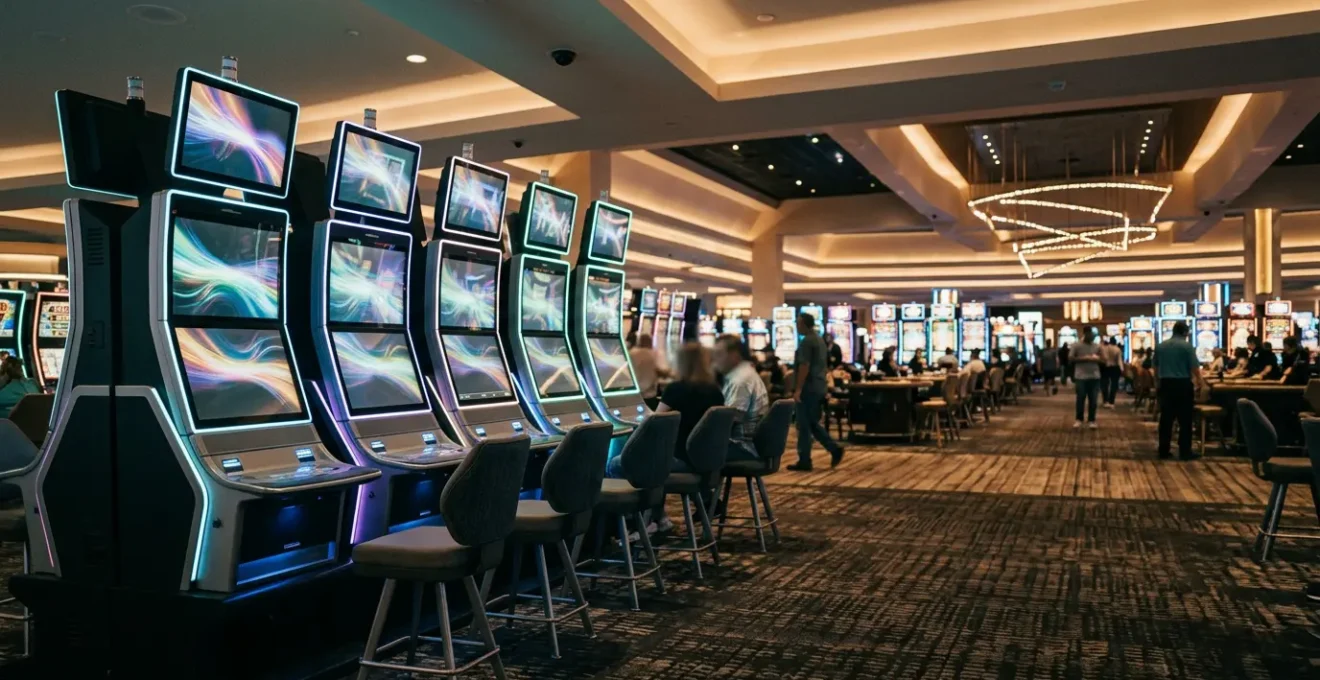
The promise of using your gaming skills to win money in Vegas is real, but it’s built on a system where the house mathematically caps your advantage.
- Skill-based games replace random spins with interactive challenges, offering a higher entertainment value per dollar than traditional slots.
- Despite your talent, these games have a built-in « house edge, » achieved by limiting maximum payouts and adjusting difficulty to guarantee casino profitability over time.
Recommendation: Approach skill games as a more engaging entertainment expense, not an income strategy. Your goal should be to maximize fun, not to consistently beat a system designed to win.
The hypnotic chime of a slot machine payout is a sound synonymous with Las Vegas, but for a generation raised on console controllers and esports, the passive act of pulling a lever feels hopelessly outdated. The casino industry knows this. Their answer? Skill-based gaming—a revolutionary hybrid that promises to let your video game prowess directly influence your winnings. The allure is powerful: what if your talent in a first-person shooter or a puzzle game could finally pay off in cold, hard cash on the casino floor?
Many discussions stop at the simple « skill vs. chance » debate, concluding that it’s a mix of both. But this misses the real story. The true innovation isn’t just in the gameplay; it’s in the sophisticated design architecture that powers it. Casinos aren’t simply installing arcade machines; they are deploying finely-tuned economic engines that give players a compelling sense of control—the « illusion of agency »—while ensuring a predictable, profitable outcome for the house. The critical question isn’t *if* you can win, but rather *what are the limits* the system places on your success.
This review dissects the reality behind the hype. We’ll explore the mechanics of the skill-based house edge, how to find these new gaming zones, and whether they offer better value than traditional slots. We will also look at the psychological traps, the future of VR gambling, and how to experience « pure » skill competition in Vegas’s growing esports scene. It’s time to look past the flashing lights and understand the code that truly runs the game.
To navigate this new era of interactive gambling, this article breaks down everything you need to know. The following summary provides a roadmap to the key topics we will explore, from the mechanics of the house edge to the future of virtual reality casinos.
Summary: Your Guide to the New Wave of Vegas Gaming
- Why Skill Games Still Have a « House Edge » Despite Your Talent?
- How to Locate Skill-Based Zones in Mega-Casinos?
- Arcade Gambling vs. Traditional Slots: Which Provides More Entertainment per Dollar?
- The Danger of Overestimating Your Skill Level on « Hard » Difficulty Settings
- What to Expect from VR Gambling Lounges in the Next 5 Years?
- Why the Triple Zero Wheel Is the Worst Bet in Las Vegas History?
- The Disappointment of « AI » Attractions That Are Just Pre-Recorded Loops
- Esports Arenas: How to Experience Competitive Gaming Events in Vegas?
Why Skill Games Still Have a « House Edge » Despite Your Talent?
The central promise of skill-based gaming is that your ability matters. Unlike a slot machine where the outcome is determined by a random number generator (RNG) the moment you press « spin, » your actions in a skill game directly impact the result. However, it’s a critical mistake to assume this eliminates the house edge. Instead, the edge is simply engineered in a more sophisticated way. The casino’s profit is guaranteed not by pure chance, but by a concept we can call « skill-capped payouts. »
Here’s how it works: the game’s pay table is structured so that even a « perfect » performance—achieving the highest possible score—yields a return that is less than the total money wagered over time across all players. For example, a game might be designed to pay back an average of 90% of all money put in. A highly skilled player might achieve a 92% return-to-player (RTP), while a novice might only get 85%. The skill creates a variance, but the overall system is mathematically designed to retain a portion of the wagers. Traditional slot machines operate on a similar principle, though with a much wider range; casino gaming analysis shows house edges from 2% to 15% depending on the machine.
This design architecture ensures that while individual players can have winning sessions, the casino is the guaranteed long-term winner. The « skill » component is a tool to keep you engaged and playing longer, but it doesn’t break the fundamental economic model of the casino. You are not playing against other players in a fair match; you are playing against a system with a pre-determined profit margin.
How to Locate Skill-Based Zones in Mega-Casinos?
As casinos experiment with this new form of gaming, they are not typically scattering these machines among the traditional slot banks. Instead, they are creating dedicated « zones » or « arcades » designed to foster a more social and energetic atmosphere that appeals to their target Millennial and Gen Z demographic. Locating these areas often means looking for a distinct shift in the casino floor’s ambiance—brighter lights, louder music, and different physical setups.
A prime example of this strategy was when Caesars Entertainment partnered with Gamblit Gaming to roll out terminals. Their initial trial at Planet Hollywood and other properties placed these games in highly visible, communal areas. The hardware itself is a dead giveaway: instead of solitary cabinets, you’ll often find large, multi-station setups with shared 42-inch touchscreens designed for 2-4 players. These zones are intentionally designed to feel more like a modern arcade or a lounge than a traditional casino floor.
Look for areas with clusters of unique-looking cabinets, often arranged in circles or pods to encourage social interaction. They are frequently positioned near bars, food courts, or on the peripheries of the main gaming floor to draw in foot traffic from younger patrons who might otherwise bypass the endless rows of slots.
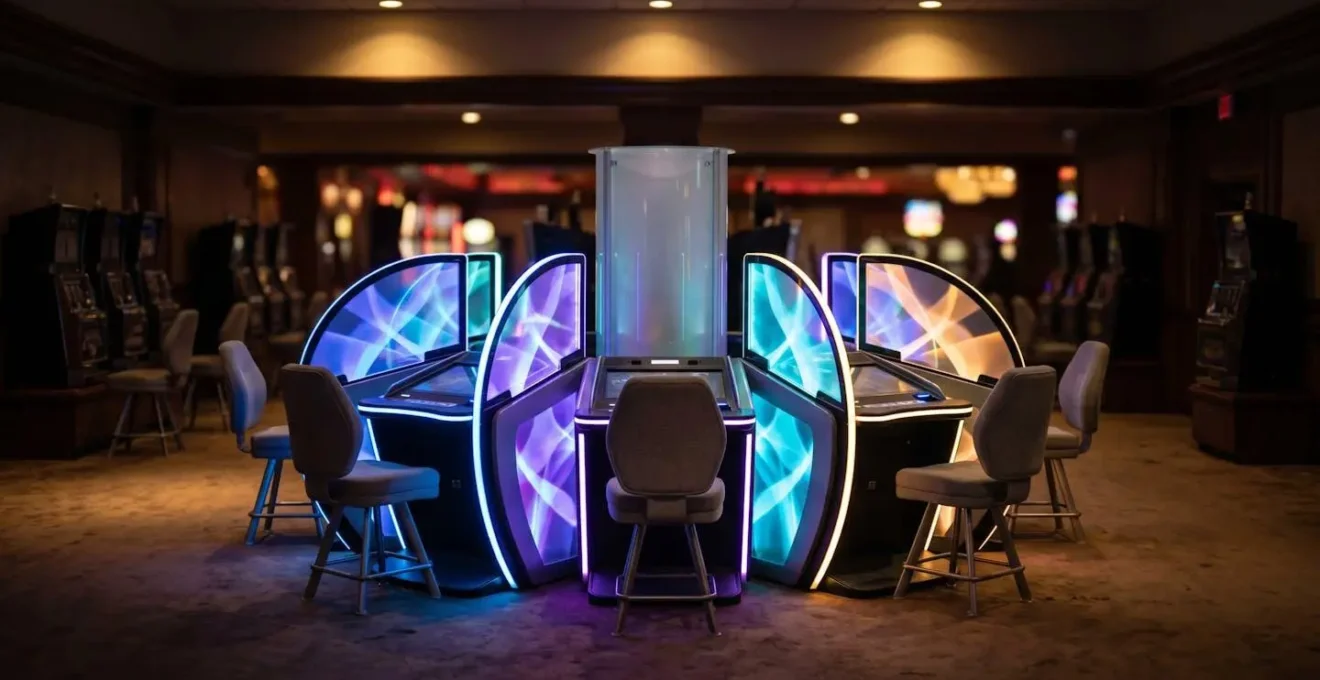
As you can see, the layout is fundamentally different. The focus is on a shared, vibrant experience. If you’re walking through a mega-casino like Caesars Palace, The LINQ, or MGM Grand, keep an eye out for these distinct architectural and lighting cues that signal you’re entering the new frontier of interactive gambling.
Arcade Gambling vs. Traditional Slots: Which Provides More Entertainment per Dollar?
When you sit down at a gambling machine, you are effectively paying for entertainment. The core question for many players isn’t « Will I get rich? » but « How much fun can I have before my budget runs out? » This is the concept of Entertainment Value Per Dollar (EVPD), and it’s where skill-based games truly shine compared to their traditional counterparts, especially penny slots.
Penny slots are notoriously deceptive. While the minimum bet is low, they encourage a high volume of bets on many lines, and their house edge is often among the highest on the floor. According to research by gambling mathematics experts, the house edge on these machines can easily range from 6% to 15%. This means your money disappears quickly in a series of passive, repetitive spins with very little player input. The « entertainment » is fleeting and consists mostly of watching reels spin.
Skill-based games, by contrast, offer a much more engaging experience. Your time is spent making decisions, reacting to challenges, and actively participating in the outcome. Even if you are losing money at a similar rate, the *quality* of the time spent is arguably much higher. You are playing a video game, not just feeding a machine. This sentiment is echoed by players who have tried the new formats.
Skill-based games are pretty damn fun. If players are looking for a way to gamble that is more engaging than simply pushing ‘spin’ these types of slots could be a hit.
– Player Feedback, Las Vegas Then and Now
Ultimately, the choice comes down to your goal. If you view gambling as a purely transactional expense for a chance at a jackpot, slots may suffice. But if you’re seeking a more interactive and mentally stimulating form of paid entertainment, skill-based games offer a superior EVPD, making your gambling budget stretch further in terms of genuine fun.
The Danger of Overestimating Your Skill Level on « Hard » Difficulty Settings
A key feature that makes skill games so alluring is the inclusion of difficulty settings. The logic seems simple: if you’re a good player, you should choose « Hard » or « Expert » mode to maximize your potential payout. However, this is one of the most subtle and effective psychological traps in their design. The difficulty levels are not just a measure of challenge; they are a direct tool for the casino to manage its house edge while exploiting player overconfidence.
The « Hard » setting might offer a higher jackpot, but it dramatically increases the performance required to achieve a positive return. The game’s math is calibrated so that only a tiny fraction of players can perform at the necessary level. The vast majority who attempt it will lose their money much faster than on « Normal » difficulty. This preys on the « illusion of agency »—the belief that your skill gives you more control over the outcome than it actually does within the game’s rigid mathematical framework. You might be a great gamer at home, but you’re now playing in a system designed to monetize even the smallest mistakes.
Casinos know their audience. They are targeting a demographic that is competitive and confident in their gaming abilities. In fact, field trial data revealed that up to 80 percent of millennial players are drawn to these new forms of gaming. This demographic is primed to select the highest difficulty, viewing it as a challenge to be conquered. The reality is that they are often just selecting a faster way to contribute to the casino’s bottom line. Unless you have verifiably mastered a specific game, sticking to lower difficulties will almost always extend your playtime and improve your overall experience.
What to Expect from VR Gambling Lounges in the Next 5 Years?
If skill-based terminals are the present, Virtual Reality (VR) gambling lounges are the immediate future. The casino industry sees VR not just as a novelty, but as the next logical step in creating deeply immersive and social gaming experiences. These are not solo affairs; the vision is for dedicated lounges where players can interact with each other and a virtual dealer in a shared digital space, combining the convenience of online gaming with the social atmosphere of a real casino.
The trend is already taking root. As early as 2022, the Las Vegas Strip began introducing VR gaming areas. According to a report on the future of VR in casinos, these early lounges allowed players to enjoy games like poker and blackjack in highly immersive environments. The appeal is twofold: it offers a unique, singular gaming experience while simultaneously encouraging social connection between players, attracting a wide spectrum of gamers. This is the next evolution of the « entertainment per dollar » model, offering unparalleled immersion as part of the value proposition.
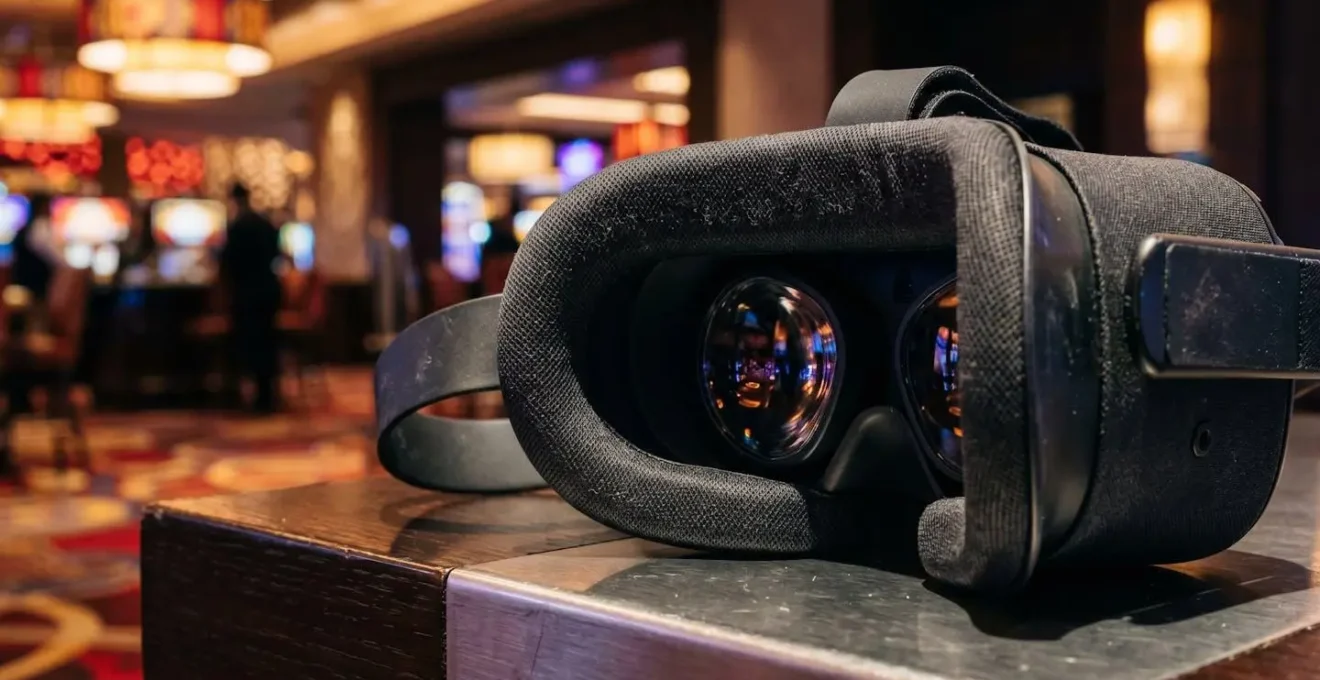
In the next five years, expect this to accelerate. We will likely see the rise of haptic suits that let you « feel » the cards and chips, photorealistic avatars, and exclusive virtual high-roller rooms. The technology will further blur the line between a video game and a gambling experience, amplifying the « illusion of agency » to a whole new level. For players, this means more engaging and potentially more deceptive environments. For tech reviewers, it represents a fascinating frontier where game design, psychology, and financial technology converge.
Why the Triple Zero Wheel Is the Worst Bet in Las Vegas History?
To truly appreciate the nuances of the house edge in skill-based games, it’s essential to understand its most blunt and brutal form: the triple-zero roulette wheel. This game variant, which has sadly become more common on the Las Vegas Strip, serves as a stark baseline for evaluating any bet in a casino. It represents a pure, undisguised statistical disadvantage for the player, with no skill component whatsoever to mitigate the losses.
A standard American roulette wheel has 38 pockets (numbers 1-36, plus 0 and 00). A winning bet on a single number pays 35-to-1. Because of the two zero pockets, the house edge is a hefty 5.26%. The triple-zero wheel adds a third zero pocket (often a casino logo) to the wheel, bringing the total to 39 pockets. Crucially, the payout for a single number remains 35-to-1. This simple change causes the house edge to skyrocket to a staggering 7.69%. For every $100 you bet, you are statistically expected to lose $7.69.
This makes it one of the absolute worst bets available. To put this in perspective, let’s compare it to other casino games. The following table, based on data from gambling odds experts, clearly illustrates where different games stand in terms of their built-in house advantage.
| Game Type | House Edge | Skill Component |
|---|---|---|
| Video Poker (optimal) | 0.5% – 1% | High |
| Blackjack (basic strategy) | 0.5% | Medium |
| Baccarat (Banker) | 1.06% | None |
| Craps (Pass Line) | 1.4% | None |
| American Roulette | 5.26% | None |
| Slot Machines | 2% – 15% | None |
| Keno | Up to 25% | None |
As the table demonstrates, games that involve optimal strategy, like video poker and blackjack, offer the player the best odds. The triple-zero roulette wheel sits at the opposite end of the spectrum, far worse than even standard roulette. It is a bet that exists for one reason only: to prey on uninformed players. Understanding this helps you appreciate that while skill games have a house edge, they at least offer engagement and some player agency in return—a value proposition that triple-zero roulette completely lacks.
The Disappointment of « AI » Attractions That Are Just Pre-Recorded Loops
In the tech-fueled spectacle that is modern Las Vegas, « AI » has become the ultimate buzzword. From robot bartenders to interactive displays, casinos are eager to project an image of cutting-edge innovation. However, as a tech reviewer, one of the most common disappointments is discovering that a heavily marketed « AI » attraction is nothing more than a cleverly disguised pre-recorded loop. This is not just a letdown; it’s a perfect metaphor for the potential pitfalls of skill-based gaming.
Imagine an « AI » concierge that promises personalized recommendations. You ask it a complex question, and it delivers a generic, pre-scripted answer that doesn’t quite fit. It soon becomes clear that the system isn’t « thinking » or adapting; it’s just playing back a limited set of responses triggered by keywords. The « intelligence » is an illusion. There’s a profound sense of being tricked, of interacting with a facade rather than a genuine system.
This feeling is directly analogous to a player realizing a « skill » game is designed in a way that their skill has a negligible impact on the ultimate outcome. If the payout structure is so restrictive or the difficulty so punishing that player input becomes almost irrelevant, is it truly a game of skill? Or is it just a more complex, interactive version of a pre-recorded loop, designed to keep you engaged while the underlying math grinds away at your bankroll? The disappointment stems from the same source: a promise of agency and intelligence that turns out to be a carefully constructed illusion. A truly innovative experience respects the user’s input, whether it’s a query to an AI or a strategic move in a game.
Key Takeaways
- Skill-based games are designed with a « skill-capped payout » system that guarantees a house edge, regardless of player talent.
- These games offer a higher « Entertainment Value Per Dollar » (EVPD) than traditional slots due to their engaging and interactive nature.
- The best way to experience pure, skill-vs-skill competition in Vegas is at dedicated esports arenas, not on the casino floor.
Esports Arenas: How to Experience Competitive Gaming Events in Vegas?
While skill-based casino games offer a taste of interactive gambling, they are ultimately a player-vs-house experience. If you’re looking for the purest form of competitive gaming—where your skill is pitted directly against other human opponents—then you need to head to Las Vegas’s dedicated esports arenas. These venues are the heart of the city’s burgeoning competitive gaming scene, offering an authentic experience far removed from the calculated odds of the casino floor.
The most prominent of these is the HyperX Esports Arena at the Luxor. This is not a casino sideshow; it’s a state-of-the-art, multi-level facility dedicated entirely to gaming. It hosts everything from major professional tournaments, like the EVO fighting game championships, to daily events for amateurs. This is where you can truly test your mettle. Instead of playing against a machine’s algorithm, you’re competing against other passionate gamers in a live, energetic environment.
Participating is more accessible than many realize. You don’t have to be a pro to get in on the action. These arenas are built to foster community and offer multiple levels of engagement. For those ready to jump in, here is a practical plan to get the most out of the Vegas esports experience.
Action Plan: Your Esports Experience in Las Vegas
- Visit the Main Venue: Make the HyperX Esports Arena your primary destination, as it remains the premier dedicated esports venue in Las Vegas.
- Participate Actively: Go beyond spectating. Sign up for one of the daily amateur tournaments or community nights to compete and connect with other players.
- Practice with Your Crew: Rent gaming stations at the LAN center. It’s a perfect way to warm up, practice with your group, or just enjoy high-end gaming in a premium setting.
- Check for Perks: Investigate casino loyalty programs like MGM Rewards (for Luxor/HyperX) to see if there are any integrated benefits or discounts for using the arena.
- Plan Around Major Events: For the ultimate experience, plan your trip to coincide with a major tournament like the Evolution Championship Series (EVO) to witness top-tier professional competition.
By shifting your focus from the casino floor to the esports arena, you move from a game of managed odds to a true contest of skill. It’s the ultimate destination for any gamer visiting Las Vegas.
Ultimately, navigating the world of skill-based gaming requires a shift in perspective. Instead of chasing elusive jackpots, the savvy player should focus on maximizing entertainment and seeking out the experiences that offer genuine, rewarding challenges. Whether it’s enjoying the high EVPD of an arcade-style game or diving into the pure competition of an esports arena, the future of gaming in Vegas is in your hands—as long as you know the rules of the game.