
In American luxury travel, a well-placed cash tip isn’t a mere gratuity; it’s a powerful service transaction that unlocks significant, immediate value.
- The « $20 Trick » is a proven method for securing room upgrades, especially in high-inventory locations like Las Vegas where staff have discretionary power.
- The key is targeting the right staff (front desk, concierge) at the right time, using a specific script to transform a polite request into a prioritized action.
Recommendation: Treat tipping as a strategic investment. Learn the unwritten rules, understand the timing, and always carry cash to capitalize on opportunities for enhanced service.
Navigating American tipping culture can feel like trying to solve a puzzle with no instructions, especially for international travelers. You’re told to be polite, smile, and maybe you’ll get lucky. Standard advice suggests joining loyalty programs or booking with special credit cards—slow, passive strategies that don’t help the guest standing at the check-in counter right now, hoping for a better view.
But what if the conventional wisdom is wrong? What if the key to unlocking a better travel experience isn’t just about politeness, but about understanding the unspoken language of the service industry? The secret lies in treating certain tips not as an afterthought for good service, but as a proactive, strategic investment in securing it. This isn’t about bribery; it’s about understanding the internal economy of a hotel or casino, where front-line employees have the discretionary power to enhance your stay.
This guide pulls back the curtain. Forget vague platitudes. We will break down the specific, transactional techniques used by seasoned travelers to secure room upgrades, ensure prompt drink service, and gain access to « sold-out » reservations. It’s time to learn how to make your tip work for you.
This article provides a direct, culturally-informative roadmap to navigating the world of strategic tipping. From the front desk to the casino floor, you’ll learn the practical steps to elevate your travel experience from standard to VIP.
Summary: VIP Luxury: How to Tip Your Way to Upgrades and Better Service?
- Why a $20 Tip to the Front Desk Works Better Than Politeness?
- How to Tip a Casino Cocktail Waitress to Ensure Fast Drink Service?
- Concierge vs. VIP Host: Who Can Actually Get You Into the Sold-Out Show?
- The Mistake of Tipping Before Confirming the Upgrade Availability
- When to Ask for a Late Checkout: The Critical 10-Minute Window?
- How to Use the « $20 Trick » Successfully at 5-Star Resorts?
- How Much to Tip for a Last-Minute Restaurant Reservation?
- Luxury Travel in Vegas: How to Secure VIP Perks Without a Million Dollar Budget?
Why a $20 Tip to the Front Desk Works Better Than Politeness?
Politeness is expected in the service industry; it’s the baseline. A cash tip, however, is an exception that gets immediate attention. The psychology is simple: a front desk agent interacts with hundreds of polite guests a day, but very few of them present a tangible token of appreciation upfront. This single act separates you from the crowd. While a recent survey found that 79% of guests believe hotel workers deserve tips, only about 30% actually leave them. This gap is your opportunity.
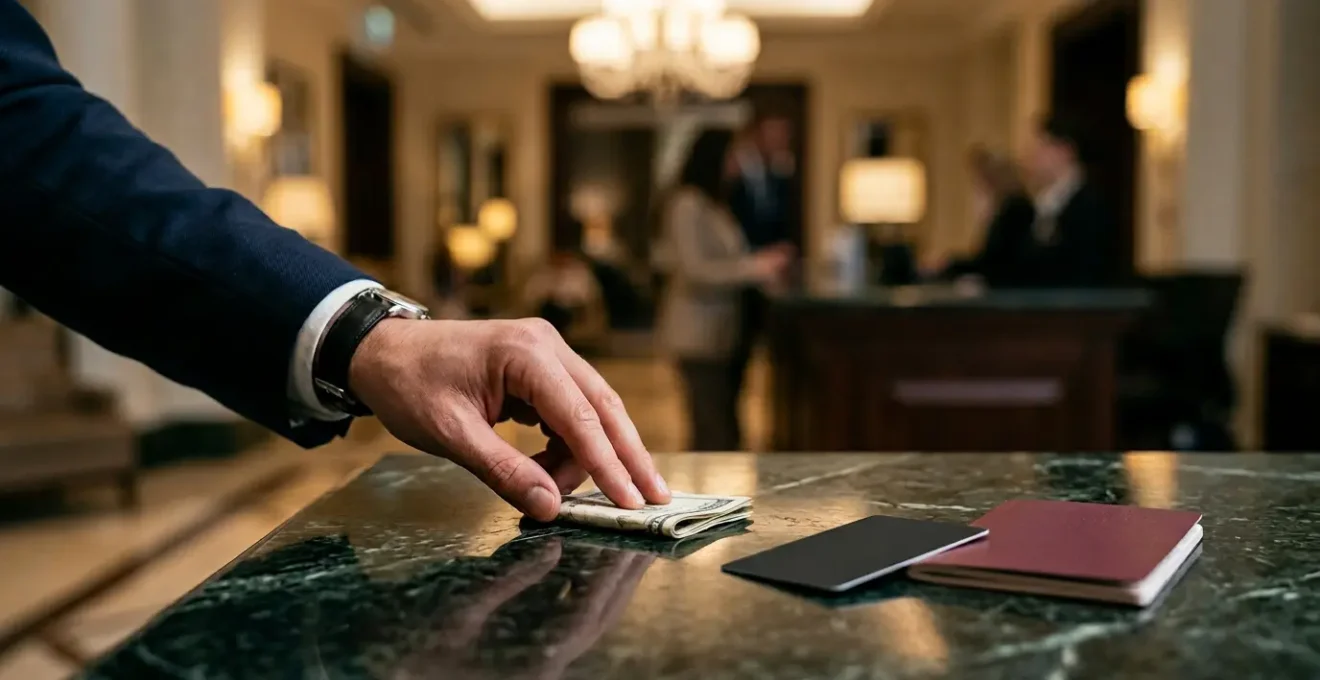
A folded $20 bill presented with your ID and credit card isn’t a bribe; it’s a service transaction. You are signaling that you are a guest who understands and values the agent’s time and effort. It communicates that you are politely requesting they use their discretionary power to check for a better room, a higher floor, or a nicer view—tasks that take extra time and effort. It motivates the agent to go beyond the standard check-in process and actively look for ways to enhance your stay.
The effectiveness of this technique, often called the « $20 Trick, » is not just a myth, especially in high-inventory hotel markets like Las Vegas. It’s a calculated gesture that can yield a remarkable return on investment.
Case Study: The $20 Trick’s Massive ROI in Las Vegas
A radio host put the technique to the test across multiple major Las Vegas properties. The results were significant, but one success stands out. At The Mirage, by presenting a simple $20 tip with his ID at check-in, he successfully upgraded from the cheapest available standard room to a 1,700 square foot Hospitality Suite on the 20th floor overlooking the Vegas strip. The upgrade also included complimentary parking for the entire stay. This demonstrates that when inventory is available, a small, strategic tip can unlock value hundreds of times its face value, achieving a result that politeness alone would never accomplish.
How to Tip a Casino Cocktail Waitress to Ensure Fast Drink Service?
On a busy casino floor, getting a drink can feel like a game of chance. Cocktail servers are covering large sections with dozens of thirsty patrons. While drinks are complimentary for players, the server’s income is based almost entirely on tips. Understanding this is the key to ensuring you’re never left with an empty glass. Your goal is to make yourself the most profitable and easiest stop on their route.
The strategy is to tip generously on the very first drink. While others might tip a dollar or two per round, you will make a statement. Handing the server a $10 or $20 bill on the first order and telling them you plan to be at a specific machine or table for a while changes the dynamic instantly. You’ve just become a priority. This initial « investment » ensures they will remember you and make a point to circle back to your location frequently. It’s a simple, effective way to buy premium service.
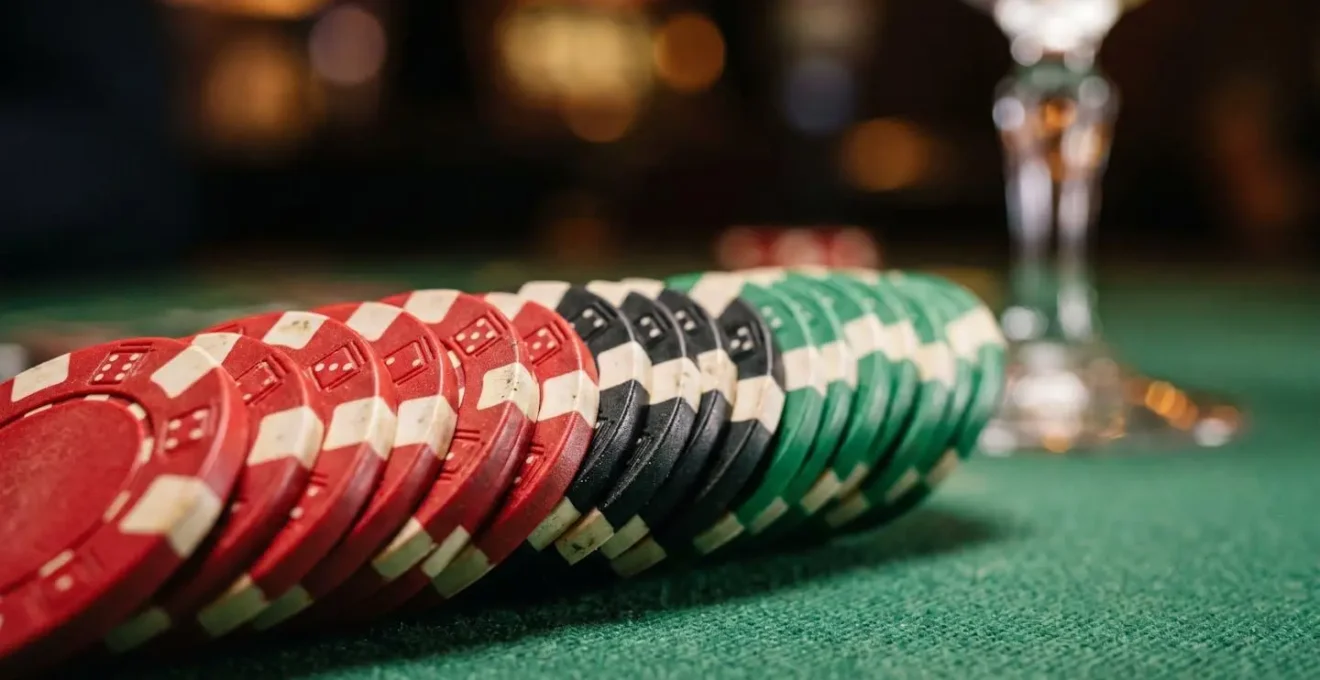
Remember that a server’s path is not random. They tend to circulate more often around high-action table games like poker or blackjack where players are more stationary and tipping is a more visible part of the culture. If you are playing slots, this initial large tip is even more critical to ensure you’re not overlooked. For exceptional, fast service throughout your session, leaving another significant tip at the end shows true appreciation and solidifies your status as a valued patron for your next visit.
Concierge vs. VIP Host: Who Can Actually Get You Into the Sold-Out Show?
When you need the impossible—tickets to a sold-out show or a last-minute reservation at the city’s hottest restaurant—knowing who to ask is half the battle. Many travelers use the terms « concierge » and « VIP host » interchangeably, but they operate in different universes with distinct sources of power. The concierge’s power is external, built on a network of city-wide relationships. The VIP host’s power is internal, fueled directly by your value to the casino.
A concierge is your key to the city. They maintain relationships with restaurants, tour operators, and ticket brokers. A tip motivates them to leverage this network for you. A VIP host, on the other hand, is your key to the casino property itself. Their job is to cultivate relationships with valuable gamblers. Their ability to « comp » (provide for free) rooms, food, and show tickets is directly tied to your gambling activity, measured by a metric known as Average Daily Theoretical (ADT). Tipping a host is often unnecessary and sometimes inappropriate; your value is your play. The following breakdown clarifies who to approach for what.
This distinction is critical for an effective strategy; as this comparative analysis of their roles shows, asking the wrong person for a favor is a waste of time and money.
| Criteria | Hotel Concierge | Casino VIP Host |
|---|---|---|
| Power Source | External network of city vendors and relationships | Internal authority driven by your gambling/spending value to casino |
| Primary Function | Securing restaurant reservations, show tickets, city experiences | Managing high-value player relationships and issuing comps based on player worth |
| Tipping Range | $5-$20 for securing hard-to-get reservations or tickets | Often not tipped (salaried); gift cards may be acceptable |
| Access Level | Citywide connections, ‘black book’ of held tickets for high-value guests | Property-specific perks: comp rooms, food credits, show access based on play |
| Best For | External experiences when asset is located outside casino property | Internal casino perks when your value is tied to gambling activity |
| Activation Requirement | Polite request + appropriate tip for service rendered | Consistent gambling activity (ADT – Average Daily Theoretical loss value) |
The Mistake of Tipping Before Confirming the Upgrade Availability
The execution of the « $20 Trick » is an art. A common mistake made by novices is to be too obvious or clumsy, creating an awkward situation for both the guest and the front desk agent. Simply placing a $20 bill on the counter and asking for an upgrade feels transactional in a negative way—like a bribe. The key is subtlety and creating a scenario where the tip is a reward for a positive outcome, even if that outcome was prompted by the tip itself.
Never slide cash over and ask « What can this get me? ». This puts the employee in a difficult position. The proper technique is often called the « sandwich. » You discreetly fold a $20 or $50 bill and place it between your credit card and your driver’s license. When you hand them over, you make your polite request. The script is crucial:
« I was wondering, do you have any complimentary upgrades available today? »
This phrasing is specific and professional. You are not demanding an upgrade. You are inquiring about « complimentary » ones, which gives the agent the framing they need. They will feel the bill as they take the cards. Now, a silent contract has been established. If an upgrade is available, they know a thank you is waiting for them. If the hotel is completely sold out and no upgrades are possible, the best agents will simply hand your cards and the bill back, with no awkwardness. You can then choose to leave the tip anyway for their effort, but the pressure is off. This method protects both parties and makes the service transaction smooth and professional.
When to Ask for a Late Checkout: The Critical 10-Minute Window?
A late checkout can be an invaluable perk, turning a frantic morning of packing into a relaxed final few hours of vacation. However, a request at the wrong time is almost guaranteed to be denied. Asking for a late checkout during the peak morning rush, when a line of guests is waiting to check out and housekeeping is on a tight schedule, is the least effective approach. The « critical 10-minute window » is a metaphor for finding the perfect, quiet moment to make your request.
Timing is everything. Your best opportunity is not at check-in or during the checkout frenzy, but on the morning of your departure. Call down to the front desk or approach them in person during a lull, typically between 7:00 AM and 8:30 AM. At this time, the night audit is complete, the front desk knows exactly which rooms are staying and which are departing, but the peak checkout chaos has not yet begun. This is your window.
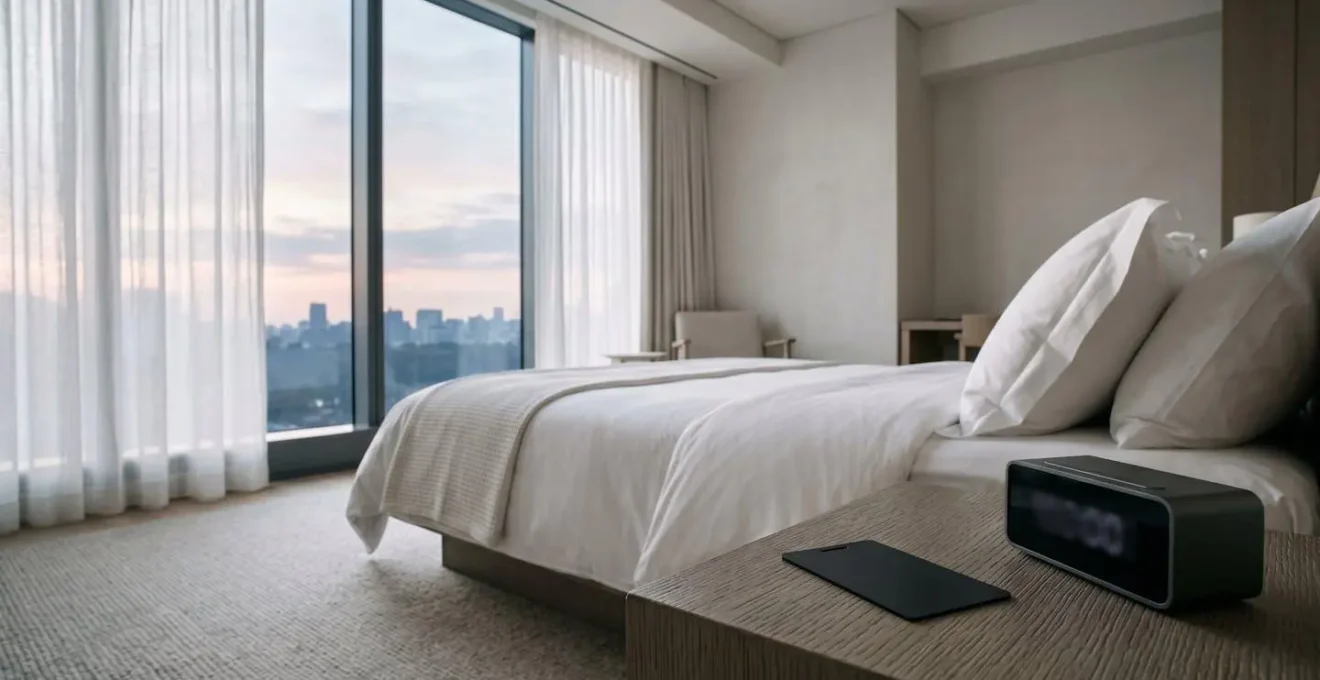
Your chances are also dramatically increased by external factors. As travel experts note, requesting special accommodations like a late checkout during the off-season or on weekdays when the hotel isn’t at full capacity is far more likely to be approved. Trying to get a 2 PM checkout on a Sunday when a large convention is checking in on Monday is a fool’s errand. By choosing a low-traffic time to ask on a low-occupancy day, you give the front desk staff the time and flexibility to grant your request without disrupting their operations.
How to Use the « $20 Trick » Successfully at 5-Star Resorts?
The effectiveness of the « $20 Trick » is not uniform across the hotel landscape. While it can be remarkably successful at large, mid-tier resorts, its application at ultra-luxury, five-star properties requires more nuance and carries a different set of risks. At hotels like a Four Seasons or a Ritz-Carlton, the brand identity is built on proactive, personalized service. Staff are empowered and trained to create exceptional experiences for guests without the need for a tip-based incentive.
Sliding a $20 bill to a front desk agent at a hotel of this caliber can sometimes be perceived as crass or out of touch with the culture. Officially, no hotel endorses this practice. As Michele Marsee, a marketing director at the Plaza Hotel in Las Vegas, stated regarding the practice, « You get into a very sticky situation in terms of unreported income. That is not a policy of the hotel to ever encourage that kind of thing. » This highlights the unofficial, under-the-table nature of the transaction.
You get into a very sticky situation in terms of unreported income. That is not a policy of the hotel to ever encourage that kind of thing.
– Michele Marsee, Director of Sales and Marketing, Plaza Hotel and Casino Las Vegas
At these high-end properties, your status in their loyalty program or your politeness and a well-phrased request are often more effective. However, this doesn’t mean strategic tipping is useless; it just needs to be scaled and adjusted. Instead of a $20, a more substantial tip ($50-$100) might be appropriate, and even then, it’s best reserved for truly exceptional requests. The context of the hotel’s brand and inventory is critical.
The ethos of the hotel brand directly impacts the effectiveness of this technique. Understanding where it is most likely to succeed is key to using it wisely.
| Hotel Category | Effectiveness | Recommended Approach | Typical Outcome |
|---|---|---|---|
| Budget Properties (Econo Lodge) | Low value | Not recommended | Limited upgrade options available; may get slightly better room condition |
| Mid-Tier Vegas Resorts | High (80-90%) | $20-$50 standard tip | Room upgrades, higher floors, better views, occasionally suites |
| Large Convention Resorts | Very High | $50 tip, target desk managers | Significant upgrades due to varied room inventory and flexible agents |
| Ultra-Luxury (Four Seasons, Ritz-Carlton) | Low to Moderate | $50-$100 or rely on status/politeness | Staff empowered to upgrade without tips; technique may be perceived as crass |
| Boutique High-End | Moderate | Polite request + smaller gift | Buttoned-up culture may resist; upgrade based more on availability and status |
How Much to Tip for a Last-Minute Restaurant Reservation?
Securing a table at a « fully booked » restaurant is one of the most valuable services a concierge can provide. This isn’t a simple request; it requires them to call in favors, leverage personal relationships with maître d’s, or utilize block-booked tables the hotel holds for VIPs. Therefore, the tip should reflect the difficulty and value of the service. A standard $5 tip is insufficient and almost insulting for this level of request.
According to 2024 U.S. hotel tipping guidelines, a tip of $20-$50 for securing a hard-to-get reservation is appropriate. However, for truly in-demand restaurants, a more aggressive, two-part strategy can yield better results. This approach treats the process as a high-value project for the concierge, with an incentive for effort and a larger bonus for success. It’s a professional way to signal that you are serious and willing to compensate generously for a positive outcome.
For extremely difficult reservations, some seasoned travelers bypass the concierge entirely and go directly to the source: the restaurant’s maître d’. This high-risk, high-reward move involves approaching the maître d’ an hour before the restaurant opens, being exceptionally polite, and discreetly palming them a $100 bill while making your request. It won’t always work, but for a special occasion, it can sometimes create a miracle.
Action Plan: Securing a High-Value Reservation
- Upfront Motivation Tip: When making the request, offer an initial $20 to the concierge. This motivates them to begin the search and prioritize your request over less serious inquiries.
- Commit to a Success Bonus: Clearly and verbally state your intention to provide a larger bonus upon success. Use a direct phrase like, « I’ll have another $50 for you if you can make this happen. » This creates a powerful incentive.
- Scale the Tip for Group Size: For larger dining parties, adjust the tip proportionally. A good rule of thumb is to budget $20-$25 per person in your party, as a larger table is significantly harder to secure.
- Confirm and Deliver the Bonus: Once the concierge confirms they have secured the reservation, return to the desk immediately to thank them and provide the promised success bonus. This builds your reputation for future visits.
- Assess the Situation: If the reservation is truly « impossible » and the concierge fails, consider the direct approach. Go to the restaurant early and discreetly approach the maître d’ with a polite request and a significant tip ($100) as a last resort.
Key Takeaways
- Cash is a Differentiator: In a world of polite requests, a tangible cash tip makes you stand out and signals you are a serious guest who values service.
- Target Discretionary Power: Focus your efforts on front-line staff (front desk, concierges, servers) who have the authority to grant immediate perks.
- Match the Tip to the Venue: The « $20 Trick » is highly effective in high-inventory resorts (like in Las Vegas) but can be perceived as crass in ultra-luxury properties where service is part of the brand promise.
Luxury Travel in Vegas: How to Secure VIP Perks Without a Million Dollar Budget?
While strategic, one-off tips are excellent for immediate, short-term gains, the path to consistent VIP treatment in a place like Las Vegas lies in a more systematic approach: becoming a known player. Casinos are not just in the business of gambling; they are masters of data analysis. They track every dollar you spend and play, calculating your value to the house. This value, often distilled into a metric called Average Daily Theoretical (ADT), determines your access to comps—free rooms, food, shows, and more.
You don’t need a million-dollar budget to get on their radar. The key is to concentrate your play. Spreading a $500 gambling budget across five different casinos makes you invisible to all of them. Playing that same $500 at a single, mid-tier property’s table games or slot machines for a few hours makes you a player worth noting. By always using your player’s card, you ensure all your activity is tracked. This consistent, loyal play, even at a moderate level, can be enough to trigger offers from a casino VIP host for free hotel nights and dining credits on future trips.
This long-term strategy shifts the dynamic from hoping for a lucky upgrade to having the casino actively court you for your business. It’s the difference between a one-time transaction and building a valuable relationship. While the success of any single tipping attempt can vary, the overall data shows these strategies are highly effective. User-tracked reports indicate an 84.4% success rate for the « $20 Trick, » although this number is likely inflated by self-selection bias. Nonetheless, it proves that understanding and leveraging the unwritten rules of service is the most effective way to enhance your luxury travel experience.
Case Study: Becoming a « Known Low Roller »
Casinos are experts at calculating a player’s worth through their ADT, which is a measure of the money a guest cycles through the system, not their actual wins or losses. A casino host’s job is to build relationships with players based on this value. Even a moderate player who concentrates their gambling at one property can generate enough consistent ADT to trigger comp offers. The system is mutually beneficial: the casino secures a loyal customer, and the player enjoys complimentary services proportional to their demonstrated loyalty and play.
Ultimately, a successful luxury travel experience comes from understanding the culture you are in. By treating service staff with respect and showing your appreciation with strategic, well-timed tips, you are not just hoping for better service—you are actively creating it.