
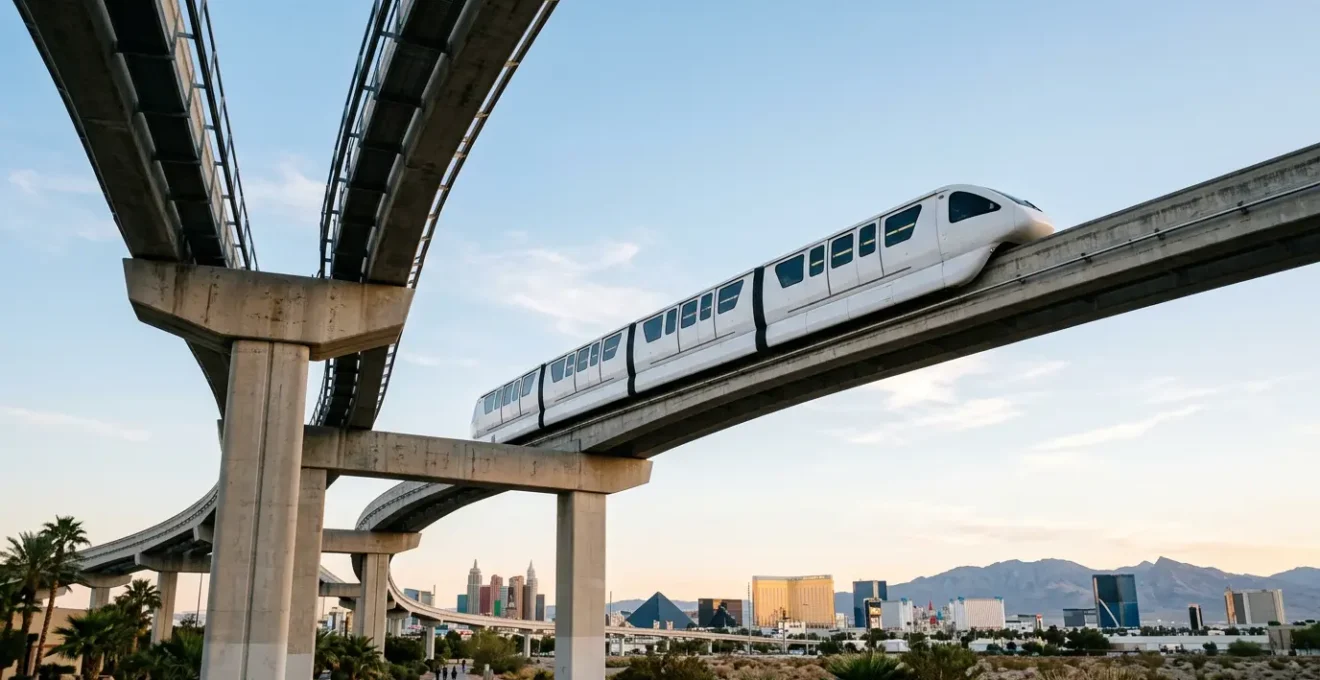
The Las Vegas Monorail is more than just transport; it’s a strategic tool to conquer the Strip’s notorious gridlock and save significant time and money.
- Understanding the precise economic trade-offs against rideshares determines when a pass is a smart investment versus a waste.
- Mastering the « hidden » station paths inside casinos is the key to minimizing walking and maximizing efficiency.
Recommendation: Treat the Monorail, free trams, and rideshares as a combined system, choosing the best option for each specific trip rather than relying on a single mode of transport.
Las Vegas Boulevard—the iconic Strip—is a spectacle of lights, sounds, and people. It is also, more often than not, a frustratingly slow-moving parking lot. For convention attendees on a tight schedule and savvy travelers who value their time, the gridlock of taxi and rideshare traffic is a major logistical bottleneck. Many visitors resort to long, tiring walks or simply accept the high cost and wasted time of being stuck in traffic. The solution is often hiding in plain sight, running silently on an elevated track behind the casinos.
While most guides mention the Las Vegas Monorail, they often stop at listing its price and stations. They treat it as a simple alternative, not the strategic asset it can be. The real key to mastering the Strip isn’t just knowing the Monorail exists; it’s understanding its ecosystem. It’s about a concept we’ll call Transit Arbitrage: the art of choosing the most efficient option—Monorail, free trams, or even a strategic Uber ride—for every specific scenario. This involves knowing the hidden station pathways, the critical late-night schedule vulnerabilities, and the precise cost-per-trip thresholds.
This guide moves beyond the basics. We will not just show you a map; we will give you a new framework for thinking about movement in Las Vegas. Forget just getting from A to B. It’s time to learn how to navigate the Strip’s « back-of-house network » like a seasoned pro, turning a source of frustration into your competitive advantage.
This comprehensive guide will break down the essential strategies for using the Las Vegas Monorail and associated transit systems. Below is a summary of the key areas we will cover, from cost-benefit analysis to navigating the future of Vegas transport.
Summary: Your Strategic Guide to Navigating the Las Vegas Strip
- Why a Monorail Pass is Cheaper Than Two Uber Rides?
- How to Find the Monorail Stations Hidden in the Back of Casinos?
- Monorail vs. The Deuce Bus: Which is Faster for Strip Travel?
- The Risk of Relying on the Monorail After 2 AM on Weekdays
- How to Share a Multi-Day Pass Strategy Within a Group?
- How to Utilize the 3 Free Tram Systems to Save Your Feet?
- Why Elon Musk’s Tesla Tunnel is the Future of Convention Transport?
- Airport Shuttles: How to Get to Your Hotel Without Overpaying for a Limo?
Why a Monorail Pass is Cheaper Than Two Uber Rides?
The most common question for any transit system is simple: « Is it worth it? » In Las Vegas, the answer depends entirely on your itinerary. A single Uber or Lyft ride down a 4-mile stretch of the Strip can easily cost $15-$20 before surge pricing, which is almost guaranteed during peak convention hours or after a major show. A 24-hour unlimited Monorail pass, by contrast, is a fixed price. The math seems obvious, but the decision requires a more nuanced approach—a practice of Transit Arbitrage. You must weigh the fixed cost of a pass against the variable, often inflated, cost of on-demand rides.
The key is to predict your movements. If you plan to make at least two significant journeys along the Monorail’s route within 24 hours—for example, from your hotel near the Convention Center to a dinner show at the MGM Grand and back—the pass almost always wins. However, the Monorail isn’t a universal solution. For groups, the economics can flip; as travel experts note, a single $25 Uber for four people can be cheaper than four individual Monorail tickets for the same journey. The following table breaks down a typical scenario for a solo traveler or couple.
| Transportation Type | Single Trip Cost (4 miles) | 24-Hour Unlimited | Notes |
|---|---|---|---|
| Monorail (e-Ticket) | $5.50 | $13.45 | Consistent pricing, no surge |
| Uber (Standard) | $14.40 | N/A | Plus surge pricing during peak |
| Lyft (Standard) | $14.95 | N/A | Plus surge pricing during events |
| Taxi | $20.65+ | N/A | Plus tip and credit card fee |
The data clearly shows that for individuals making multiple trips, the unlimited pass offers substantial savings and, more importantly, cost predictability. It removes the sting of surge pricing from your budget, allowing for more spontaneous travel along the eastern side of the Strip.
How to Find the Monorail Stations Hidden in the Back of Casinos?
The Monorail’s single greatest advantage—bypassing surface-level traffic—is also the source of its biggest navigational challenge. The stations are not conveniently located on the Strip sidewalk. Instead, they are integrated into the rear of the massive casino properties. This design is intentional; it forces you to walk through the casino, but for a first-timer, it can feel like a confusing labyrinth. This is the « feet-on-the-ground cost« —the time and energy spent simply getting to the platform. An efficiency expert minimizes this cost by learning the routes.
This is where you gain an edge. Learning the pathways transforms the Monorail from a confusing option into your personal « back-of-house network. » Instead of being a lost tourist, you navigate with purpose through designated corridors, past convention center access points and employee areas, bypassing the casino floor chaos. The key is to look for the overhead directional signage as soon as you enter a host casino. These signs are your lifeline. The journey to the MGM Grand station, for example, is a multi-stage process that involves escalators and a subterranean walkway.

As the image suggests, these pathways are often modern and well-lit, designed for efficient movement away from the gaming floor. Mastering one or two of these routes, especially the one at your « home base » casino, is a fundamental skill. Don’t wander aimlessly; enter the casino with the mission of finding the Monorail and follow the signs diligently. Below is a practical audit to help you plan your routes.
Your Action Plan: The Casino Navigation Audit
- Points of contact: Before your trip, identify the two Monorail stations you’ll use most. Look at a satellite map to see where they are in relation to the casino’s main entrance.
- Collecte: Upon arrival at the casino, immediately look for « Monorail » directional signage. Take a photo of the first sign you see for reference.
- Coherence: Follow the signs. Does the path feel logical, or are you doubling back? Note any confusing intersections or lack of signage.
- Mémorabilité/émotion: Is the path a quick walk down a sterile hallway or a long trek through a crowded shopping promenade? Assess the « feet-on-the-ground cost. »
- Plan d’intégration: Based on your audit, decide if this station is an efficient part of your plan or if a rideshare from the main casino entrance would be faster for certain trips.
Monorail vs. The Deuce Bus: Which is Faster for Strip Travel?
For budget-conscious travelers, the primary alternative to the Monorail is The Deuce, the 24/7 double-decker bus that runs the length of the Strip. On paper, The Deuce seems like a strong contender with its lower 24-hour pass price and broader coverage, including Downtown Las Vegas. However, the efficiency expert’s primary currency is time, and in this regard, there is no contest. The Deuce is a slave to the same gridlock the Monorail was built to avoid.
The Monorail operates on its own elevated track, completely immune to traffic jams, accidents, or street closures. According to official Monorail data, it takes just 15 minutes to travel its entire 3.9-mile route from the MGM Grand to the Sahara. A similar journey on The Deuce during moderate traffic could take 30-45 minutes, and far longer during peak hours. The choice becomes a classic trade-off: The Deuce offers better coverage and a front-row seat to the Strip’s spectacle, but the Monorail offers unparalleled speed and predictability along its specific corridor.
The table below provides a clear, at-a-glance comparison for making a strategic decision based on your priorities for a given trip.
| Factor | Las Vegas Monorail | The Deuce Bus |
|---|---|---|
| Route Coverage | East side only (MGM to Sahara) | Entire Strip + Downtown |
| Speed | Fast: 15 min full route | Slow: 30+ min in traffic |
| Frequency | Every 4-8 minutes | Every 15 minutes |
| Hours | 7am-midnight (Mon), 7am-3am (Fri-Sun) | 24/7 operation |
| Cost (24-hour) | $13.45 (e-ticket) | $8 |
| View | Behind-the-scenes, elevated | Front-row Strip spectacle |
For a convention attendee needing to get from a meeting at the LVCC to a dinner at Harrah’s, the Monorail is the only logical choice. For a tourist wanting a leisurely, scenic trip to the Fremont Street Experience, The Deuce is the superior option. The savvy traveler uses both, deploying each system for its unique strengths.
The Risk of Relying on the Monorail After 2 AM on Weekdays
The Monorail’s greatest weakness is that it is not a 24/7 service. This creates a significant « schedule vulnerability » for travelers, especially those enjoying Las Vegas’s late-night offerings. Assuming the Monorail will be there for you after a late show or casino session on a weekday can lead to a long, frustrating walk or an expensive surge-priced rideshare. An efficiency expert knows the schedule by heart and always has a Plan B.
The operating hours are not consistent across the week. While the system runs until 3 a.m. on weekends (Friday-Sunday), it closes earlier during the week. Most critically, as the official schedule states, it closes at midnight on Mondays and 2 a.m. on Tuesdays through Thursdays. Missing that last train by minutes can strand you at the back of a casino, far from the main taxi stands on Las Vegas Boulevard. This is a rookie mistake you must avoid.
Your strategy must include a pre-planned alternative for any travel after 11:30 p.m. on a Monday or 1:30 a.m. on other weekdays. This means knowing the location of the nearest taxi stand, having both Uber and Lyft apps ready to compare prices, or knowing the route to the nearest stop for The Deuce bus, which does run 24/7. Having a contingency plan isn’t pessimistic; it’s a core component of a resilient and stress-free transit strategy.
Here are some specific Plan B options to consider depending on your location when the Monorail shuts down:
Late-Night Plan B Alternatives by Station
- MGM Grand: Exit to Las Vegas Boulevard and use the taxi stand near the main entrance
- Sahara: Walk west through the resort to Las Vegas Boulevard, turn right to find the Deuce bus stop north of main entrance
- Convention Center: Limited late-night options; pre-arrange rideshare pickup at Convention Center Drive
- All Stations: Download both Uber and Lyft apps for maximum driver availability during surge periods
How to Share a Multi-Day Pass Strategy Within a Group?
Traveling in a group introduces new layers of complexity to your transit strategy. The immediate temptation might be to buy everyone an unlimited multi-day pass and assume you’re covered. This can be a costly mistake. The first and most important rule to understand is the official policy on pass sharing. As a matter of policy, passes are not designed to be shared.
The Las Vegas Monorail’s official policy is clear and must be respected. As one transit guide notes, there is a fundamental rule about pass usage:
Unlimited-ride passes are typically non-transferable and intended for the use of the pass holder only.
– Las Vegas Monorail Official Policy, Lively Vegas Monorail Guide
With this rule in mind, the strategic question becomes one of economic optimization for the group as a whole. Does everyone need a pass? Or would a hybrid approach be more cost-effective? This is where your role as the group’s transit expert comes in. You need to analyze the group’s likely travel patterns. Will you always be traveling together, or will individuals split off for different activities? The answer determines the most efficient strategy.
For a group of four attending a convention, where everyone will be making multiple, independent trips between the hotel, LVCC, and evening events, four individual passes might be the best investment. But for a family that plans to stick together, a single Uber XL for key journeys combined with using the free trams could be significantly cheaper. The table below illustrates the economic breakdown for a hypothetical group.
| Scenario | Cost Breakdown | Best For |
|---|---|---|
| 4 Individual 3-Day Passes | 4 × $29.95 = $119.80 | Group splits frequently, everyone travels independently |
| Shared Uber XL (6 rides) | ~$25 × 6 = $150 | Group always travels together, direct hotel-to-hotel |
| 2 Passes + Strategic Uber | $59.90 + ~$50 Uber = $109.90 | Hybrid: heavy users get passes, occasional riders share Uber |
| Single Rides As-Needed | $5.50 × 18 rides = $99 | Only 3 trips per person over 3 days |
How to Utilize the 3 Free Tram Systems to Save Your Feet?
While the Monorail is the star of the paid transit systems, a savvy traveler’s secret weapon is the network of free, automated trams operating on the west side of the Strip. These are often overlooked but are essential tools for reducing the « feet-on-the-ground cost » of your journey. Integrating these free trams into your travel plan can save you miles of walking and connect you to key locations the Monorail doesn’t directly service.
There are three main free tram systems, each serving a specific cluster of casinos:
- Mandalay Bay Tram: Connects Mandalay Bay, Luxor, and Excalibur at the south end of the Strip.
- Aria Express Tram: Connects Park MGM, Aria/Crystals, and Bellagio in the mid-Strip.
- Mirage-Treasure Island Tram: Connects the two namesake properties further north.
The real strategic value comes from using these trams as « feeders » to the Monorail system. The most powerful move is the « Bellagio-to-MGM Connection. » A traveler can take the free Aria Express Tram from the Bellagio to the Park MGM station. From there, it’s a relatively short walk across the street to the MGM Grand, where you can access the main southern terminus of the Las Vegas Monorail. This single hack connects the entire west-side mid-Strip to the Monorail’s eastern corridor, effectively doubling your high-speed transit options for the price of a short walk.
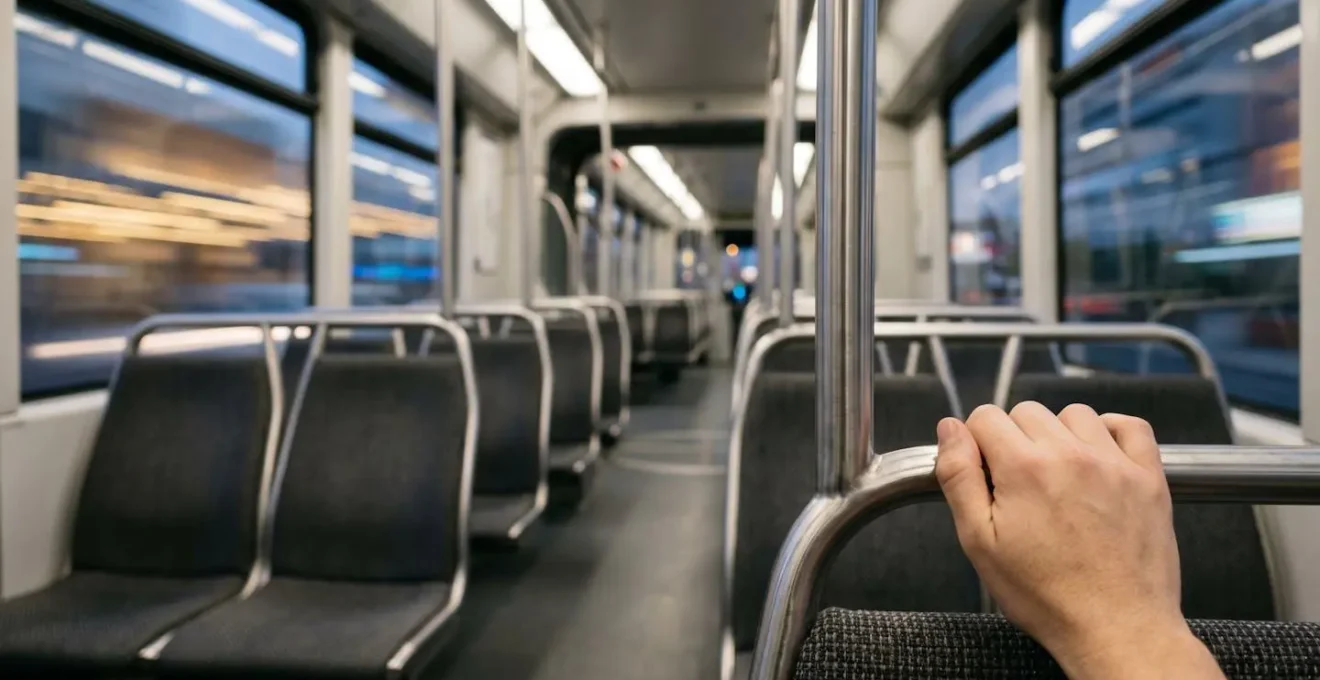
These trams are clean, efficient, and offer a moment of air-conditioned respite. They are a crucial component of the larger « back-of-house network » that allows you to move with an efficiency that casual tourists, slogging along the crowded sidewalks, can only dream of.
Why Elon Musk’s Tesla Tunnel is the Future of Convention Transport?
While the Monorail is the established workhorse for Strip transit, the future is rapidly taking shape in a series of tunnels beneath the Las Vegas Convention Center (LVCC). The Vegas Loop, developed by Elon Musk’s The Boring Company, represents the next paradigm in point-to-point urban transport. For convention attendees, it’s not just a novelty; it’s a game-changing tool for efficiency.
Unlike the Monorail with its fixed stops, the Vegas Loop uses human-driven Teslas in a network of tunnels to provide an express, on-demand service. The primary function right now is to move attendees across the vast LVCC campus, turning a 25-minute walk from the West Hall to the South Hall into a 2-minute ride. The system is expanding, and according to current Las Vegas transportation data, it already connects the LVCC to several major resorts, with dozens more planned.
The Vegas Loop doesn’t replace the Monorail; it complements it by solving a different problem. The Monorail is a linear, mass-transit system for north-south travel along the Strip. The Loop is a non-stop, point-to-point system for short, high-demand routes. Its success in connecting the LVCC to a major resort serves as a powerful proof of concept.
Case Study: Resorts World-LVCC Connector
The Resorts World-LVCC Connector provides a direct connection between Resorts World on the Las Vegas Strip and multiple exhibition halls at the Las Vegas Convention Center, with travel times varying from 1 to 4 minutes based on destination. Phase 1 is complete and operational, demonstrating the concept’s viability for convention attendees.
As the Loop expands to include the airport and downtown, it will become an increasingly vital part of the city’s transit ecosystem. The savvy traveler of tomorrow will use the Monorail for long-haul Strip travel, the free trams for hyper-local casino hopping, and the Vegas Loop for express trips to and from convention venues.
Key Takeaways
- A Monorail pass is a strategic buy, not a default purchase. It’s most valuable when you plan at least two long-distance trips in a day.
- The true cost of the Monorail includes the « feet-on-the-ground » time spent navigating casino interiors to reach the hidden stations.
- The Monorail offers speed, while The Deuce bus offers coverage and 24/7 operation. The expert traveler knows when to use each.
Airport Shuttles: How to Get to Your Hotel Without Overpaying for a Limo?
Your strategic transit plan for Las Vegas begins the moment you land at Harry Reid International Airport (LAS). The options for getting to your hotel can be overwhelming, with barkers trying to sell you everything from a shared van to a private limousine. For the efficiency-focused traveler, the goal is to find the optimal blend of cost, speed, and convenience for your specific situation. There is no single « best » way; the right choice depends on your traveler profile.
A common mistake is to assume a taxi is the easiest option. While they are readily available, they are also one of the most expensive ways to get to the Strip, especially if you get stuck in tunnel traffic. Rideshare services like Uber and Lyft are often more affordable, with an average cost of around $25 for a trip to the Strip. However, during peak arrival times, surge pricing can erase those savings, and wait times at the dedicated rideshare pickup area can be long.
For the solo budget traveler, the RTC public bus is the undisputed king of low-cost travel, though it is also the slowest. For groups, a pre-booked Uber XL often provides the best value, offering door-to-door service for a price that, when split, is highly competitive. The most strategic option for a Monorail user is often a direct taxi or Uber to the nearest Monorail-connected hotel (like the MGM Grand), allowing you to drop your bags and immediately leverage your multi-day pass for the rest of your trip.
This table ranks the best options based on common traveler profiles, helping you make a quick, smart decision upon arrival.
| Traveler Profile | Best Option | Estimated Cost | Travel Time |
|---|---|---|---|
| Solo Budget Backpacker | RTC Bus | $6 (day pass) | 45-60 min |
| Time-Pressed Couple | Taxi/Uber direct to MGM, then Monorail | $25-30 + pass | 20 min |
| Group of 4+ | Pre-booked Uber XL | $25-40 split 4 ways | 15-20 min |
| Late-Night Arrival (after midnight) | Taxi (shorter wait than rideshare) | $25-35 + tip | 15 min |
| Convention Attendee | Shared shuttle to Convention Center | ~$15 | 30-60 min (multiple stops) |
Ultimately, mastering Las Vegas transit is a mindset. It’s about seeing the Monorail, buses, trams, and rideshares not as competing choices, but as a suite of tools. By applying a strategic filter of cost, time, and convenience to every journey, you elevate yourself from a mere tourist to a master of the urban landscape. Start applying these strategies on your next trip to transform your experience of navigating the city.