
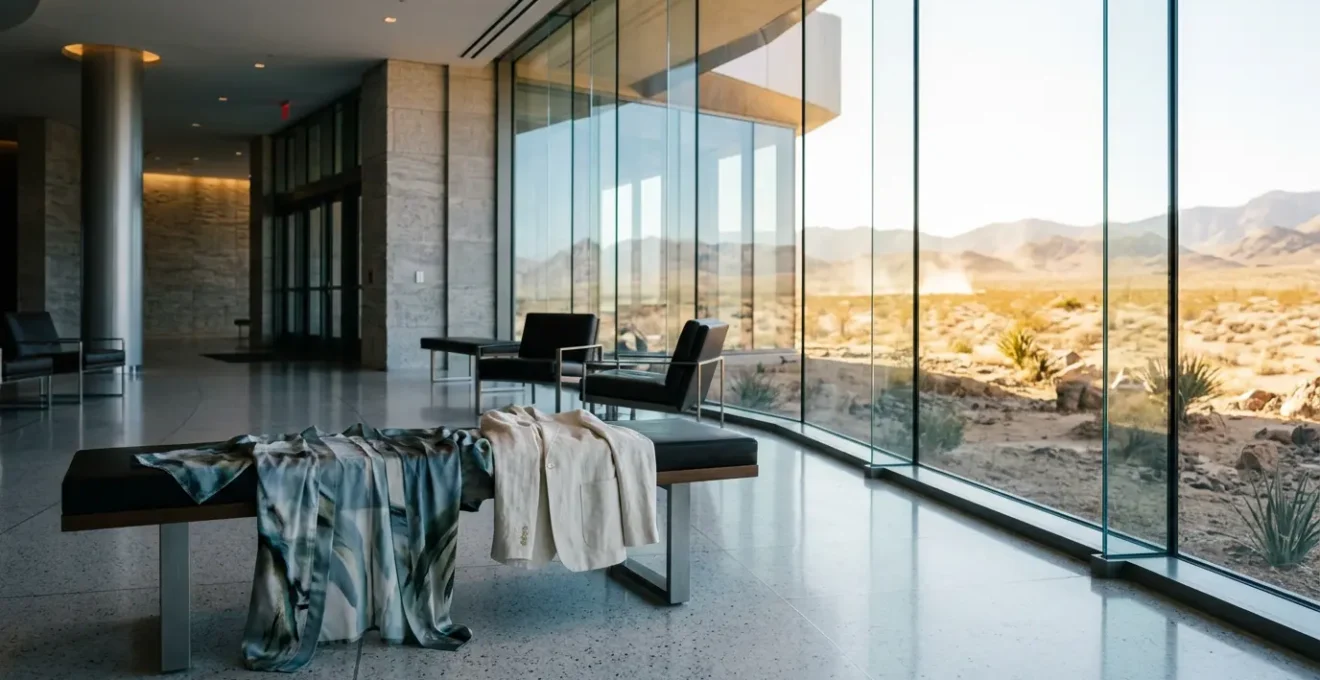
The key to conquering casino temperatures isn’t packing more clothes—it’s adopting a strategic system of performance fabrics and intentional layering to defeat the extreme thermal shock.
- Casinos are intentionally kept cold (around 68°F) for psychological reasons, creating a huge temperature gap with the summer heat outside.
- Standard « light fabrics » like linen often fail; the secret lies in moisture-wicking, thermoregulating blends like Merino-Tencel that manage the sweat-to-freeze transition.
Recommendation: Base your layering decisions on your itinerary (e.g., a long show or dinner) rather than the time of day, and always have a stylish, packable « third piece » ready.
We’ve all felt it. That jarring moment you step from the shimmering, 100-degree desert heat into a casino and a wall of arctic air hits you. Your carefully chosen summer outfit, perfect for a poolside lounge or a stroll down the Strip, suddenly feels laughably inadequate. The immediate reaction is a shiver, followed by the frustrating realization that you’ll be uncomfortably cold for the next several hours. You packed for the heat, but you’re living in a freezer.
The common advice is as predictable as it is insufficient: « bring a sweater. » This platitude fails to address the core of the problem—the extreme and rapid temperature transition. For the fashion pragmatist, the real challenge isn’t just about having an extra layer; it’s about managing the journey from sweat-inducing heat to air-conditioned chill without sacrificing style or comfort. It’s a battle of material science and strategic preparation.
But what if the solution wasn’t just another pashmina stuffed in your tote? What if the key was a deliberate system, an engineered approach to your wardrobe that anticipates and conquers this thermal shock? This guide moves beyond the basics. We’re not just talking about what to wear; we’re exploring the science of why casinos are so cold, how different fabrics perform in these extreme transitions, and how to build a versatile, stylish wardrobe that leaves you in complete control of your own microclimate.
This article provides a complete system for mastering casino climate control. We will explore the psychology behind the cold temperatures, detail a strategic layering method, compare the performance of key fabrics, and even provide an emergency shopping guide for when you need a solution on the fly. Follow this guide, and you’ll never be left shivering again.
Table of Contents: A Strategic Guide to Casino Climate Control
- Why Do Casinos Keep the Temperature at Meat-Locker Levels?
- How to Layer a « Day Club » Outfit for an Evening in the Casino?
- Linen vs. Synthetic: Which Fabric Handles the Sweat-to-Freeze Transition Best?
- The Risk of Being Too Casual: Where « Resort Wear » Ends and « Sloppy » Begins
- When to Carry a Jacket: The Critical Sunset Temperature Drop?
- Why Do Specific Casinos Smell Like Coconut or Fresh Linen?
- What to Pack for July: Why « Light Fabrics » Aren’t Enough?
- Retail Therapy: How to Shop the Strip Without Paying Tourist Prices?
Why Do Casinos Keep the Temperature at Meat-Locker Levels?
The bone-chilling temperature inside a casino isn’t an accident or a poorly calibrated thermostat; it’s a calculated environmental strategy. While the old adage suggests it’s to « keep players awake, » the reality is a more nuanced form of psychological manipulation designed to encourage longer stays and increased spending. As one expert in behavioral psychology notes, this is part of a much larger system of control.
As Kenneth Freundlich, Ph.D., explains in his analysis of casino psychology, operators meticulously craft every aspect of the indoor environment. He states:
Casino operators employ psychological methods when designing the physical layout, color schemes, gameplay, and even fragrance in the air to encourage spending. They also control the temperature, air quality, and even the lighting inside the building.
– Kenneth Freundlich, Ph.D., Morris Psychological Group – Casino Psychology Analysis
The cold, fresh air serves multiple purposes. First, it creates a stark contrast with the oppressive outdoor heat, making the casino a literal oasis that you’re reluctant to leave. This effect is powerful when there is a 40- to 50-degree temperature discrepancy between the scorching sidewalk and the cool casino floor. Second, a cooler environment is perceived as more luxurious and refreshing, subtly encouraging a feeling of well-being and a willingness to indulge. Finally, the consistent, controlled climate contributes to a sense of timelessness, detaching you from the natural cues of the outside world and keeping you focused on the games within. Understanding this intentional design is the first step to strategically dressing against it.
How to Layer a « Day Club » Outfit for an Evening in the Casino?
The transition from a sun-drenched day club to an air-conditioned casino floor is the ultimate test of a traveler’s wardrobe. The key is not to think in terms of separate outfits, but as a modular system. This is where the « Third Piece Rule » becomes your most valuable asset. Your base outfit (e.g., a stylish top and shorts or a sundress) is your first and second piece. The third piece is your strategic, easily added-or-removed layer that provides warmth and elevates the entire look.
This third piece shouldn’t be an afterthought; it should be chosen with the same care as the rest of your outfit. Think of a fine-knit cardigan, a silk-blend kimono, or a structured linen overshirt. These items provide significant warmth without the bulk of a traditional jacket, and their fabric and drape add a layer of sophistication that instantly transitions your look from « day » to « evening. »
A successful layering system also depends on a convertible carry solution. The third piece is useless if it’s back in your hotel room. Opt for packable totes that fold into small pouches or a chic crossbody bag that’s just large enough to hold your rolled-up layer. The goal is to make carrying your warmth-providing layer effortless when you’re outside, so it’s always on hand the moment you step into the cold. This synergy of a stylish base, a strategic third piece, and a smart carry method is the core of mastering the day-to-night casino transition.
Linen vs. Synthetic: Which Fabric Handles the Sweat-to-Freeze Transition Best?
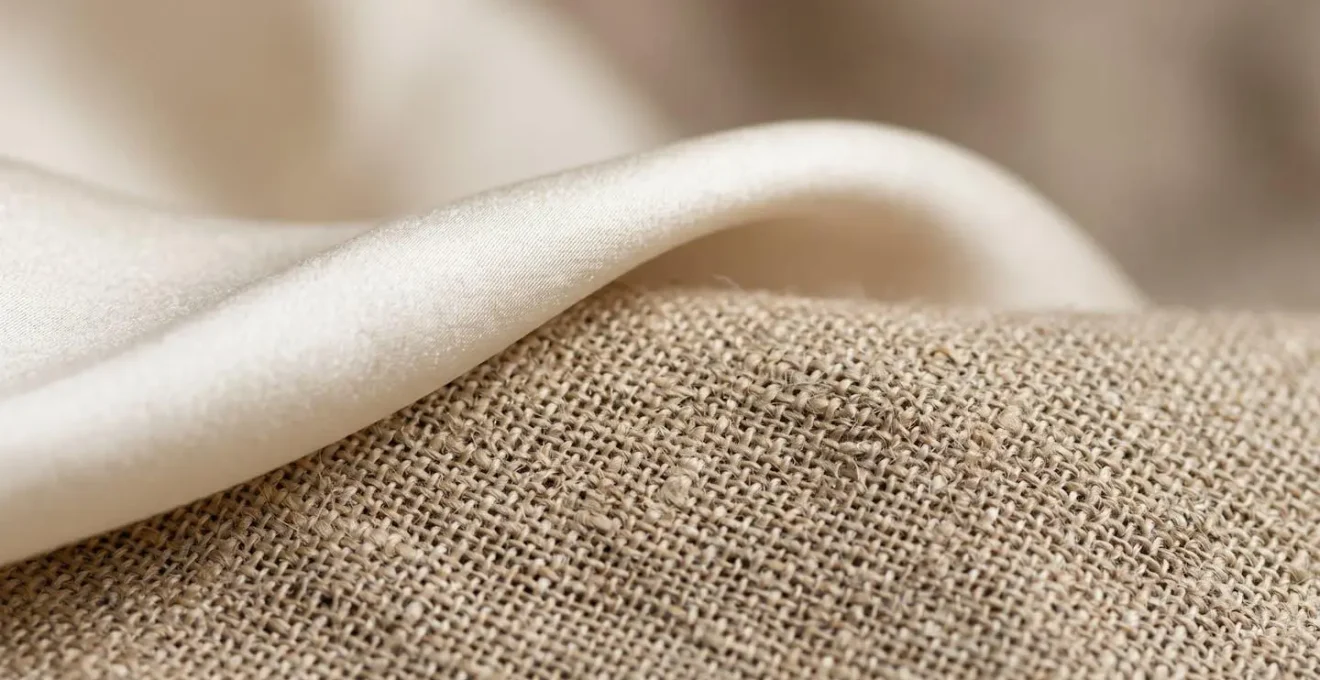
The choice of fabric is the most critical and often overlooked element in dressing for casino climate control. While many instinctively reach for « light fabrics » like linen for the outdoor heat, they often fail spectacularly in the transition to indoor cold. Linen is breathable, but it absorbs and holds moisture. When you walk into a cold casino after perspiring in the heat, that damp linen turns clammy and cold against your skin, actively working against your comfort. This is where the science of performance textiles becomes your best friend.
The ideal fabric for this extreme transition is one that excels at moisture management and thermoregulation. As the following comparison shows, modern hybrid blends far outperform traditional summer staples. According to performance textile analysis, Tencel is 50% cooler than pure merino wool and dries three times faster, highlighting the power of these advanced materials.
| Fabric Type | Moisture Management | Wrinkle Resistance | Chill Transition | Best Use Case |
|---|---|---|---|---|
| Linen | Good breathability but holds moisture | Poor – wrinkles badly | Can feel clammy when cold | Outdoor heat only |
| Basic Synthetics | Quick-drying but can feel clammy | Good | Poor thermal regulation | High-intensity activity |
| Merino Wool | Excellent vapor-stage wicking | Good natural recovery | Superior thermoregulation | All temperature transitions |
| Tencel/Lyocell | Absorbs 20% water at 90% humidity, dries 3x faster than merino | Excellent | Active cooling effect | Hot & humid conditions |
| Hybrid Blends (Merino/Tencel) | Best of both – wicking + absorption | Excellent | Optimal microclimate control | Extreme transitions (heat to AC) |
The clear winner for the casino environment is a hybrid blend, particularly Merino wool and Tencel (also known as Lyocell). This combination offers the best of both worlds: Merino wool’s incredible ability to regulate temperature (keeping you warm when it’s cold and cool when it’s hot) and Tencel’s superior moisture-wicking and rapid-drying properties. An outfit based on these fabrics will actively pull moisture away from your skin in the heat and maintain a dry, insulating layer of air when you move into the cold, effectively creating a personal microclimate that neutralizes the thermal shock.
The Risk of Being Too Casual: Where « Resort Wear » Ends and « Sloppy » Begins
While battling the temperature is your primary concern, navigating the often-unspoken dress codes is a close second. The line between « chic resort wear » and « too casual » can be fine, and crossing it can lead to an awkward conversation at the entrance to a restaurant or lounge. While most casino floors are relatively relaxed during the day, the standards universally elevate after 6 PM, and higher-end properties maintain a stricter code at all times. A key mistake is assuming anything you’d wear to the pool is acceptable indoors.
The most common offenders are footwear and swim cover-ups. Foam flip-flops and athletic slides are almost universally frowned upon, even in more relaxed venues. A simple switch to a leather slide or an elegant flat sandal makes a world of difference. Similarly, wearing a sheer swim cover-up over a bikini as an outfit is a clear signal of « poolside, » not « evening entertainment. » The goal is to look intentionally put-together, even in a casual setting. A structured layer, proper footwear, and avoiding overt athletic or swimwear are the fundamental rules for staying on the right side of the dress code.
Your Action Plan: Navigating Casino Dress Codes
- Identify the Tier: Know the reputation of your destination. A night at the Wynn (Tier 1) requires a different standard than a casual afternoon at the Flamingo (Tier 3).
- Apply the Footwear Test: Assess your shoes. Are they leather or a refined material? (Good). Are they foam, rubber, or designed for a locker room? (Leave them in the hotel room). This is the quickest way to elevate your look.
- Respect the 6 PM Shift: Plan your day-to-night transition. After 6 PM, ensure you’ve shed any obvious beachwear (e.g., athletic tanks, swim cover-ups) and added a more structured element to your outfit.
- Check for Structure: Look at your layering piece. Is it a tailored blazer, a well-draping cardigan, or a silk kimono? (Excellent). Is it a wrinkled hoodie or a team-logo windbreaker? (Too casual for evening).
- Confirm with the Venue: When in doubt for a specific restaurant or show, a quick check of their website’s FAQ or a call to the concierge can save you from a dress code mishap.
By thinking in tiers and applying these simple litmus tests, you can navigate any casino’s dress code with confidence, ensuring your carefully planned outfit is appreciated, not questioned.
When to Carry a Jacket: The Critical Sunset Temperature Drop?
A common mistake is to base the decision to carry a layer on the time of day or the outdoor temperature. While the desert does cool after sunset, the most significant temperature drop you’ll experience is the one you create by walking through a casino’s doors. The single most important factor in your decision should be your itinerary. The rule is simple: the longer you plan to be continuously indoors, the more essential your « third piece » becomes.
Casinos maintain a remarkably consistent climate. Standards dictate a year-round indoor environment that rarely deviates from a narrow band, with an average temperature of 68°F (20°C). If your plans involve a two-hour dinner followed by a three-hour show, you will spend five continuous hours in that 68°F environment. In this scenario, a layer is not optional; it is a non-negotiable part of your outfit, regardless of whether you enter the building at 3 PM or 9 PM. Conversely, if you’re simply walking through a casino for 15 minutes to get to another location, you might forgo the extra piece.
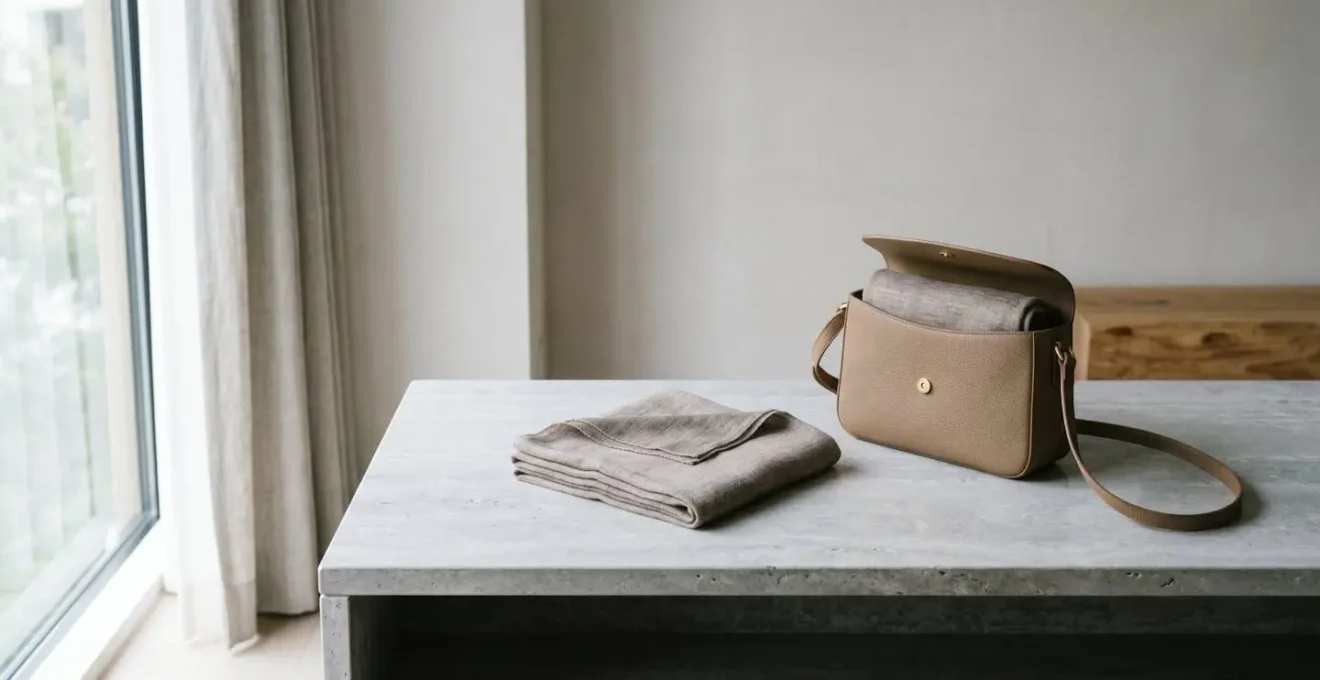
The most pragmatic approach is to always have a solution ready. This is where the concept of the ultra-packable layer comes in. A featherlight pashmina made from a cashmere blend or a technical wind shell made from performance fabric can be compressed to the size of a fist and kept in your bag. This « emergency layer » strategy ensures you are never caught unprepared. Your decision-making process should be based on planned indoor duration, not the sun’s position in the sky.
Why Do Specific Casinos Smell Like Coconut or Fresh Linen?
Just as temperature is a tool of environmental control, so is scent. If you’ve ever walked into The Venetian and been transported to an Italian seaside by a floral, slightly musky aroma, or felt a sense of clean relaxation at Mandalay Bay with its notes of coconut and spice, you’ve experienced « scent marketing. » This is a highly sophisticated practice where custom fragrances are pumped through the ventilation system to create a specific, brand-aligned mood and, more importantly, to influence behavior.
The goal is to create a powerful, subconscious association between a pleasant feeling and the casino’s brand. A pleasant scent can mask the less desirable smells of a crowded space (like smoke) and create an atmosphere of luxury and cleanliness. This makes patrons feel more comfortable, encouraging them to linger longer and, consequently, spend more money. The financial impact of this olfactory manipulation is staggering.
The link between scent, mood, and spending is not just theoretical. It’s been studied and quantified. For example, a study of casino scent marketing found a stunning 45% increase in revenue from slot machines when a pleasant, specifically designed fragrance was diffused in the gaming area. This proves that the scent in the air is as much a part of the casino’s business model as the cards and chips. It’s another invisible force, like the temperature, designed to shape your experience and open your wallet.
What to Pack for July: Why « Light Fabrics » Aren’t Enough?
Packing for a summer trip to a casino destination like Las Vegas presents a unique sartorial challenge. The mantra is often « pack light fabrics, » but this advice is dangerously incomplete. As we’ve established, a fabric’s weight is far less important than its performance characteristics, specifically its ability to manage moisture and regulate temperature. A « light » cotton or linen dress can become your worst enemy, turning into a cold, damp cloth the moment you step inside from the heat.
The truly savvy traveler thinks beyond weight and focuses on function. The goal is to build a wardrobe of pieces that work in synergy to manage the extreme temperature swings. This means prioritizing materials that are both breathable for the heat and insulating when dry. Your packing list should be less about a collection of individual items and more about a curated system of compatible layers that can be combined to create a comfortable microclimate in any environment.
Case Study: The Power of Merino-Tencel Blends
A travel clothing case study focused on extreme temperature transitions highlights the exceptional performance of Merino-Tencel fabric blends. This combination is ideal for the exact scenario of moving from 100°F+ heat to a 68°F casino. The Tencel component actively absorbs moisture and creates a cooling sensation on the skin while outdoors. Upon entering the cold, its rapid-drying properties work in tandem with merino wool’s natural thermoregulation to trap a layer of dry, warm air, preventing the post-perspiration chill. This demonstrates how a fabric that is softer than silk and cooler than linen can provide superior performance, proving that the right « light fabric » is one engineered for technical performance, not just low weight.
So, when packing for July, instead of just grabbing the lightest items in your closet, audit them for performance. Ask yourself: will this fabric wick moisture away or hold onto it? Will it feel good when it’s 100°F and when it’s 68°F? Building your travel wardrobe around performance-oriented pieces like Merino-Tencel tops, silk-blend blouses, and packable fine-knit cardigans is the only way to truly solve the casino climate paradox.
Key takeaways
- Casinos are intentionally kept cold as a psychological tool to create a comfortable « oasis » and encourage longer stays and more spending.
- The solution to the thermal shock is a strategic system: a moisture-wicking base layer, a stylish « third piece » for warmth, and a smart carry solution.
- Fabric choice is paramount; performance blends like Merino-Tencel manage the sweat-to-chill transition far better than traditional summer fabrics like linen or cotton.
Retail Therapy: How to Shop the Strip Without Paying Tourist Prices?
Even the most prepared traveler can find themselves caught off guard. Perhaps the cold is more biting than you expected, or you forgot your essential layering piece in a rush to dinner. Fortunately, you’re in a city built on retail. However, buying an « emergency layer » on the Strip can be a costly affair. The key is to know where to look to find a stylish, practical solution without paying exorbitant « tourist tax. »
Your first instinct might be the high-end designer shops in The Shops at Crystals or the Forum Shops, but a quality layering piece there could set you back hundreds. A more strategic move is to head to the Miracle Mile Shops at Planet Hollywood. It offers a mix of mid-range retailers where you can find a stylish, non-souvenir pashmina, wrap, or cardigan for under $50. For even better value, a short ride-share trip is your best bet. The Las Vegas North Premium Outlets are a 15-minute drive away and host stores like Theory, Saks Off 5th, and Lululemon, where you can find high-quality blazers, versatile technical jackets, or designer wraps at a significant discount.
Timing and tactics matter, too. If you must shop on the Strip, asking politely for any available discounts on a weekday (Tuesday-Thursday) can sometimes yield an unadvertised 10-15% off. When visiting the outlets, go early (9-11 AM) to avoid the crowds and get the best selection. Knowing these strategic shopping hacks can turn a moment of wardrobe panic into a savvy shopping victory, allowing you to acquire the perfect layering piece and get back to enjoying your evening in comfort and style.
Now that you have the complete strategy for conquering casino climate, the next step is to audit your own travel wardrobe. Before your next trip, review your go-to pieces through this new lens of material science and strategic layering to build a system that guarantees your comfort and style.