
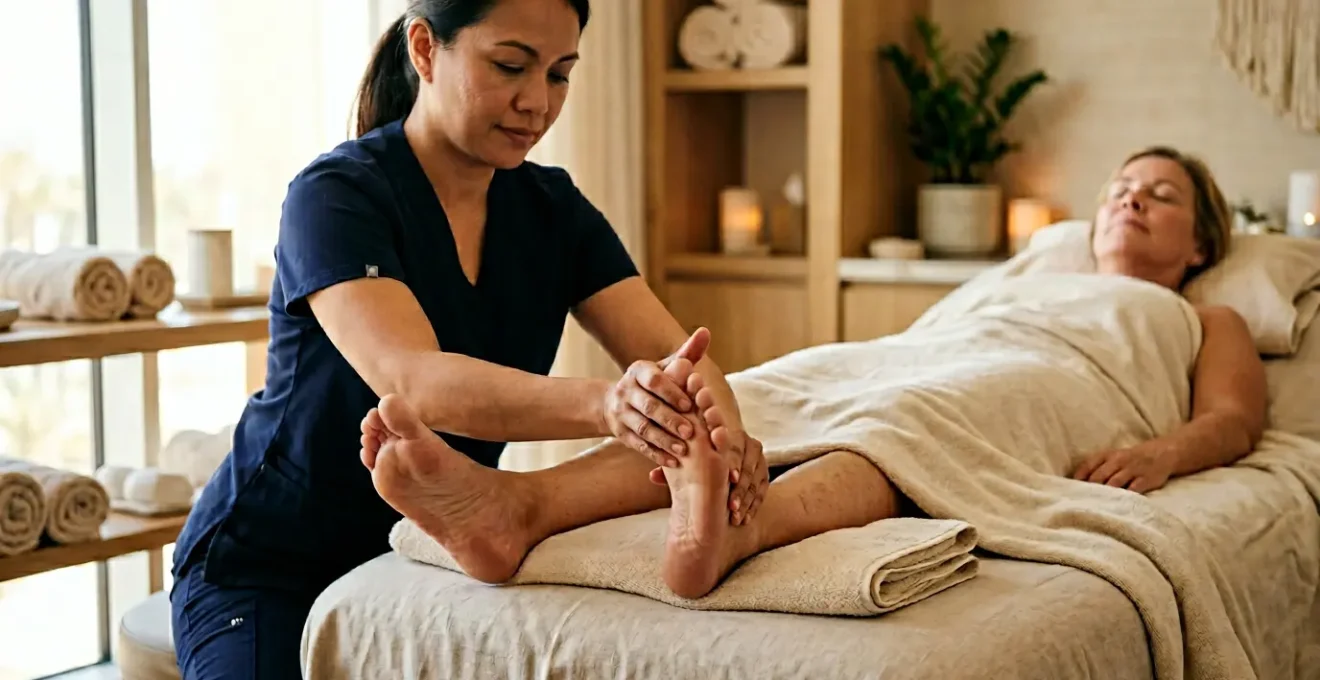
The key to recovering from a Las Vegas trip isn’t just rest; it’s a strategic, physiological intervention to reverse specific stressors like lymphatic congestion and extreme muscle fatigue.
- Targeted massage techniques, such as Lymphatic Drainage for bloating, are vastly more effective than generic Swedish massages.
- Proactive strategies—like using trams and hydrotherapy circuits—can prevent more than 50% of the physical breakdown before it even starts.
Recommendation: Treat your Vegas recovery like an athletic event: prepare with a wellness kit, execute precise recovery techniques based on your symptoms, and refuel with targeted hydration.
The familiar Las Vegas aftermath: a throbbing head, swollen ankles colloquially known as « Vegas Feet, » and a sense of bloating that defies explanation. You’ve walked miles between megaresorts, danced until dawn, and indulged in the city’s myriad temptations. The common advice is predictable: drink more water and get some rest. While not incorrect, this guidance barely scratches the surface of the physiological toll your body has endured. It’s like telling an athlete to « just relax » after a marathon.
The truth is, the combined assault of air travel, extreme dry heat, alcohol, and excessive walking creates a perfect storm of inflammation, dehydration, and lymphatic system overload. Simply hydrating and elevating your feet is a passive approach to an acute problem. To truly accelerate recovery and feel human again, you need to think like a physiotherapist and apply targeted interventions. The key isn’t just *that* you get a massage, but *which* massage you get, *when* you get it, and how you leverage your entire environment for a systematic reset.
This guide moves beyond the platitudes. We will deconstruct the specific physical stressors of a Vegas trip and provide an evidence-based protocol to counteract them. We’ll explore why certain massage modalities are superior for specific symptoms, how to turn a simple massage booking into a full-day therapeutic experience, and how to make intelligent choices—from transportation to hydration—that form a comprehensive resilience and recovery strategy. Forget hope and luck; this is about applying bodywork science to conquer the Vegas hangover.
This article provides a complete framework for understanding and executing a professional-grade recovery plan. You will find actionable protocols, comparative analyses, and safety checklists to navigate your options with the precision of a wellness expert.
Summary: A Physiotherapist’s Protocol for Vegas Recovery
- Why Deep Tissue is Better Than Swedish for Post-Flight Bloating?
- How to Use a Massage Booking to Gain All-Day Spa Pass Access?
- Resort Spa or Chinatown Foot Massage: Which Fits Your Budget?
- The Safety Risk of Booking Unverified In-Room Massages from Flyers
- When to Schedule Your Massage relative to Pool Time?
- How to Utilize the 3 Free Tram Systems to Save Your Feet?
- The Signs of Heat Exhaustion That Most Tourists Ignore
- Vegas Well-Being: How to Maintain Your Detox Routine in Sin City?
Why Deep Tissue is Better Than Swedish for Post-Flight Bloating?
The question itself contains a common but critical misunderstanding. While deep tissue massage is an excellent tool for post-travel recovery, its primary function is not to address bloating. From a physiotherapist’s perspective, matching the treatment to the specific physiological symptom is paramount. Post-flight discomfort is rarely a single issue; it’s a combination of muscular tension from prolonged sitting and fluid retention (bloating) from changes in cabin pressure and inactivity. Each requires a different approach.
A Swedish massage, with its long, gliding strokes, is primarily for relaxation. It helps down-regulate the nervous system but lacks the specificity to release deep muscle knots or effectively move stagnant lymphatic fluid. Deep tissue massage, conversely, uses firm, sustained pressure to target the deeper layers of muscle and connective tissue. It is the ideal choice for undoing the tight hips, sore lower back, and knotted shoulders that result from being cramped in an airplane seat for hours. It works on the myofascial system, restoring mobility and relieving pain.
However, for the puffiness and bloating, the gold standard is Manual Lymphatic Drainage (MLD). This is a very light, gentle, rhythmic technique designed to stimulate the lymphatic system—the body’s waste-disposal network. Inactivity and pressure changes can cause this system to become sluggish, leading to fluid buildup. MLD can accelerate lymph flow by up to 30 times, helping the body process and eliminate this excess fluid far more efficiently than general massage. Applying aggressive deep tissue work to a bloated abdomen can be counterproductive and uncomfortable. A truly effective post-flight recovery massage would ideally combine both: starting with MLD to address fluid retention, followed by targeted deep tissue work on areas of muscular strain.
How to Use a Massage Booking to Gain All-Day Spa Pass Access?
One of the most underutilized recovery hacks in Las Vegas is viewing a massage booking not as a 60-minute event, but as a key to unlock hours of powerful, therapeutic amenities. Most major resort spas on the Strip bundle full-day access to their facilities with the booking of any signature treatment. This transforms a $200 massage into a 4-5 hour systematic hydrotherapy circuit, dramatically increasing its value and effectiveness. The cost of a day pass alone can be $50-$100, making the massage booking the most economical entry point.
The goal is to leverage the science of contrast therapy (hot and cold) and hydrotherapy to prepare your body for the massage and extend its benefits afterward. Arrive at least an hour before your scheduled treatment. This allows you to cycle through the amenities strategically: start with a dry sauna to open pores and begin detoxification through sweat, move to a steam room for respiratory and skin benefits, and then take a brief, invigorating cold plunge or shower. This process boosts circulation, reduces inflammation, and primes your muscles, making them more receptive to bodywork. Your therapist will be able to work more deeply and effectively on a body that is already warm and relaxed.
Post-massage, the benefits continue. Instead of rushing out, return to the relaxation lounge to rehydrate. Use heated stone loungers (ganbanyoku beds) or whirlpools to keep muscles warm and pliable, preventing the post-massage soreness that can sometimes occur after deep work. This strategic use of spa facilities turns a simple treatment into a comprehensive detox and recovery protocol that addresses the full spectrum of Vegas-induced physical stress. The table below breaks down the immense value proposition.
This approach provides a significant return on investment, as shown in a comparative analysis of spa pass value. The combined cost of accessing these amenities separately would far exceed the price of the massage itself.
| Item | If Purchased Separately | Included in Spa Day Pass | Value Assessment |
|---|---|---|---|
| 50-minute massage | $150-$200 | ✓ Core service | Base cost |
| Sauna access (daily) | $35-$50 | ✓ All-day included | $40 value |
| Steam room access | $35-$50 | ✓ All-day included | $40 value |
| Hot tub/whirlpool | $40-$60 | ✓ All-day included | $50 value |
| Pool access (select spas) | $30-$50 | ✓ Included at some | $40 value |
| Fitness center | $25-$40 day pass | ✓ Often included | $30 value |
| Relaxation lounge + amenities | Not sold separately | ✓ Included (robe, slippers, fruit, tea) | $25 value |
| Total Value (3+ hours) | $315-$450 | $200-$250 typical spa pass cost | $100-$200 savings |
Resort Spa or Chinatown Foot Massage: Which Fits Your Budget?
The choice between a luxurious resort spa and a no-frills Chinatown foot massage is not just about budget; it’s about mission. As a physiotherapist, I advise clients to define their primary objective. Are you seeking a « total system reset » for your mind and body, or do you need a « tactical strike » against the acute, debilitating pain of Vegas Feet? Your answer dictates the best and most cost-effective option.
A resort spa, as discussed, offers a holistic experience. It’s an investment in decompression, utilizing hydrotherapy, serene environments, and full-body treatments to address stress, muscle tension, and mental fatigue. This is the ideal choice for the day after you arrive to de-stress from travel, or the day before you leave to ensure you return home feeling restored, not wrecked. It’s a multi-hour commitment designed for deep recovery.
Conversely, the foot massage parlors in Las Vegas’s Chinatown (a short Uber/Lyft ride from the Strip) are specialists. They are masters of reflexology and lower leg massage, focusing with incredible precision on the very muscles and tissues punished by miles of walking on hard surfaces. For a fraction of the cost of a resort treatment, you can get a 60-to-90-minute session that specifically targets plantar fasciitis symptoms, calf tightness, and poor circulation in the lower extremities. The environment is functional, not luxurious, but the therapeutic impact on sore feet is often superior to a generalized full-body massage. A mission-based decision framework highlights these differences clearly.
| Factor | Resort Spa (Strip) | Chinatown Foot Massage | Best For |
|---|---|---|---|
| Primary Mission | Total System Reset (mental + full-body detox) | Targeted Tactical Strike on swollen feet | Align choice with main symptom |
| Typical Cost | $150-$250+ for 50-90 min treatment | $40-$80 for 60-90 min foot massage | Chinatown = 3-5x more affordable |
| Environment | Luxury amenities, robes, lounges, tea | Functional, clean, no-frills setting | Resort for experience; Chinatown for results |
| Time Investment | Plan 3-5 hours (pre/post amenities) | 60-90 minutes total (quick in-and-out) | Chinatown fits tight schedules |
| Treatment Focus | Full-body relaxation, holistic wellness | Deep foot reflexology, leg circulation | Chinatown superior for Vegas Feet |
| Accessibility | Walk or short tram within resort | 5-10 min Uber/Lyft from Strip ($8-$15) | Both highly accessible |
| Booking | Reserve 2-7 days ahead (weekends) | Walk-ins often accepted, call ahead | Chinatown = spontaneous flexibility |
If choosing the Chinatown route, ensuring the establishment is legitimate and professional is non-negotiable. Quality and safety should always be the priority, even when seeking a budget-friendly option. A few simple checks can protect you from a negative experience.
Verification Checklist for Chinatown Massage Parlors
- Transparent Pricing: Is there a clear, publicly displayed price list visible at reception or online? Reputable establishments openly advertise rates; avoid places with vague or negotiated pricing.
- Licensing Display: Look for visible Nevada State Board of Massage Therapy licenses on the wall, both for the business and individual therapists. Check that licenses are current.
- Cleanliness Standards: Inspect the footbath area—water should be fresh for each client, basins sanitized. Clean linens and professional hygiene are non-negotiable.
- Pressure Preference Question: Do therapists ask about your preferred pressure level before and during treatment? This indicates client-centered care and professionalism.
- Multi-Platform Reviews: Check consistency across Google, Yelp, and TripAdvisor. Look for a 4+ star average with 50+ reviews mentioning ‘clean,’ ‘professional,’ and ‘licensed.’
The Safety Risk of Booking Unverified In-Room Massages from Flyers
After a long day, the temptation to book an instant in-room massage from a flyer slipped under your door or a « card flicker » on the Strip is understandable. The promise of immediate relief without having to leave your room is powerful, especially when you consider that tourism statistics show the average visitor walks 5 miles daily on the unforgiving Las Vegas pavement. However, from a safety and professional standpoint, this is the single biggest risk a visitor can take. These services are almost universally unlicensed, uninsured, and operate outside the law.
The dangers are significant and multi-faceted. First, there is the risk of theft and personal safety. You are inviting an unvetted stranger into your private hotel room. Second, there is a serious health risk. These individuals lack professional training, an understanding of anatomy, or knowledge of contraindications. An improper massage technique can not only be ineffective but can actively cause harm, exacerbating an injury, causing bruising, or worse. Third, many of these flyers are fronts for illegal activities, including prostitution, putting you in a legally and personally compromising situation.
There is no reason to take this risk when legitimate, safe, and professional mobile massage services are readily available. Reputable options fall into two categories: services booked through the hotel concierge and services booked via modern, vetted platforms like Soothe or Zeel. In both cases, the therapists are licensed, insured, and have undergone background checks. The hotel has a record of who is coming to your room, and booking platforms provide the therapist’s name, license number, and photo beforehand. These legitimate services prioritize professionalism and client safety above all else, representing the only acceptable way to receive an in-room massage.
When to Schedule Your Massage relative to Pool Time?
Optimizing the timing of your massage in relation to other activities, especially sun and pool time, is crucial for maximizing its therapeutic benefits. Many visitors make the mistake of scheduling a massage *before* heading to the pool, which effectively negates much of the treatment’s value. The physiological reasons for this are straightforward and should guide your entire scheduling strategy.
The golden rule is: massage always comes AFTER pool time. During a massage, the therapist uses high-quality oils or lotions designed to nourish the skin and provide the necessary glide to work on muscle tissue. Hopping into a chlorinated pool or even just sunbathing immediately after your session washes off these therapeutic agents. More importantly, the heat from the sun or a hot tub can increase inflammation in muscles that have just been deeply worked, potentially leading to increased soreness. It’s estimated that post-massage swimming or sun exposure can reduce a treatment’s effectiveness by as much as 60-70%.
The ideal protocol is to enjoy your time at the pool, then return to your room or the spa for a shower. This rinses off the chlorine, which can be drying to the skin, and allows your body temperature to normalize. Waiting about 30-60 minutes after leaving the pool creates the perfect canvas for a massage. Your skin is clean, and the therapist can use hydrating oils that will be fully absorbed, replenishing moisture lost to the sun and chlorine. If you are recovering from a hangover, timing is also key. Schedule your massage for late morning, but only after you have spent at least two hours actively rehydrating with water and electrolytes. A massage on a severely dehydrated body is less effective and can sometimes increase feelings of nausea.
How to Utilize the 3 Free Tram Systems to Save Your Feet?
Prevention is the most powerful tool in a physiotherapist’s arsenal. While massage can treat the symptoms of « Vegas Feet, » strategically avoiding the causal stress in the first place is far more effective. The sheer scale of the Las Vegas Strip is deceptive; what looks like a short walk between casinos can be a half-mile trek. The entire strip stretches over four miles, a 90-minute walk end-to-end without stops. The single most effective strategy to preserve your feet, legs, and lower back is to master the city’s tram systems.
Las Vegas offers three primary, elevated tram systems that are clean, efficient, and—most importantly—largely free. Integrating them into your daily travel plan can cut your walking distance by more than half, saving you thousands of steps and hours of standing time. Thinking of these trams not as a novelty, but as a crucial part of your personal mobility and recovery strategy is a game-changer.
The three key systems are:
- The Aria Express Tram: This is your workhorse for the central-west side of the Strip. It connects the Park MGM, Aria/Vdara, and Bellagio. Using this tram to get from Park MGM to the Bellagio Fountains, for example, saves a 15-minute walk in the scorching heat.
- The Mandalay Bay Tram: This system services the south end of the Strip, providing an essential link between the Excalibur, Luxor, and Mandalay Bay. This route covers a significant distance and is a lifesaver when traveling between these sprawling properties.
- The Las Vegas Monorail: Running along the east side of the Strip from the MGM Grand to the Sahara, this is the only system that is not free. However, for those staying on the east side or needing to travel a long distance quickly (e.g., from a convention at the LVCC), a day pass is an excellent investment, covering the full 4-mile stretch in about 15 minutes.
Mastering these routes and combining them with strategic use of indoor walkways and pedestrian bridges (like the one connecting Bellagio to Caesars Palace) allows you to navigate the Strip in climate-controlled comfort, dramatically reducing the cumulative physiological load on your body.
The Signs of Heat Exhaustion That Most Tourists Ignore
While alcohol-related hangovers get most of the attention, one of the most serious and overlooked dangers in Las Vegas is the environment itself. For a significant portion of the year, the city operates under extreme heat conditions. In fact, Las Vegas experiences extreme heat with average highs in the 90s and 100s for five months straight (May through September). For visitors unaccustomed to this dry desert heat, the line between having fun and developing heat exhaustion is dangerously thin. As a physiotherapist, I urge clients to be aware of the early, subtle warning signs that most tourists ignore until it’s too late.
Heat exhaustion isn’t just about feeling hot and sweaty. The body’s thermoregulation system begins to fail, leading to specific, often counter-intuitive symptoms. Recognizing these is critical for immediate intervention. One of the most alarming and misunderstood signs is getting chills or goosebumps in 100°F heat. This indicates your body’s core temperature regulation is malfunctioning and is a red flag to seek air conditioning immediately. Another is « Casino Brain Fog »—a sudden onset of confusion, irritability, or disorientation that goes beyond the effects of a single cocktail. Heat stress directly impacts cognitive function.
Other critical signs include:
- Dark Urine: Anything darker than a pale straw color indicates dangerous dehydration levels. You should be urinating frequently and it should be almost clear.
- Muscle Cramps: Sudden, painful cramps in your legs or abdomen while walking are a sign of severe electrolyte depletion.
- Cessation of Sweating: Profuse sweating is a normal cooling response. If you are hot and you *stop* sweating, your body has progressed to the more dangerous stage of heat stroke. This is a medical emergency requiring an immediate 911 call.
If you experience any of the early symptoms, the protocol is simple and non-negotiable: get inside, sit down, and drink a large bottle of water immediately. Do not resume activity for at least 20 minutes, even if you start to feel better. Your health is more important than any show or dinner reservation.
Key Takeaways
- Symptom-Specific Treatment: Always match your massage modality to your primary symptom—Lymphatic Drainage for bloating and fluid retention, Deep Tissue for muscle knots and tension.
- The Spa as a Tool: A single massage booking should be leveraged for all-day access to a spa’s hydrotherapy circuit (saunas, steam rooms, cold plunges) to maximize recovery.
- Prevention Over Reaction: Proactive strategies like using trams to reduce walking and carrying a wellness kit with electrolytes are more powerful than any reactive treatment.
Vegas Well-Being: How to Maintain Your Detox Routine in Sin City?
The concept of maintaining a « detox » or wellness routine in a city nicknamed « Sin City » may seem paradoxical. However, shifting your mindset from one of indulgence-then-punishment to one of strategic resilience and maintenance is the ultimate key to enjoying Las Vegas without paying a severe physical price. It’s about integrating small, intelligent habits that support your body’s detoxification systems, primarily the lymphatic system, allowing them to cope with the increased physiological load. This proactive approach ensures you feel good throughout your trip, not just after a desperate recovery session.
This begins before you even leave home by packing a « Vegas Wellness Kit. » This isn’t about restriction; it’s about support. Key items include electrolyte packets (like Liquid IV or LMNT) to add to your water, combating the dual threat of dry heat and alcohol-induced dehydration. A magnesium supplement taken at night can help with muscle soreness from walking and improve sleep quality. A travel-sized foam roller or lacrosse ball takes up minimal luggage space but provides immense relief for sore feet and calves after a 10-minute session before bed.
In Vegas, specialized wellness centers are emerging that focus specifically on this type of recovery. For example, some boutique studios focus on advanced techniques designed to support the body’s natural detoxification processes. A case study on one such business, Lymphatic Organic, highlights their proprietary method combining manual lymphatic drainage with other therapies to specifically address Vegas lifestyle stressors. For visitors experiencing puffiness and sluggishness, a session targeting the overloaded lymphatic system can provide profound relief, as noted by clients in a report on their specialized detox services.
Case Study: Lymphatic Organic Las Vegas for Detox Recovery
Lymphatic Organic in Las Vegas developed the proprietary LO Method specifically for Vegas lifestyle stressors: hangover recovery and chronic inflammation from indulgent travel. The method combines gentle manual lymphatic drainage with infrared sauna and other therapies. For Vegas visitors experiencing post-travel bloating, fluid retention, and sluggish recovery, these sessions target the root cause—an overloaded lymphatic system—rather than masking symptoms. Many clients report a visible reduction in puffiness and feeling significantly lighter after a single 90-minute session, particularly when combined with proper hydration.
Ultimately, true Vegas well-being is about balance. It’s about enjoying the city’s world-class entertainment and dining while also providing your body with the fundamental support it needs to function optimally. By implementing a few of these proactive strategies, you change the entire equation, returning home energized and restored, not depleted and in need of another vacation.
Start implementing this proactive, physiotherapist-approved recovery protocol on your next trip to Las Vegas to transform your experience from one of endurance to one of energized enjoyment.