
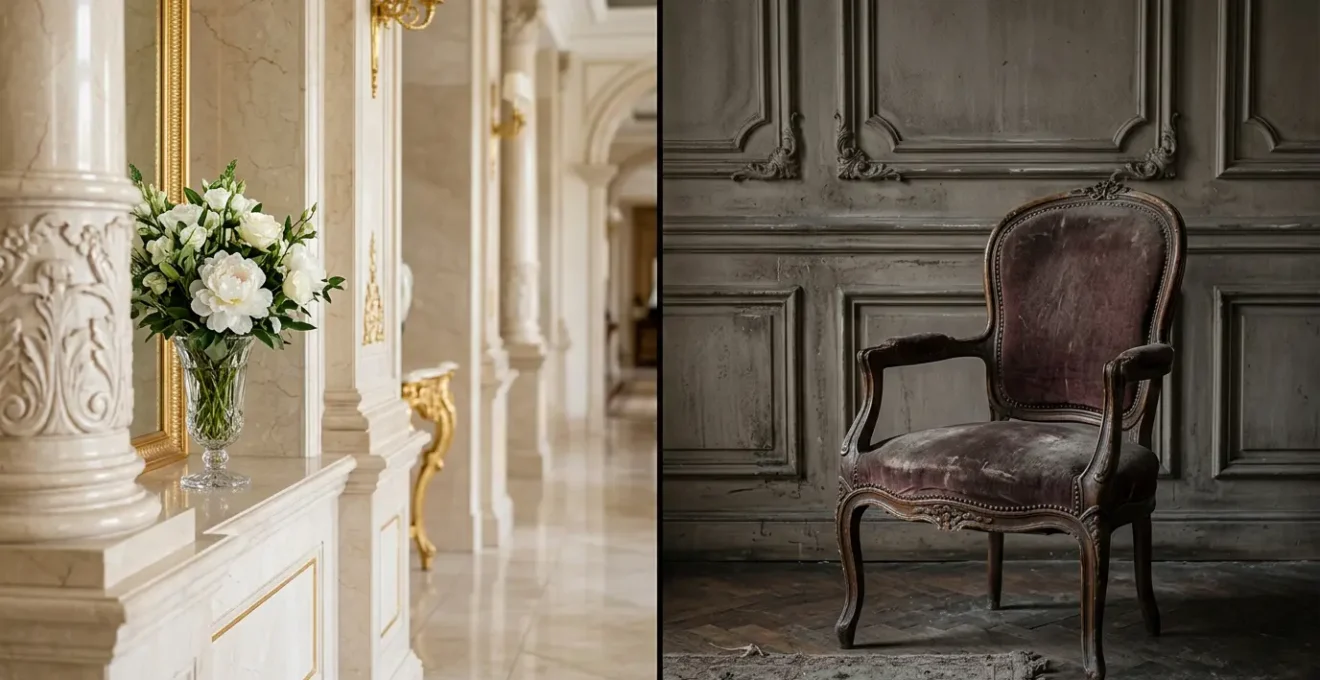
The magic of a themed hotel isn’t in its grand facade, but in its ‘Thematic Integrity’—the deep commitment to quality details that separates true immersion from a disappointing, dusty stage set.
- High-quality materials and authentic craftsmanship are non-negotiable signs of a well-maintained, immersive theme.
- A true sensory audit goes beyond sight to include consistent sound, scent, and textures that reinforce the hotel’s narrative.
Recommendation: Before booking, perform a digital ‘wear-and-tear’ audit by scrutinizing recent, unfiltered guest photos for signs of neglect like scuffed paint, worn furniture, or inconsistent lighting.
For families and couples, the allure of a themed resort is powerful. It’s the promise of stepping out of reality and into the fantasy of Venice, ancient Rome, or a pirate’s cove. Yet, this fantasy often comes with a nagging worry: will the room be as magical as the lobby? Or will the glamour of the theme be a thin veneer over tired, dusty, and dated facilities? The disappointment of finding worn carpets, chipped paint, and malfunctioning amenities can quickly shatter the illusion you paid a premium for.
Most travel advice focuses on the obvious: read reviews, look at pictures. But this approach is reactive and often fails to uncover the subtle signs of decay. The real problem isn’t the theme itself, but its execution and maintenance over time—what a professional would call its Thematic Integrity. This is the cohesive quality that ensures every detail, from the grand architecture down to the texture of the door handles, works in harmony to sustain the fantasy.
But what if the key to finding a great themed hotel wasn’t about choosing the most spectacular theme, but about learning how to audit it like an expert? This guide provides an auditor’s framework for assessing a themed resort. It will teach you how to look past the grand gestures and inspect the critical details that signal true quality and commitment. We’ll explore why some themes feel authentic while others feel cheap, how to navigate confusing layouts, and why you must audit everything from the scent in the air to the hotel’s social vibe to ensure your vacation is genuinely magical, not just a well-marketed mirage.
To help you conduct your own expert audit, this guide is structured to walk you through the key inspection points. The following sections break down exactly what to look for, from the integrity of the architecture to the reality of the amenities provided.
Summary: Themed Hotels: How to Choose a Resort That Doesn’t Feel Dated and Dusty?
- Why The Venetian’s Canal Replica Feels More Real Than Excalibur’s Castle?
- How to Find Your Room in the Labyrinth of Caesars Palace?
- New Rooms vs. Original Theme: Which Tower Should You Book?
- The Mistake of Thinking « Circus Theme » Means Kid-Friendly Amenities
- When to Arrive at the Front Desk to Avoid the 4 PM Crush?
- Why Staying at a Theme-Heavy Resort Can Feel Exhausting After 3 Days?
- Why Do Specific Casinos Smell Like Coconut or Fresh Linen?
- Resort Atmospheres: How to Choose a Hotel That Matches Your Party Vibe?
Why The Venetian’s Canal Replica Feels More Real Than Excalibur’s Castle?
The difference between a theme that transports you and one that makes you cringe often comes down to one word: investment. Not just financial investment, but an investment in authenticity and detail. As design experts note, the exterior is designed for that « first big wow, » the moment you’re pulled from the real world into a fantasy. The Venetian succeeds because it sweats the details. The canals feature meticulously crafted gondolas and architecture that respects Venetian proportions and materials. Excalibur, by contrast, relies on broad, cartoonish strokes—brightly colored turrets and large, simple shapes that read more like a playground than a medieval castle. This is the essence of Thematic Integrity.
A high-integrity theme is built on a foundation of quality craftsmanship. Look closely at the materials. Are the « stone » walls textured plaster with genuine-looking imperfections, or are they flat, painted drywall? Is the « aged » metalwork actually patinated bronze, or is it just brown paint on aluminum? These details are what your brain subconsciously registers as « real » or « fake. » The immersive experience sector is now a $4.5 billion industry, and the best properties understand that this investment in tactile, authentic-feeling materials is what creates a believable world.
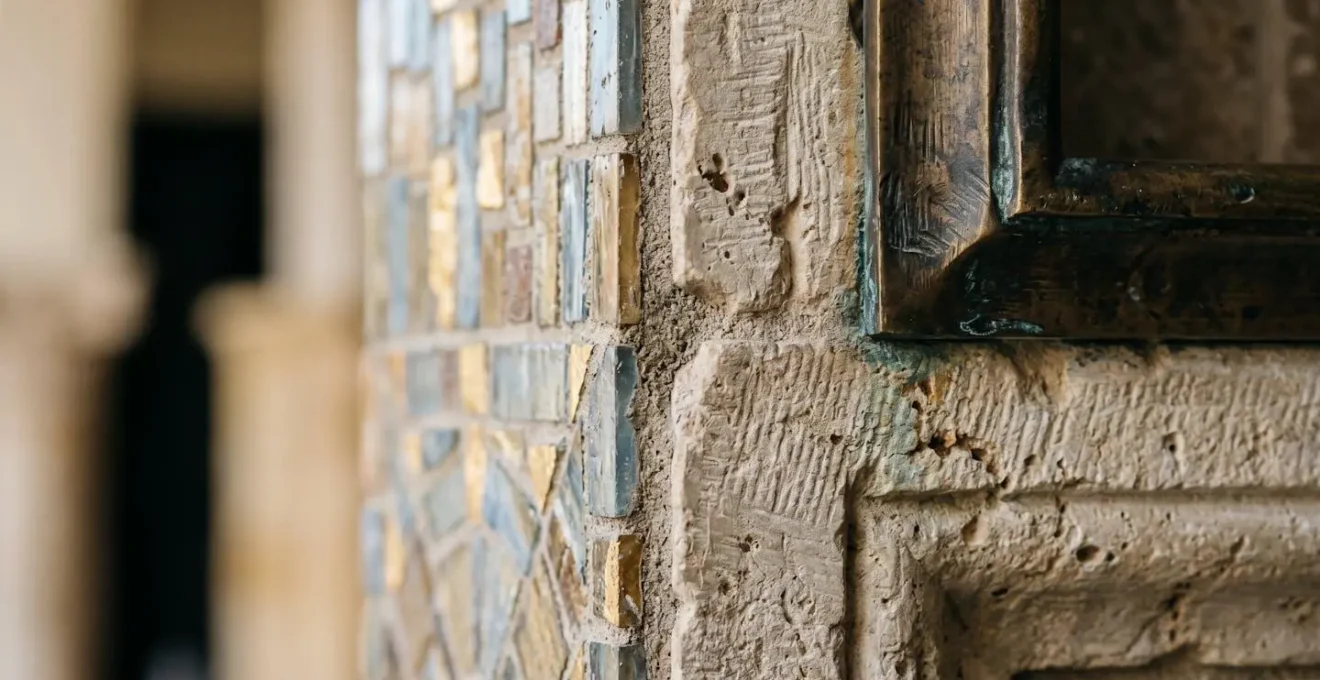
As the image above highlights, true immersion is found in the micro-details: the visible tool marks on hand-carved plaster, the texture of real mosaic tiles, the weight of a solid brass door handle. These elements signal that the resort’s commitment to the theme runs deep, not just skin-deep. A cheap theme uses shortcuts, and those shortcuts are the first things to look dated and dusty. An authentic theme, built with quality materials, ages gracefully and maintains its magic for years.
How to Find Your Room in the Labyrinth of Caesars Palace?
Feeling lost in a sprawling casino resort isn’t an accident; for many years, it was a deliberate design strategy. An analysis of casino design evolution reveals that older resorts were often built using a « maze design » philosophy. This approach used winding paths, confusing slot machine layouts, and hidden exits to deliberately disorient guests. The goal was to keep you on the gaming floor longer, maximizing the time you spent gambling. If you find yourself walking in circles trying to find an elevator bank, you may be experiencing the legacy of this design.
However, modern design has shifted towards a « playground concept, » pioneered by resorts like the Bellagio and Wynn. This newer approach, which you can read about in a deep dive on casino design secrets, prioritizes guest comfort with wide, clear pathways, high ceilings, and intuitive navigation. The philosophy is that relaxed, comfortable guests are more likely to stay and spend than frustrated, disoriented ones. From an auditor’s perspective, the quality of a resort’s wayfinding is a direct signal of its overall guest philosophy. Is the resort designed to trap you or to guide you?
Assessing this before you arrive can be difficult, but you can look for clues in recent guest reviews that mention « easy to navigate » or, conversely, « impossible to find anything. » Once on-site, a quick audit of their signage and directional tools can tell you everything you need to know about their priorities.
Actionable Checklist: Assessing Wayfinding Quality
- Digital Signage: Look for interactive touchscreens that offer personalized directions, not just static, generic maps. This shows investment in a modern guest experience.
- Thematic Integration: Is the signage just a plastic sign, or is it integrated into the theme? Mural-based directions or artful signposts make navigation part of the experience.
- Intuitive Lighting: Check if lighting is used strategically to highlight paths, draw your eye toward key destinations like elevators or restaurants, and create an intuitive flow.
- Mobile App: Does the hotel’s app include an interactive map with turn-by-turn directions? A robust app is a strong sign of a modern, guest-focused resort.
- Staff Assistance: Are staff members visible, knowledgeable, and proactive in offering directions? A human touch can overcome even the most confusing layout.
New Rooms vs. Original Theme: Which Tower Should You Book?
One of the biggest dilemmas when booking a classic themed resort is choosing between an older room in a tower with full thematic character and a newly renovated room in a tower that feels generic. This is the challenge of theme dilution. As hotels age, they must renovate to meet modern guest expectations for comfort and technology—USB ports, walk-in showers, and contemporary decor. Often, the easiest and most cost-effective way to do this is to strip out the old theme entirely, resulting in a clean, comfortable, but completely anonymous room.
The most successful renovations manage to walk this tightrope, preserving the spirit of the place while upgrading the facilities. As one case study on managing historic hotel renovations highlights, the key is to find creative solutions that honor the original appearance while incorporating contemporary amenities. Instead of erasing the theme, a smart renovation finds a new « hook » to hang the hotel’s identity on. This could mean drawing inspiration from local history or doubling down on a specific aspect of the original theme.
In every case, the hotels looked for a hook on which to hang their identity: the Loews, for instance, has been positioned as an athletes’ haven while the Algonquin continues to bank on its reputation as home to the Round Table.
– Multiple NYC Hotel Renovation Case Study Authors, ResearchGate Hotel Repositioning through Property Renovation
As an auditor, your job is to figure out which tower offers the best of both worlds. Start by looking at photos from the hotel’s official website, but be critical. Compare the « Deluxe King » in the « Forum Tower » versus the « Palace Tower. » Pay attention to the dates of renovation. If a tower was redone in the last 2-3 years, it likely has modern amenities. Then, cross-reference with traveler photos on review sites to see how the theme was (or wasn’t) integrated. Often, booking the slightly more expensive, newly renovated room in a tower that still has thematic accents in the hallways and public spaces is the winning compromise.
The Mistake of Thinking « Circus Theme » Means Kid-Friendly Amenities
A colorful, whimsical theme like a circus or a castle seems like a guaranteed win for a family vacation. However, this is one of the most common and costly assumptions travelers make. A theme is an aesthetic wrapper; it is not a guarantee of family-friendly programming or amenities. A « circus » theme might just mean a brightly colored casino floor and a big-top-shaped roof, with no actual kid-friendly activities in sight. From an auditor’s perspective, you must separate the thematic promise from the functional reality.
Hotels that genuinely cater to families understand the value of this demographic. As research shows, family bookings drive critical hotel revenue through longer stays, multiple-room reservations, and higher spending on on-site dining and activities. A truly family-focused resort invests in the infrastructure to support this, not just in a coat of paint. This means dedicated play zones, supervised kids’ clubs, and thoughtful in-room conveniences that make traveling with children easier.
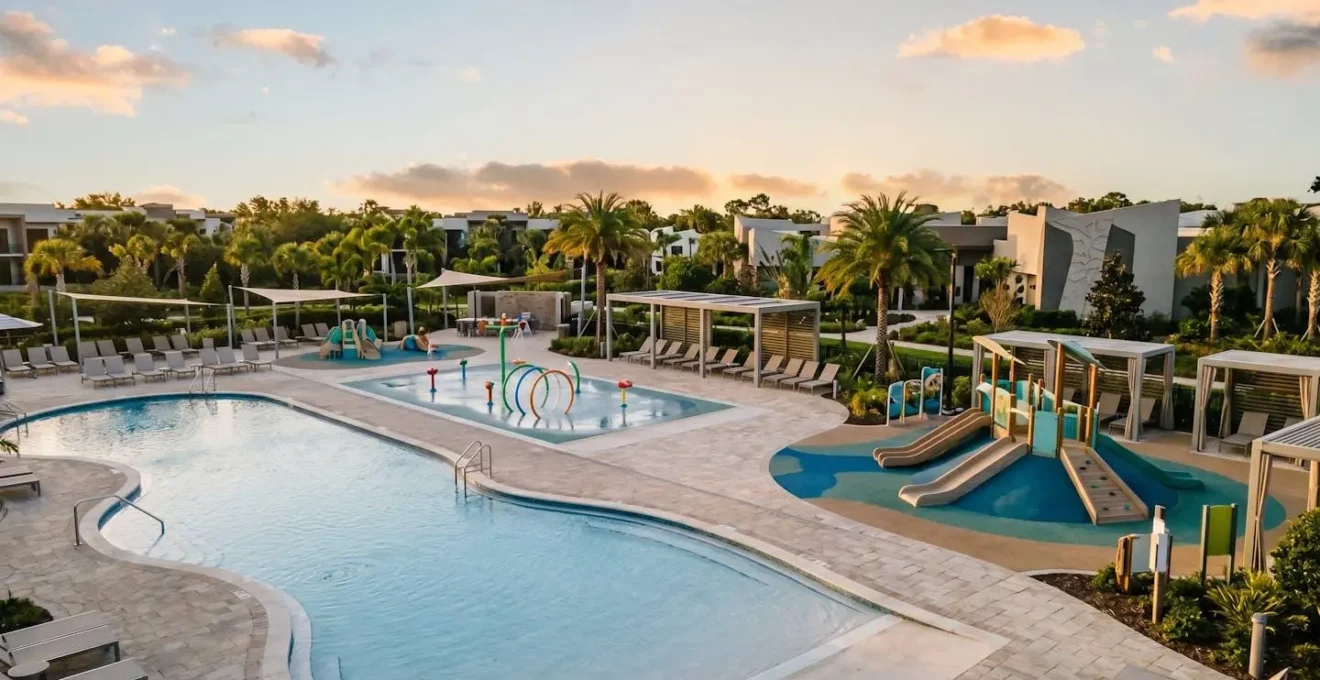
Before you book, you must conduct a thorough amenity audit that goes far beyond the theme. Don’t be swayed by a picture of a mascot. Look for concrete, verifiable features. Scour the hotel’s website for a « Family » or « Activities » page. If the information is vague or non-existent, that’s a major red flag. A truly family-friendly hotel will proudly list its offerings, from the dimensions of the kiddy pool to the daily schedule for the kids’ club. The checklist below provides a clear framework for your audit.
- Swimming Pools & Water Features: Verify the presence of kid-friendly pools, waterslides, or splash pads. Check for information on lifeguards and heated water.
- Play Zones & Kids’ Clubs: Confirm the existence of supervised children’s programming. Look for schedules, age requirements, and the types of activities offered.
- Family Dining: Do the on-site restaurants have kids’ menus and high chairs? Is the atmosphere welcoming to children?
- In-Room Conveniences: Check for the availability of connecting rooms, cribs or Pack ‘n Plays, and in-room refrigerators or microwaves.
- Babysitting Services: Does the hotel offer accredited on-site babysitting or referrals to vetted agencies? This is a key indicator of a true family resort.
When to Arrive at the Front Desk to Avoid the 4 PM Crush?
Your arrival is the first chapter of your vacation story, and a long, frustrating queue at the check-in desk is a terrible opening scene. For massive themed resorts, especially in destinations like Las Vegas, the 3-5 PM window is peak check-in time, leading to a « crush » that can sour your mood before you’ve even seen your room. The first step in your audit is to manage this moment. A simple but effective tactic is to time your arrival strategically. As travel guides often suggest, arriving a bit later can make a world of difference.
Arriving later in the evening, around 6 pm, may help you avoid long lines at hotel check-ins, allowing you to quickly dive into the array of dining and entertainment options available.
– TripAdvisor Travel Guidance, TripAdvisor Las Vegas Themed Hotels Guide
While arriving later is a good low-tech solution, a truly modern resort offers a high-tech one: bypassing the front desk entirely. The best-in-class properties have invested heavily in mobile-first technology, allowing you to check in via an app, receive a digital room key, and head straight to the elevator. This technology is a key indicator of a hotel’s commitment to a frictionless guest experience. It ensures your first « wow » moment is entering your themed room, not staring at the back of someone’s head in a line.
According to trend reports on tech-forward casino design, this is the future. Features like passkeys and biometrics are being integrated to make the entire process near-instantaneous. When auditing a potential hotel, check their website and app store description for mentions of « mobile check-in, » « digital key, » or « contactless arrival. » The presence of this technology is a strong signal that the resort understands the importance of the modern guest journey and has invested in making it seamless, preserving the magic from the very first moment.
Why Staying at a Theme-Heavy Resort Can Feel Exhausting After 3 Days?
Total immersion is the goal of a great themed resort, but it can also be its downfall. Staying in a high-intensity environment—with costumed characters, constant thematic music, and no visual break from the fantasy—can lead to sensory overload. After a few days, what was initially magical can start to feel overwhelming and even claustrophobic. You might find yourself craving a simple, quiet coffee shop or a walk in a normal park. This feeling of « theme fatigue » is a real phenomenon.
The best, most guest-centric themed resorts understand this and design for it. As noted by the design firm Gensler, a truly great property provides what they call « escape hatches. » These are intentionally neutral spaces where guests can decompress. A truly great, guest-centric themed resort provides ‘escape hatches’—neutral spaces like a minimalist spa, a quiet, non-themed garden, or a sophisticated lobby bar with classic decor where you can take a break from the narrative. The availability of these « thematic off-ramps » is a sign of a very mature and thoughtful design philosophy.
Before booking, it’s crucial to assess your own tolerance for stimulation and audit the resort for these decompression zones. A framework for this is the Theme Intensity Scale:
- Level 1-2 (Thematic Accents/Inspiration): These hotels use themed decor in public spaces but have standard rooms. They are ideal for travelers who want a sense of place without constant immersion.
- Level 3 (Moderate Immersion): This is the sweet spot for most, with themed lobbies and restaurants but modern, functional rooms. It offers a balance of fantasy and reality.
- Level 4-5 (Strong/Total Immersion): These are all-encompassing experiences, like a Disney resort with costumed staff. They are best for dedicated theme enthusiasts with a high tolerance for continuous stimulation.
When looking at a hotel’s website, don’t just look for pictures of the themed areas. Actively search for images of the spa, the fitness center, or any gardens and courtyards. If they all look as intensely themed as the rest of the resort, and you know you’re sensitive to overstimulation, you may want to reconsider.
Key Takeaways
- Audit for Thematic Integrity: True quality lies in the details, craftsmanship, and authentic materials, not just the grand facade.
- Separate Theme from Function: A whimsical theme doesn’t guarantee family-friendly amenities or intuitive navigation. Always audit these practical elements separately.
- Look for « Thematic Off-Ramps »: The best resorts provide neutral, quiet spaces for guests to decompress from sensory overload, showing a mature approach to guest comfort.
Why Do Specific Casinos Smell Like Coconut or Fresh Linen?
The most sophisticated themed resorts understand that immersion is a multi-sensory experience. What you see is only part of the story. What you hear, touch, and even smell are powerful tools for reinforcing a theme and influencing your mood. This practice, known as scent marketing or « scent branding, » is a key part of an auditor’s sensory checklist. When you walk into a resort and smell coconut and vanilla, it’s not by chance; it’s a deliberate choice to transport you to a tropical paradise. The key is to distinguish between a scent that tells a story and one that’s just covering something up.
A narrative scent is a signature fragrance designed to enhance the theme. A salty, oceanic scent in a nautical-themed resort or the smell of leather and old books in a library-themed bar are examples of high-integrity sensory design. A masking scent, on the other hand, is a generic, overpowering floral or « fresh linen » smell used to cover up unpleasant odors like cigarette smoke or mildew. A masking scent is a major red flag, suggesting underlying cleanliness or ventilation issues. This same logic applies to all senses, as a full sensory audit reveals.
The following table, based on principles from modern resort design trends, provides a framework for your audit. It helps you distinguish between a thoughtful, narrative-driven application and a generic, low-quality one for each sense.
| Sensory Element | Narrative/Thematic Application | Masking/Generic Application | Quality Indicator |
|---|---|---|---|
| Scent | Signature fragrance enhancing theme (e.g., salty ocean air in beach resort, vanilla in tropical paradise) | Generic air freshener covering unpleasant odors like smoke or mildew | Scent changes between zones but remains cohesive with story |
| Sound | Custom musical score or environmental audio (waves, birds) aligned with theme | Generic commercial pop music or silence | Audio consistency from lobby through hallways to rooms |
| Light | Dynamic lighting that changes throughout day mirroring natural environment or theatrical narrative | Static bright casino lighting or generic hotel fluorescent | Color temperature and intensity support theme and circadian rhythm |
| Touch | Premium materials reflecting theme (natural stone, authentic textiles, quality wood) | Cheap plastic, synthetic fabrics, or generic commercial grade materials | Tactile surfaces reward physical interaction and feel authentic |
| Taste | Themed signature cocktails, regional cuisine, or culturally authentic menu items | Standard chain restaurant menu with no local connection | Food and beverage program tells same story as physical environment |
As design professionals emphasize, « Every stone, wall, texture, and detail is an opportunity to reinforce the narrative. » A resort that has carefully considered its sensory landscape is one that is deeply committed to its theme and to the quality of its guest experience.
Resort Atmospheres: How to Choose a Hotel That Matches Your Party Vibe?
You’ve audited the theme’s integrity, the room’s condition, and the sensory landscape. The final piece of the puzzle is auditing the social atmosphere. A themed resort is not a static museum; it’s a living environment shaped by the people within it. The most beautiful, well-maintained resort can be a disappointment if its « vibe » doesn’t match your own. Are you looking for a high-energy party scene centered around a pool club, a quiet, romantic escape, or a place bustling with family activities? The theme itself rarely provides this answer.
To gauge a resort’s atmosphere, you need to become a digital archaeologist. Go to Instagram and search for the hotel’s location tag. Scrutinize the unfiltered photos posted by recent guests. Are they filled with 20-somethings taking selfies with cocktails, families with young children, or couples enjoying quiet dinners? This user-generated content is a far more honest reflection of the hotel’s daily life than its own curated marketing. This allows you to match the resort’s dominant guest archetype to your own travel style.
Consider which of these common traveler archetypes best describes you, and use it to guide your final decision:
- The Escapist: You want total immersion and suspension of disbelief. Look for Level 4-5 intensity resorts with comprehensive storytelling where the fantasy is uninterrupted.
- The Explorer: You want a fun, comfortable base to see the city from. A Level 2-3 resort in a central location offers the best balance of theme and convenience.
- The Socialite: You’re looking for a vibrant scene and opportunities to meet people. Audit for active pool scenes, multiple bars, and guest photos that show a lively, communal atmosphere.
- The Relaxation Seeker: You prioritize tranquility and spa services. Look for properties with prominent « thematic off-ramps, » adult-only pools, and a mature guest demographic.
- The Family Memory Maker: You need a mix of experiences for all ages. Prioritize resorts with clear zoning, a diverse mix of amenities, and dedicated kids’ programming.
Choosing the right themed resort is a process of alignment. It’s about matching your expectations, your tolerance for stimulation, and your social preferences with what a resort genuinely offers, beyond its marketing promises. By adopting this auditor’s mindset, you move from being a passive consumer to an empowered traveler, capable of seeing past the facade to find the magic that is truly built to last.
Armed with this auditor’s framework, you are now equipped to approach your next search for a themed hotel with a critical and expert eye. Apply these principles to your research, scrutinize the details, and trust your assessment to book a vacation that delivers on its promise of immersive, high-quality fantasy.