
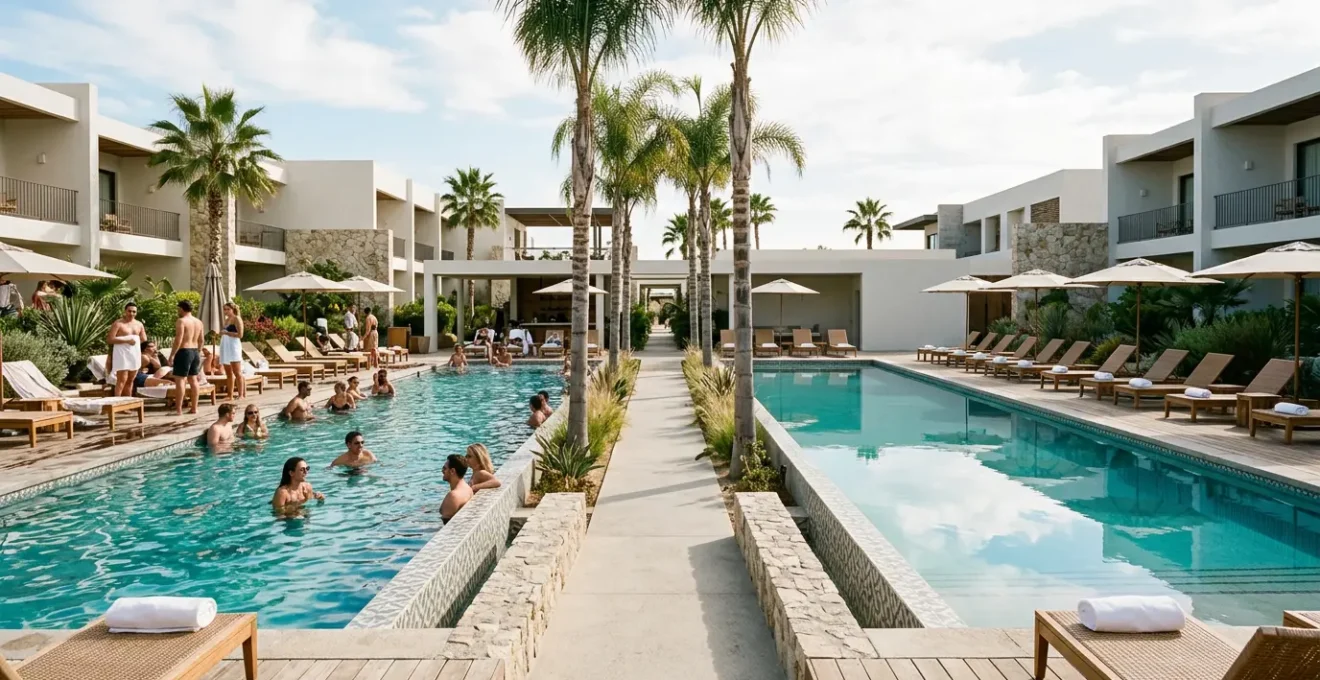
The secret to a perfect group trip isn’t finding a « party » or « quiet » hotel—it’s decoding a resort’s ‘Sensory Footprint’ to ensure it matches everyone’s energy levels.
- Heavily themed resorts can cause « thematic saturation, » leading to exhaustion for a significant portion of travelers.
- A hotel’s true vibe is revealed in its operational details, like pool configurations and renovation schedules, not just its marketing photos.
Recommendation: Audit your potential hotel’s atmosphere by analyzing its physical layout and guest amenities to find a space with « vibe-flexibility »—the ability to cater to both high-energy and relaxation needs within your group.
Planning a group getaway should be exciting, but the hotel selection process often devolves into a stalemate. One friend wants a 24/7 party, another needs a tranquil escape, and you’re stuck in the middle, trying to find a place that won’t leave half the group miserable. The typical advice—scrolling through photo galleries and reading a few reviews—rarely captures the true feeling of a place. A resort can look serene in pictures but have a thumping pool party all day, or its « fun » theme can become grating by day three.
The common mistake is to think in binaries: party versus relaxation. This approach fails to recognize the nuances of a resort’s atmosphere and the diverse needs of a group. The real challenge is finding a location that offers vibe-flexibility, a space where different energy levels can coexist peacefully. This isn’t about compromise; it’s about making a more intelligent choice. What if the key wasn’t in the hotel’s marketing slogans, but in its very design and operational rhythm?
This guide moves beyond superficial labels. We’ll explore how to perform an atmosphere audit by decoding a resort’s « Sensory Footprint. » You’ll learn why themed resorts can be draining, how to distinguish a true party hub from a place that simply has a bar, and why seemingly minor details like tower renovations or poolside seating can make or break your group’s collective mood. By the end, you’ll be equipped to choose a hotel that feels less like a gamble and more like a curated experience, perfectly tailored to your crew.
To navigate this deep dive into resort atmospheres, the following guide breaks down the essential factors. You will discover how to analyze everything from sensory triggers to VIP perks, ensuring your next group vacation is a resounding success for everyone involved.
Summary: Decoding Resort Atmospheres for Your Group
- Why Staying at a Theme-Heavy Resort Can Feel Exhausting After 3 Days?
- How to Identify if a Resort is « Party-Centric » or « Relaxation-Focused »?
- Casino Resort or Non-Gaming Hotel: Which Offers Better Sleep Quality?
- The Booking Mistake of Ignoring « Tower Renovations » That Ruins Mornings
- How to Split Your Stay Between Two Resorts for a Dual Experience?
- Cabana or Daybed: Which Offers Necessary Shade for Pale Skin?
- Adult Pool Party vs. Adult Quiet Pool: Which Matches Your Vibe?
- Luxury Travel in Vegas: How to Secure VIP Perks Without a Million Dollar Budget?
Why Staying at a Theme-Heavy Resort Can Feel Exhausting After 3 Days?
The initial thrill of a hyper-themed resort—whether it’s an imitation of ancient Rome or a pirate fantasy—can quickly fade, leaving you feeling drained and overstimulated. This phenomenon, which can be called thematic saturation, occurs when the environment’s constant sensory input overwhelms your cognitive resources. Every carpet pattern, soundtrack, and staff uniform is designed to reinforce the theme, creating a dense and inescapable Sensory Footprint. While exciting at first, this lack of neutral space for your mind to rest can become mentally taxing.
This isn’t just a matter of personal preference; it’s rooted in psychology. Research on multisensory hotel experiences shows that nearly 30% of the general population scores high on Sensory Processing Sensitivity. For these individuals, and even for those less sensitive, continuous exposure to intense visual and auditory stimuli leads to faster fatigue. The novelty wears off, and what was once charming becomes a source of low-grade stress. By the third day, the desire for a simple, quiet corner can become overwhelming, a need that a heavily themed environment is structurally unable to meet.

The visual complexity shown here is a key driver of this exhaustion. To avoid this burnout, consider resorts that use theming as an accent rather than an immersive mandate. Look for properties with plenty of « negative space »—areas with clean lines, natural light, and neutral palettes. This balance ensures the theme remains a delightful feature, not a demanding host, allowing your group to engage with the fantasy on your own terms without feeling depleted.
Case Study: The Impact of Sensory Overload
A study examining sensory processing found that individuals with higher sensitivity were significantly more affected by unpleasant auditory and visual stimuli. They experienced increased overstimulation, particularly in the afternoon and evening or when fatigued. Researchers noted that continuous sensory stimulation is one of the biggest challenges for sensitive people, leading to higher levels of distress. This highlights why a relentless theme can turn a vacation from relaxing to taxing, especially over multiple days.
How to Identify if a Resort is « Party-Centric » or « Relaxation-Focused »?
Distinguishing a resort designed for non-stop festivities from one geared towards serenity requires an atmosphere audit that goes beyond marketing language. The most reliable clues are found not in the descriptions, but in the hotel’s infrastructure and amenities. A truly party-centric resort invests in specific hardware designed to facilitate a high-energy social environment around the clock. Conversely, a relaxation-focused property prioritizes features that promote peace, quiet, and personal space.
The pool area is the epicenter of a resort’s daytime vibe. Look for key indicators:
- Swim-up bar presence: This signals a culture of continuous social drinking and is a hallmark of a party atmosphere.
- Pool party infrastructure: Dedicated DJ booths, large-scale sound systems, or foam party equipment near the main pool are unambiguous signs of a party-first focus.
- On-site nightclub: A nightclub located within the main hotel building suggests the party energy is integral to the resort’s identity and operates late into the night.
Many modern resorts aim for vibe-flexibility by offering multiple, distinct zones. A property with both a « party pool » and a separate « quiet pool » is an excellent choice for a group with mixed energy levels, as it allows members to self-select their preferred environment. The simple « adults-only » designation is not enough; you must investigate whether it promises a serene escape or a boisterous, kid-free party.
gorgeous pools, so it is easy to find your preferred atmosphere, whether it be at a relaxing and quiet pool or a lively setting with rotating DJ’s playing music and the animation team getting the party started
– TripAdvisor reviewer, Caribbean Party Hotels Review Analysis
This kind of feedback from past guests is invaluable. It confirms that the resort’s design successfully delivers on the promise of choice, allowing everyone in your group to find their perfect spot, whether that’s in the heart of the action or in a tranquil oasis just a short walk away.
Casino Resort or Non-Gaming Hotel: Which Offers Better Sleep Quality?
When choosing between a casino resort and a non-gaming hotel, the primary trade-off for your group is atmosphere versus tranquility. While casino resorts offer unparalleled energy and entertainment options, this constant activity inevitably creates a more challenging environment for quality sleep. The very design of a casino—with its lack of clocks, constant light, and ambient noise—is meant to keep you engaged, not lull you to sleep. This energy often bleeds into the hotel itself, with guests returning to rooms at all hours and a low-level hum permeating the property.
For groups prioritizing rest, a non-gaming hotel is almost always the superior choice for creating a Sleep Sanctuary. These properties are architecturally and operationally designed for quiet. Without a 24/7 gaming floor as its economic engine, the focus shifts to guest comfort, resulting in quieter hallways, less foot traffic late at night, and an overall more serene ambiance. However, the choice isn’t entirely black and white. Many modern casino resorts have invested heavily in mitigating noise by placing hotel towers far from the casino floor or using advanced soundproofing.
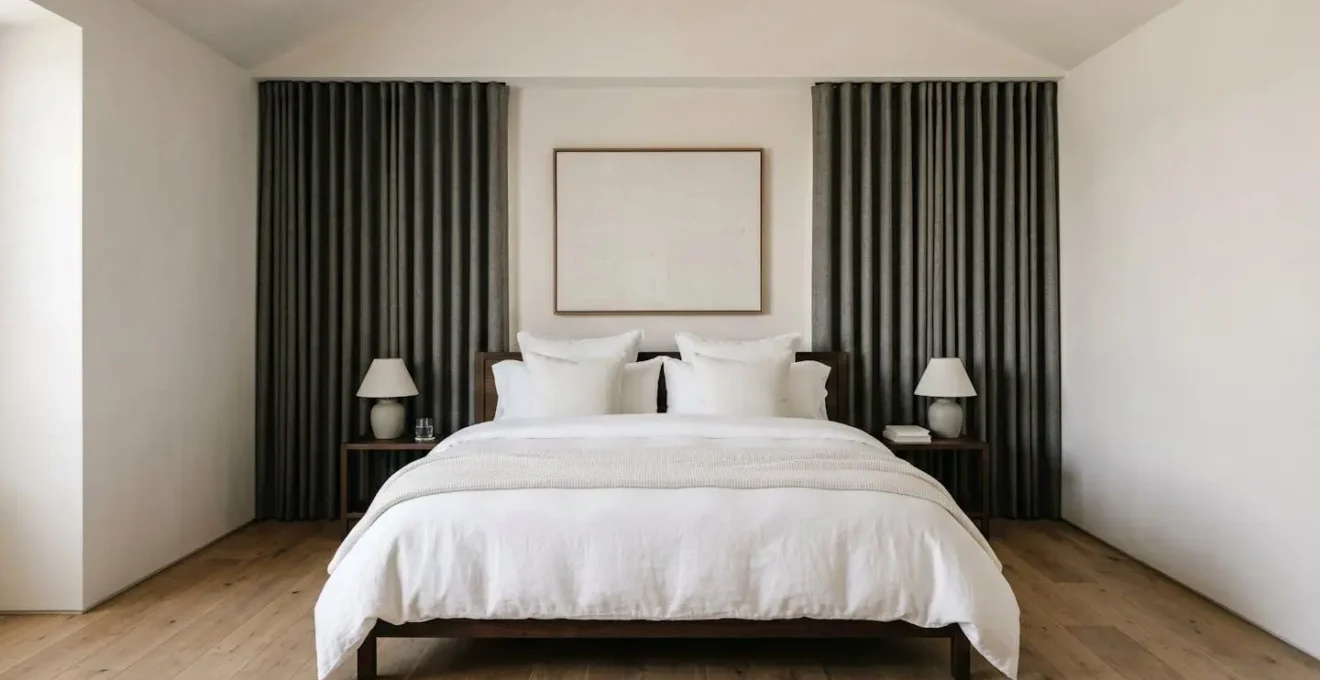
Regardless of your choice, certain factors are universal predictors of sleep quality. A cross-sectional study of 609 frequent travelers identified noisy air conditioning, uncomfortable bed linens, and noise from outside the room as the strongest determinants of poor sleep. This means your « atmosphere audit » should include checking recent reviews for mentions of these specific issues. A non-gaming hotel with a loud HVAC system can be just as disruptive as a room above a casino, proving that the quality of the immediate room environment often matters more than the hotel’s category.
The Booking Mistake of Ignoring « Tower Renovations » That Ruins Mornings
One of the most disruptive yet easily avoidable vacation pitfalls is booking a hotel room adjacent to a construction zone. The jarring sound of drilling and hammering at 8 a.m. can instantly shatter the relaxed holiday mood your group has paid for. Hotels are often discreet about ongoing renovations, sometimes burying the information in fine print or omitting it entirely during the booking process. Assuming the hotel will automatically place you far from the noise is a common and costly mistake.
Proactively investigating potential construction is a critical part of your pre-trip atmosphere audit. Hotels undergoing renovations are often running at lower occupancy, which can mean better deals and fewer crowds. However, these benefits are worthless if your sleep is disturbed. The key is to leverage this information before you arrive. By contacting the hotel directly, you shift from being a passive guest to an informed customer, giving you the power to negotiate your room placement away from the disruption.
A direct call to the front desk or concierge a week before your arrival is the most effective strategy. Be specific in your questions: inquire about the nature of the work, the scheduled hours for noise, and the specific towers or floors affected. This demonstrates that you are an aware traveler and makes it more likely that your request for a quiet room will be honored. It also opens the door to politely request a complimentary upgrade as compensation for the potential inconvenience, an opportunity that vanishes once you’re standing at a busy check-in counter.
Your Pre-Booking Renovation Check: A 5-Step Plan
- Direct Inquiry: Call the hotel directly 5-7 days before arrival to ask about any active construction or renovation work.
- Specific Questions: Ask precisely what work is happening, when noise is expected (e.g., « What are the construction hours? »), and which areas or towers are affected.
- Request Separation: Politely request a room assignment in a tower or wing that is physically separate from all renovation zones.
- Leverage for Perks: Use the potential inconvenience as leverage to inquire about a possible complimentary room upgrade or other compensation before you arrive.
- Document Everything: Make a note of the date, time, and name of the staff member you spoke with, along with any promises made regarding room location or quiet hours.
How to Split Your Stay Between Two Resorts for a Dual Experience?
For groups with diverse tastes, a split stay—dividing your vacation time between two different hotels—is an elegant solution that transforms a potential conflict into a dynamic adventure. This strategy allows you to experience two distinct resort atmospheres in a single trip, effectively giving your group « two vacations in one. » You could start with a few high-energy days at a party-centric resort with a lively pool scene, then transition to a tranquil, luxury-focused hotel for relaxation and recovery before heading home.
This approach is becoming increasingly popular with savvy travelers. In fact, summer 2024 travel data reveals that nearly 19% of travelers plan to utilize a combination of lodging options during their trip. The strategy works best for groups who pack relatively light and don’t mind a brief logistical interruption mid-trip. The key to a seamless transition is planning the move strategically. Choose resorts in close proximity to minimize travel time and opt for a mid-day transfer, checking out of the first hotel in the morning and leaving your luggage with the bell desk at the second until your new room is ready.
Case Study: The Orlando Split-Stay Strategy
Travel experts analyzing split stays in Orlando found that the strategy is highly effective for experiencing multiple resort vibes and maximizing on-site benefits. By staying at two different properties (e.g., a bustling theme park hotel followed by a quiet luxury resort), guests gain access to different pool complexes, varied dining options, and unique perks like early park entry at multiple locations. The approach is particularly successful for couples, solo travelers, and groups with older children who can manage their own packing, creating the sensation of two distinct holidays.
A split stay is the ultimate expression of vibe-flexibility. It acknowledges that a group’s desired energy level can change over the course of a vacation. By booking two different atmospheres, you cater to everyone’s preferences without forcing anyone to compromise. The first half of the trip can satisfy the partiers, while the second half offers a peaceful retreat for those needing to recharge, ensuring the entire group returns home happy and refreshed.
Cabana or Daybed: Which Offers Necessary Shade for Pale Skin?
For any group spending a full day by the pool, the choice between renting a cabana or a daybed is a crucial decision that impacts comfort, privacy, and sun protection. While both offer an upgrade from a standard lounge chair, they serve very different functions, especially for those with fair skin who need reliable shade. The decision hinges on how long you plan to be poolside and what level of amenity you desire.
A daybed is essentially an oversized, cushioned lounger, often with a light fabric canopy or adjustable umbrella. It’s a comfortable and stylish option for a few hours, but its shade is often partial and shifts with the sun’s movement. For someone needing consistent protection, a daybed requires constant adjustments and may not provide enough coverage during peak sun hours. It is best suited for couples or small groups on a budget who want a comfortable home base but don’t plan to stay put all day.
A cabana, by contrast, is a far more robust structure. It’s a private, three-walled space with a solid roof, offering guaranteed, all-day shade that doesn’t move. Most cabanas also come with curtains for added privacy and are often equipped with premium amenities like a mini-fridge, a television, a ceiling fan, and dedicated server attention. While significantly more expensive, a cabana functions as a private outdoor living room for your group. For anyone with pale skin, the complete and consistent shade it provides is a non-negotiable health and comfort benefit, making it a worthwhile investment for a full-day pool experience.
This comparative table, based on an analysis of poolside amenities, breaks down the key differences to help your group make the best choice.
| Feature | Cabana | Daybed |
|---|---|---|
| Shade Duration | Full day with solid roof structure | Partial, often fabric canopy that shifts with sun |
| Privacy Level | High – enclosed with curtains or walls | Low to moderate – open design |
| Included Amenities | Often includes mini-fridge, TV, fan, ceiling fan | Usually cushioned surface only, minimal extras |
| Service Quality | Dedicated attendant, butler drink service available | Standard poolside service, no dedicated staff |
| Average Cost | Premium pricing, can exceed $200-400 per day | More affordable, typically $50-150 per day |
| Best For | Groups, full-day stays, maximum comfort | Couples, shorter stays, budget-conscious guests |
Adult Pool Party vs. Adult Quiet Pool: Which Matches Your Vibe?
Within the « adults-only » resort category, the pool is the ultimate stage where the hotel’s true personality is revealed. The choice is rarely just one pool; it’s often a spectrum of aquatic atmospheres. A resort that truly understands vibe-flexibility will offer at least two distinct adult pool experiences: the « party pool » and the « quiet pool. » Understanding the subtle but significant differences between them is key to ensuring everyone in your group finds their perfect spot in the sun.
The adult pool party is a full-sensory experience. It’s characterized by a resident DJ playing upbeat music, an animation team leading games and contests, and a high-energy social scene centered around a swim-up bar. This is the heart of the action, designed for mingling, dancing, and celebrating. It’s the ideal spot for the extroverts in your group who thrive on social energy and want their vacation to have a lively soundtrack.
Case Study: The Pool Intensity Spectrum
An analysis of adults-only party resorts reveals clear gradations in pool atmospheres. At a high-intensity resort like Temptation Cancun, daytime activities include provocative games and contests, leading into high-octane theme parties at night. In contrast, a property like Hyatt Zilara offers both a vibrant party pool with DJs and a separate, exclusive quiet pool. This second area often features a premium swim-up bar but with fewer crowds and a serene atmosphere, designed for those who prefer conversation and relaxation over organized pool games.
The adult quiet pool, on the other hand, is a sanctuary. The focus here is on tranquility, relaxation, and elevated comfort. The music, if any, is low-volume and ambient. The vibe is sophisticated and calm, encouraging reading, quiet conversation, or simply dozing in the sun. This is the haven for group members who need to decompress and recharge. For them, the absence of organized activities and loud music is the ultimate luxury.
I love that there are two pools – a pool with activities playing top 40 hits and a second pool with more Club music and pool parties
– Travel blogger reviewing Breathless Riviera Cancun
When selecting a resort, look for properties that explicitly mention and show photos of both types of pools. This dual offering is the clearest sign of a hotel designed to cater to a group with diverse energy levels, ensuring no one has to compromise on their ideal vacation vibe.
Key Takeaways
- Audit the Sensory Footprint: Avoid « thematic saturation » by choosing resorts that balance themed decor with neutral, calming spaces.
- Decode the Pool Area: A resort’s true vibe is revealed by its pool infrastructure—look for multiple pools that offer both party and quiet zones.
- Prioritize the Sleep Sanctuary: For better rest, favor non-gaming hotels or casino resorts with dedicated quiet towers and check reviews for specific noise complaints.
- Plan for a Split Stay: For ultimate vibe-flexibility, divide your trip between two different hotels to satisfy both the partiers and the relaxers in your group.
Beyond the Vibe: Unlocking Everyday Luxury on Your Trip
Once you’ve masterfully selected a resort that matches your group’s collective vibe, there’s another layer of curation that can elevate the entire experience: securing VIP perks without a VIP budget. Luxury in travel isn’t always about extravagant spending; it’s often about thoughtful timing, polite communication, and leveraging loyalty. Small gestures can often unlock complimentary upgrades, better service, and those little touches that make a trip feel truly special.
The easiest and most overlooked step is to engage with the hotel before you even pack your bags. A simple, polite email or phone call to the concierge or front desk manager a week before arrival can work wonders. Mention that you’re celebrating a special occasion (even a minor one like a « friends’ reunion trip »), and inquire about the possibility of an upgrade. This positions you as a thoughtful guest rather than a demanding one. This strategy is most effective during the shoulder season when hotels have lower occupancy and more flexibility to grant upgrades.
Furthermore, never underestimate the power of micro-loyalty. Signing up for a hotel’s free loyalty program before your first stay instantly changes your status from a one-time booking to a potential repeat customer in their system. This small act can place you higher on the list for upgrades and other courtesies. This strategy works because it aligns with the hotel’s own goal: to cultivate repeat business. By showing a flicker of loyalty, you make it easy for them to reward you.
These simple, no-cost actions transform your relationship with the hotel from transactional to relational. This is the final layer of your atmosphere audit—curating not just the space, but the service you receive within it.
- Join the Club: Sign up for the hotel’s free loyalty program before your stay to signal you’re a potential repeat customer.
- Reach Out Early: Contact the hotel concierge or front desk manager 5-7 days before arrival via email or phone.
- Mention the Occasion: Casually mention any special occasion (birthday, anniversary, reunion) when you inquire about upgrade possibilities.
- Travel Off-Peak: Your chances for an upgrade are highest during the shoulder season when hotel occupancy is below 80%.
- Be Polite, Not Demanding: A polite, friendly inquiry about upgrade availability is far more effective than a demand made at a busy check-in desk.
By applying these strategies, your group can move beyond simply finding a nice place to stay and start curating a truly memorable and elevated travel experience, every single time.