
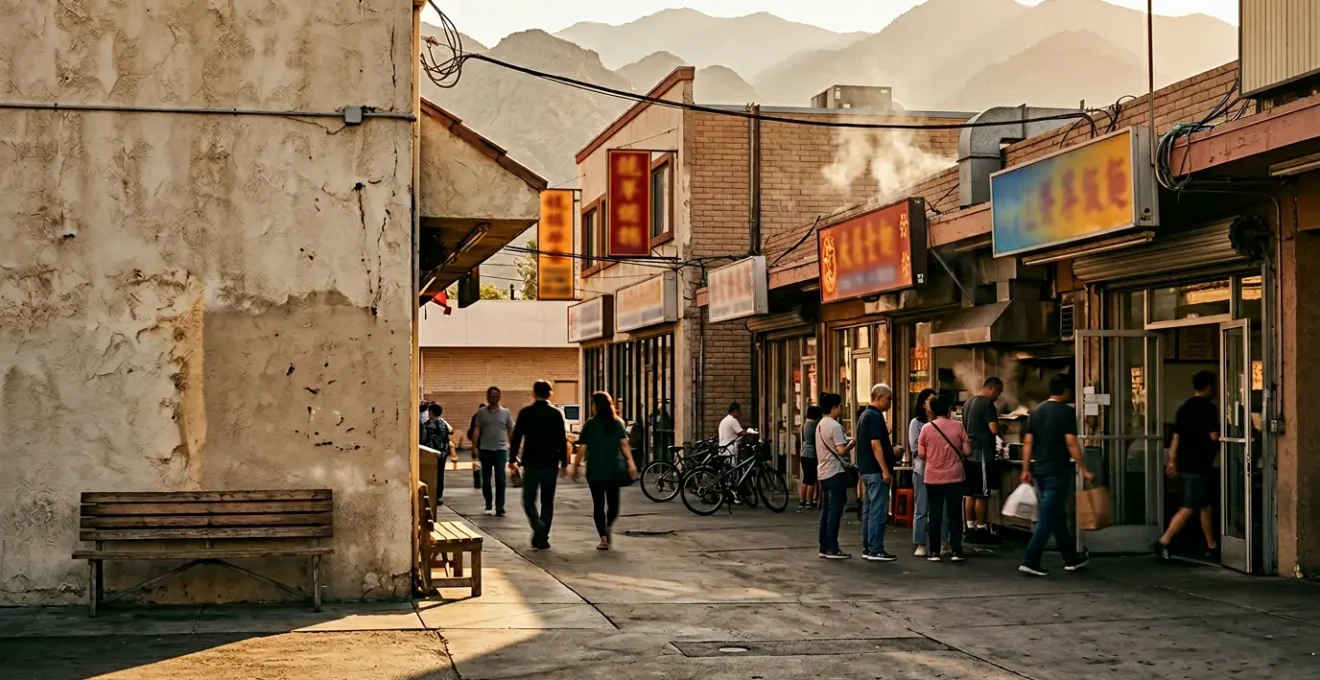
The quest for authentic Asian food in Las Vegas isn’t about finding a single ‘best’ restaurant on the Strip; it’s about learning to decipher the « authenticity code » hidden in plain sight. True culinary exploration begins by understanding the signals—from menu structure to regional specificity—that separate genuine eateries from tourist traps. This guide transforms you from a passive tourist into a culinary detective, equipped to discover exceptional flavors two miles west of the Strip, in the vibrant heart of Chinatown.
For the discerning traveler, Las Vegas presents a paradox. It’s a global food capital, yet the landscape can feel dominated by celebrity chef steakhouses and sprawling buffets. When the craving for something genuinely different strikes—a fiery bowl of Northern Thai noodles, delicate dim sum, or perfectly grilled Japanese skewers—the path forward seems unclear. Many believe that finding authentic international cuisine requires leaving the Strip entirely, but that’s only half the story. The real challenge isn’t just about location; it’s about perception.
The common advice to « go where the locals go » is a start, but it lacks tactical guidance. How do you identify an authentic spot when you’re in an unfamiliar city? The secret isn’t a list of restaurants; it’s a new way of seeing. It’s about recognizing the subtle clues that distinguish a kitchen dedicated to a specific regional tradition from one serving a generic, Americanized facsimile. What if the key to unlocking Las Vegas’s best-kept culinary secrets wasn’t about knowing a place, but about knowing what to look for?
This guide provides that framework. We will deconstruct the signals of authenticity, from decoding menus to strategic timing and ordering. You will learn why the most celebrated Asian food in America often thrives in unassuming strip malls and how to leverage your observations to eat like a seasoned local, even on your first visit. Get ready to move beyond the tourist trail and embark on a genuine flavor expedition.
To help you navigate this culinary landscape, this article is structured to build your expertise as a food explorer. The following sections provide a complete roadmap, from identifying red flags to mastering off-menu ordering and understanding the distinct food scenes of Las Vegas.
Summary: A Guide to Vegas’s Authentic Asian Flavors
- Why the « General Tso’s Chicken » Index Reveals a Tourist Trap?
- How to Order Off-Menu at Spring Mountain Road’s Best Spots?
- Buffet International Stations: Which Resort actually Imports Their Ingredients?
- The Risk of Underestimating « Thai Hot » at Lotus of Siam
- When to Arrive for Dim Sum Carts Before the Best Items Sell Out?
- Why the Best Asian Food in America is in a Strip Mall 2 Miles West?
- The Strip vs. Fremont Street: Which Offers the Best People-Watching?
- Off-Strip Dining: How to Eat Like a Local in Chinatown and Summerlin?
Why the « General Tso’s Chicken » Index Reveals a Tourist Trap?
The first step in becoming a culinary detective is learning to spot the fakes. A useful mental model is the « General Tso’s Chicken Index. » If a menu prominently features this American-Chinese invention alongside Pad Thai, Teriyaki, and Korean BBQ, it’s a major red flag. This signals a kitchen trying to be everything to everyone, which inevitably means a dilution of authenticity. Such pan-Asian menus cater to tourist expectations rather than celebrating a specific regional cuisine. They prioritize familiarity over the deep, complex flavors that define genuine Asian cooking. An overly broad menu is a sign of compromise, sacrificing depth for width.
In contrast, authentic restaurants demonstrate focus. Consider District One, a Vietnamese gem in Las Vegas’s Chinatown. Instead of a sprawling, multi-country menu, they serve inventive yet traditional Vietnamese dishes. Chef Khai Vu’s Pho Tai Nam isn’t just ‘beef noodle soup’; it’s a masterpiece of fragrant, distinct lemongrass aroma and perfectly tender meat. This is a hallmark of authenticity: elevating a traditional recipe with superior technique and ingredients, rather than simplifying it for a Western palate. The menu is a promise, and a short, focused one is a promise of expertise. When you see dishes labeled with their specific region—Sichuan, Hunan, Northern Thai—you are on the right path.
Your Authenticity Scorecard: Key Points to Verify
- Menu Scope: Is the menu hyper-focused on a single region (e.g., Cantonese, Northern Thai), or is it a sprawling « greatest hits » of Asia? A short, specialized menu is a strong positive signal.
- Challenging Ingredients: Look for the presence of items like offal, fermented vegetables, or whole fish. These ingredients indicate the kitchen is cooking for a native palate, not just tourists.
- Language Clues: Check for handwritten specials on a whiteboard, especially in the restaurant’s native language. A menu with untranslated sections is a treasure map for the adventurous eater.
- Spice Specificity: Does the menu offer generic « mild, medium, hot » options, or does it describe the *type* of heat (e.g., numbing Sichuan peppercorn, fiery Thai chili)? Specificity shows a deeper culinary understanding.
- Aesthetic Check: Is the decor reliant on stereotypical tropes like plastic cherry blossoms, or is it functional and community-focused? Authenticity is in the food, not the furniture.
How to Order Off-Menu at Spring Mountain Road’s Best Spots?
Once you’ve identified a promising restaurant, the next level of culinary exploration is accessing what isn’t explicitly offered. On Spring Mountain Road, the heart of Las Vegas’s Chinatown, many restaurants maintain two culinary identities: the public-facing English menu, and the « secret » dishes reserved for regulars and native speakers. Accessing this hidden menu isn’t about knowing a secret password; it’s about demonstrating genuine curiosity and respect. The goal is to signal that you are an adventurous eater, open to the chef’s true passion projects.
The key is in the approach. Instead of demanding a « secret menu, » you open a dialogue. This shift in communication can unlock dishes that are more complex, more traditional, and infinitely more rewarding. Here are some proven tactical scripts for respectfully inquiring about off-menu items:
- The Respectful Approach: « I’m feeling adventurous today—what is the chef most proud of that’s not on the English menu? »
- The Digital Detective: « I saw a photo of [specific dish] on your Instagram/WeChat. Is that available today? »
- The Local Reference: « A friend who works in hospitality recommended I ask for your off-menu noodle soup. Can you help? »
- The Regional Specificity: « I recently visited [region in Asia]. Do you serve any dishes from that area that aren’t listed? »
This strategy transforms a simple meal into a collaborative experience. By showing you trust the kitchen’s expertise, you are often rewarded with the most memorable and authentic dishes of your trip. It’s an invitation to be treated not as a tourist, but as a fellow food lover.
Buffet International Stations: Which Resort actually Imports Their Ingredients?
For the authenticity purist, the Las Vegas buffet often seems like the ultimate culinary compromise—a vast ocean of mediocrity designed for mass consumption. Historically, this reputation was well-earned. However, a select few resorts have radically evolved the model, challenging the notion that scale and authenticity are mutually exclusive. The modern, high-end buffet isn’t about endless troughs of lukewarm food; it’s about a collection of specialized, cuisine-specific kitchens operating under one roof. The question is no longer *if* a buffet can be authentic, but *which* ones invest in the infrastructure to achieve it.
The gold standard for this new paradigm is the Bacchanal Buffet at Caesars Palace. Rather than a single kitchen churning out a generic international menu, Bacchanal operates as nine distinct, dedicated kitchens—including Chinese, Japanese, and Mexican—each staffed by specialized culinary teams. This structure is critical. It ensures that the person making your hand-rolled sushi is a trained sushi chef, and the person wok-frying your noodles understands the principles of « wok hei. » The buffet’s 2021 renovation further leaned into this concept, dedicating its 25,000 square feet to creating an experience of distinct culinary stations. As detailed in analyses of the evolution of Strip dining, this proves that authenticity can be achieved at high volume through a massive investment in specialized talent and equipment.
While most buffets still fall into the tourist-trap category, outliers like Bacchanal demonstrate a commitment to craft. They show that when a resort decides to build what is essentially a food hall of dedicated restaurants, the result can be a surprisingly authentic and diverse experience, even amidst the spectacle of the Strip.
The Risk of Underestimating « Thai Hot » at Lotus of Siam
No conversation about authentic Asian food in Las Vegas is complete without mentioning Lotus of Siam. However, simply going there isn’t enough; one must understand *how* to approach its legendary menu. As the late, great Anthony Bourdain famously advised, « This is not the place to order Pad Thai. » His point was a profound one: to experience what makes the restaurant a multi-time James Beard Award nominee, you must venture into its heartland: authentic Northern Thai cuisine.
This is not the place to order Pad Thai. Stick to the unique Northern Thai dishes.
– Anthony Bourdain, referenced in reviews of Lotus of Siam
Chef Saipin Chutima’s menu is a masterclass in regional specificity. Unlike the sweet and tangy flavors of Bangkok-style Thai food common in the US, Northern Thai cuisine is earthy, herbaceous, and complex. This is where the famous « Thai Hot » comes into play, and underestimating it is a rite of passage for many first-time visitors. The key, however, is to understand that the heat is not punitive; it’s a crucial component of the flavor profile. According to the restaurant’s own philosophy, the spice is there to complement the deep flavors of galangal, kaffir lime, and lemongrass in dishes like the signature Khao Soi, not to obliterate your palate. The heat is functional, designed to balance the richness and herbaceousness of the food.
The restaurant’s approach to spice is educational. They encourage a dialogue, asking diners to calibrate their request by referencing their experience with other regional heat profiles (e.g., Mexican or Indian). This ensures a customized dish that respects both the integrity of the cuisine and the diner’s tolerance. To truly appreciate Lotus of Siam is to embrace this dialogue and order with intention, ready for a flavor experience that is nuanced, powerful, and profoundly authentic.
When to Arrive for Dim Sum Carts Before the Best Items Sell Out?
The experience of a traditional dim sum service, with its bustling atmosphere and parade of steaming carts, is a sensory delight. However, for the uninitiated, it can also be chaotic and intimidating. The difference between a fantastic dim sum meal and a mediocre one often comes down to a single, crucial factor: timing. Arrive too early, and the variety is limited. Arrive too late, and the best and most sought-after items—the delicate chicken feet, the flaky durian pastries, the perfectly steamed soup dumplings—are long gone. Mastering dim sum requires a strategic approach.
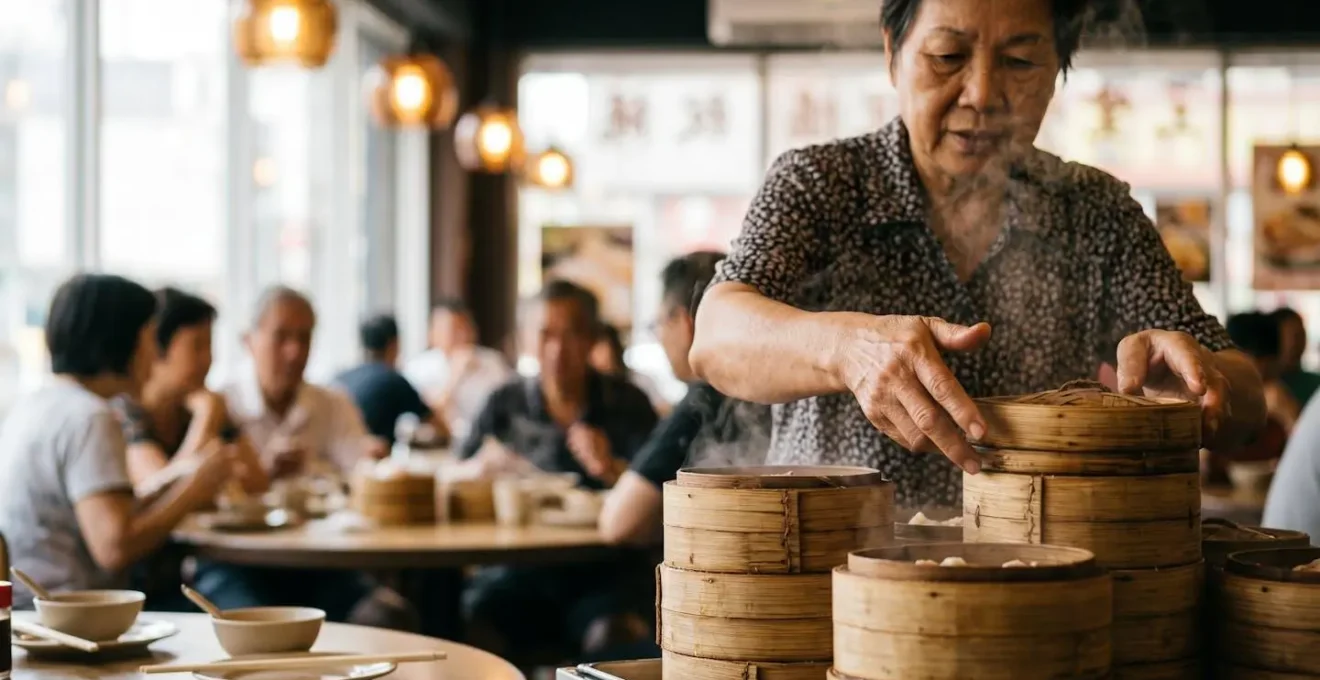
Locals and seasoned foodies understand the « dim sum power hour. » It’s a specific window where you can maximize variety while minimizing wait times. Here is a timeline to guide your arrival strategy:
- Early Bird (10:00-10:45 AM): Carts are just beginning their rounds. Everything is guaranteed to be fresh, but the kitchen is still ramping up, so the full spectrum of specialty items may not be available yet.
- Optimal Arrival (10:45 AM): This is the sweet spot. Arriving 10-15 minutes before the main rush allows you to secure a table without a long wait, just as the carts hit their peak variety.
- Prime Rush (11:00 AM-1:00 PM): This is when you’ll see the maximum number of dishes, including all the specialty items. However, be prepared for a chaotic atmosphere and waits that can stretch from 30 to 65 minutes, especially on weekends.
- Latecomer’s Gamble (Post-1:00 PM): The crowd thins and the ambiance is calmer, but this comes with a high risk that the most popular and premium items have already sold out for the day.
This strategy is especially critical on Saturdays and Sundays, when demand peaks. By planning your arrival with the precision of a local, you ensure that you experience dim sum as it’s meant to be: a vibrant, abundant, and delicious feast.
Why the Best Asian Food in America is in a Strip Mall 2 Miles West?
It may seem counterintuitive, but one of the most exciting culinary scenes in America is thriving in a series of unassuming strip malls just a short drive from the glittering Las Vegas Strip. The area known as Chinatown, centered on Spring Mountain Road, is not a tourist-oriented facsimile but a sprawling, vibrant hub of authentic Asian life and, most importantly, food. The sheer scale is staggering; a comprehensive count documents 248 verified sit-down restaurants along this corridor. This critical mass of businesses creates a competitive, dynamic environment where authenticity is the currency of survival.
The catalyst for this transformation can be traced to the opening of a single restaurant: Aburiya Raku. When this intimate Japanese robata grill opened in 2008, it fundamentally changed the perception of off-Strip dining. As chronicled in a deep dive by the Las Vegas Review-Journal, Raku was one of the first to bring « really fantastic ingredients and start pushing it stylistically. » The restaurant’s multiple James Beard nominations proved a vital concept: the economic model of the strip mall is a feature, not a bug. Lower rents allow chefs to invest their capital in what truly matters—high-quality ingredients and uncompromising recipes—rather than expensive Strip-side leases and lavish decor. This creates what insiders call a « street of hidden gems » where culinary innovation flourishes.
This is why the best Asian food is here. It’s a pure expression of market forces, where chefs are free to cook the food of their homeland for a knowledgeable and appreciative audience of locals, hospitality workers, and visiting foodies who have made the pilgrimage. It is, in every sense, the culinary heart of the city.
The Strip vs. Fremont Street: Which Offers the Best People-Watching?
For a food enthusiast, the concept of « people-watching » takes on a different meaning. It’s not about observing costumed characters on Fremont Street or gawking at tourists on the Strip. The most valuable people-watching in Las Vegas is a form of culinary reconnaissance. It’s about observing the city’s massive, 24/7 hospitality workforce—the off-duty chefs, croupiers, and hotel staff—and seeing where they choose to eat. For two decades, their destination has been the Spring Mountain corridor. This is where you watch culture, not just characters.
Tomorrow morning, by 10 or 11 o’clock in the morning, there will be about 12 limousines dropping off tourists.
– Joe Muscaglione, Partner at Shanghai Taste
This quote from a local restaurateur highlights the area’s dual identity: it’s a local haunt that has become a global foodie destination. The true insight, however, comes from applying the « Follow the Casino Workers » strategy. As one travel publication noted, the real story is found by observing the city’s real culinary heartbeat. This workforce, comprised heavily of first- and second-generation immigrants, seeks quick, cheap, and, above all, authentic meals that taste like home. Their presence is the ultimate seal of approval.
Observing this dynamic is revelatory. You’ll see multi-generational families sharing a weekend dim sum, locals expertly navigating the bustling aisles of Asian supermarkets like 99 Ranch Market, and tour buses of Asian and Asian American tourists who have rejected the Strip’s tourist fare for something genuine. This is the most telling « people-watching » in town. By observing where the culinary professionals and local community spend their own money, you gain an unfiltered, real-time guide to the most authentic food in the city.
Key takeaways
- Authenticity is a code to be deciphered through signals like menu focus and regional specificity, not just a location.
- The most genuine culinary experiences often require strategic ordering and timing, moving beyond the printed menu.
- The economic model of off-Strip strip malls directly enables higher quality ingredients and more authentic, uncompromising recipes.
Off-Strip Dining: How to Eat Like a Local in Chinatown and Summerlin?
Your culinary journey in Las Vegas culminates in the confident exploration of its diverse off-Strip neighborhoods. The two primary destinations for discerning diners are Chinatown and Summerlin, and while both offer an escape from the Strip, they represent vastly different culinary vibes. Understanding their unique characters is the final step in learning to eat like a local. Chinatown is the vibrant, chaotic, and hyper-focused heart of Asian cuisine, while Summerlin offers a more polished, suburban, and upscale interpretation.
This table breaks down the essential differences to help you choose your adventure:
| Aspect | Chinatown (Spring Mountain Rd) | Summerlin |
|---|---|---|
| Atmosphere | Vibrant, chaotic, community-focused; strip malls with 60-minute waits as late as 3:00 AM | Upscale, suburban, family-oriented; polished dining environments |
| Cuisine Focus | Hyper-regional specialties: Sichuan, Cantonese, Northern Thai, Vietnamese pho, hand-pulled noodles | Refined Japanese (izakaya), Korean-American fusion, polished pan-Asian eateries |
| Distance from Strip | 1 mile west of The Strip; easily accessible by rideshare | Further west; requires rental car or longer rideshare |
| Price Point | Budget-friendly to mid-range; prioritizes ingredients over decor | Mid-range to upscale; emphasis on ambiance and presentation |
| Parking | Notoriously crowded plazas; arrive early or expect hunting for spots | Ample suburban parking; less congested |
| Best For | Adventurous eaters seeking authentic, traditional recipes; late-night dining | Sophisticated diners wanting upscale Asian fusion in a comfortable setting |
A « perfect food day » for a local might involve leveraging the strengths of both. You could start the morning with a Vietnamese iced coffee in Chinatown, navigate the bustling plazas for world-class dim sum at lunch, and then drive to Summerlin for a sophisticated izakaya experience in the evening. This approach allows you to experience the full spectrum of Las Vegas’s off-Strip dining scene. It’s about choosing the right environment for the right meal, a skill that marks the transition from visitor to insider. You are no longer just looking for a restaurant; you are curating your own culinary itinerary.
You are now equipped with the mindset and tactics of a culinary explorer. The next time you’re in Las Vegas, don’t just settle for the closest option. Embark on your own food adventure, apply these principles, and discover the incredible, authentic flavors that await just beyond the neon glow.