
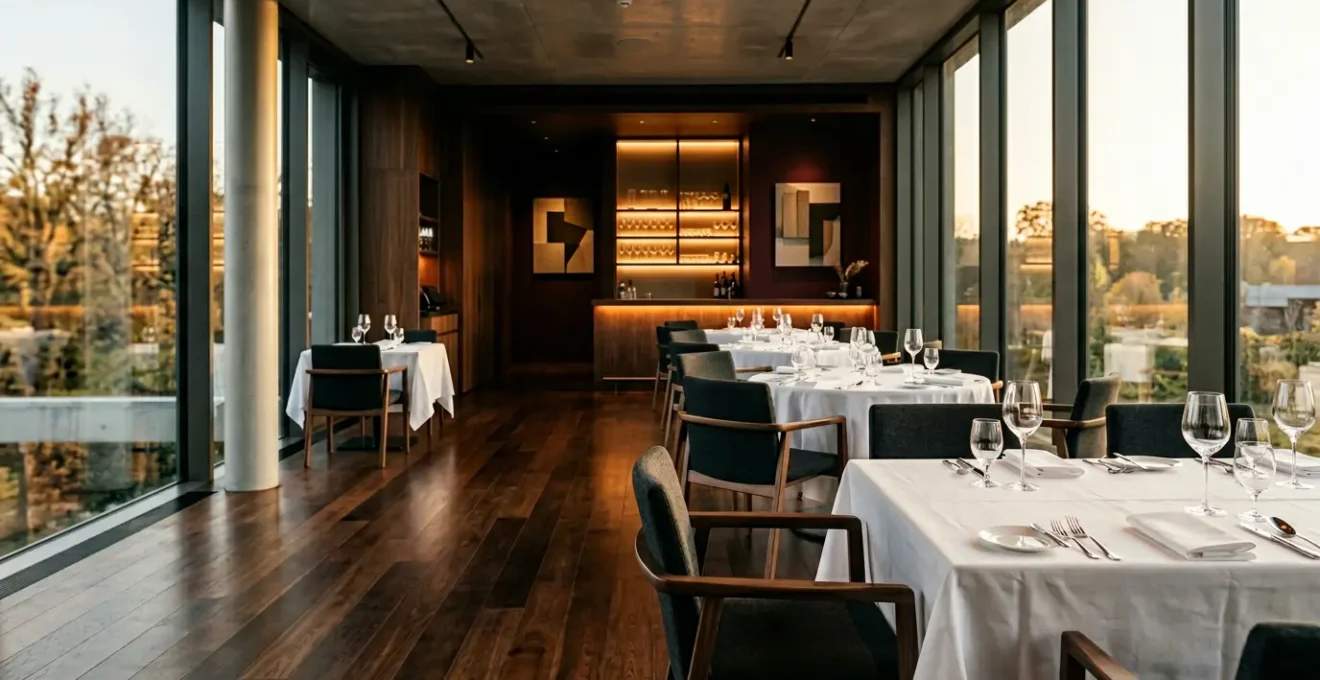
Securing a last-minute table at a top restaurant is less about luck and more about strategic positioning within the dining ecosystem.
- Reservation platforms don’t show real-time availability; they manage a fixed inventory, creating openings that only direct contact can uncover.
- Strategic timing for calls and walk-ins, combined with flexibility, acts as a « social currency » that often outweighs a long-held reservation.
Recommendation: Your best opportunity is to call the restaurant directly between 3 PM and 4 PM on the day you wish to dine, when they are finalizing the evening’s bookings and processing cancellations.
The glowing screen displays the two words every spontaneous foodie dreads: « No Tables. » You’re in town for a weekend, dreaming of that celebrity chef’s signature dish, but you failed to book six months ago. The common advice—be flexible, try apps, book in advance—is useless now. It feels like the world of fine dining has closed its doors to you. This frustration is a familiar barrier, turning a potential culinary highlight into a moment of disappointment.
Most guides will tell you to simply try your luck with a walk-in or endlessly refresh an app. They treat the reservation system as an impenetrable fortress. But what if the key wasn’t to lay siege, but to find the hidden doors? Securing a coveted table isn’t about brute force or advance planning; it’s about understanding and leveraging the hidden operational vulnerabilities and social currencies of the fine dining world. It’s a game of strategy, not just a waiting list.
This guide moves beyond the obvious. We will dismantle the reservation ecosystem, revealing why online portals are not the whole truth. We will provide a playbook for the strategic walk-in, decode the nuances of dress code and tipping that can turn a « no » into a « yes, » and show you how to find value where others only see an expense. This is your concierge’s brief to dining like an insider, even when you’ve planned like a tourist.
To navigate this exclusive world, we have structured this guide to address every critical pressure point, from decoding online systems to mastering the art of the walk-in. The following sections provide a clear roadmap to your last-minute fine dining success.
Summary: Your Playbook for Last-Minute Fine Dining
- Why OpenTable Doesn’t Show You the Full Availability of Tables?
- How to Dine at a Michelin Star Restaurant Without a Reservation?
- Tasting Menu or A La Carte: Which Offers the Best Culinary Narrative?
- The « Smart Casual » Trap That Gets You Rejected at the Host Stand
- When to Book Lunch to Experience Top Chefs at Half the Price?
- How Much to Tip for a Last-Minute Restaurant Reservation?
- Why a $25 Cocktail is Worth It for the Skyline View?
- International Cuisines: How to Find Authentic Asian Food on the Strip?
Why OpenTable Doesn’t Show You the Full Availability of Tables?
The primary mistake diners make is treating platforms like OpenTable as a real-time reflection of a restaurant’s capacity. This is fundamentally incorrect. These systems operate on what insiders call a « static book. » Instead of being a live map of every chair, the restaurant allocates a specific, limited number of reservation slots to the online platform for every 15-minute interval. These slots are predetermined and do not account for the fluid reality of a dining room: tables that finish early, no-shows, or cancellations that haven’t been processed online.
An industry expert explains that this static model is about control and yield management. « OpenTable uses something referred to as a ‘static book’. Per shift, there are a particular number of spots available for every 15 minute block of time. Each of those spots has a different party size that it can accommodate. » This means the restaurant intentionally holds back a significant portion of its inventory for direct callers, walk-ins, and VIPs. They are hedging their bets, ensuring they don’t overcommit to the digital marketplace and retain flexibility for more profitable or loyal customers.
What does this mean for you? The « No Tables » message is not a definitive statement; it’s an invitation to engage with the restaurant’s true reservation ecosystem. The real availability exists offline, managed directly by the host or maître d’. By relying solely on the app, you are only seeing a curated fraction of the possibilities and are competing with the masses for the most limited inventory. The path to a table begins the moment you close the app and pick up the phone.
How to Dine at a Michelin Star Restaurant Without a Reservation?
Walking into a Michelin-starred restaurant without a reservation sounds like a fool’s errand, but it’s a calculated strategy when executed correctly. Success hinges on timing, communication, and flexibility. The key is to present yourself not as a demanding tourist, but as a knowledgeable and accommodating guest who understands the pressures of service. The goal is to be the easiest problem the maître d’ has to solve all night. Being willing to wait at the bar or accept a less-than-prime table is a powerful signal of your flexibility.
An elegant bar or counter seat is often the secret door to a fully booked restaurant. It provides a front-row seat to the theater of the kitchen or the artistry of the mixologists, offering a unique and often more dynamic experience than a secluded table. For the spontaneous diner, this is not a compromise; it’s a strategic advantage.
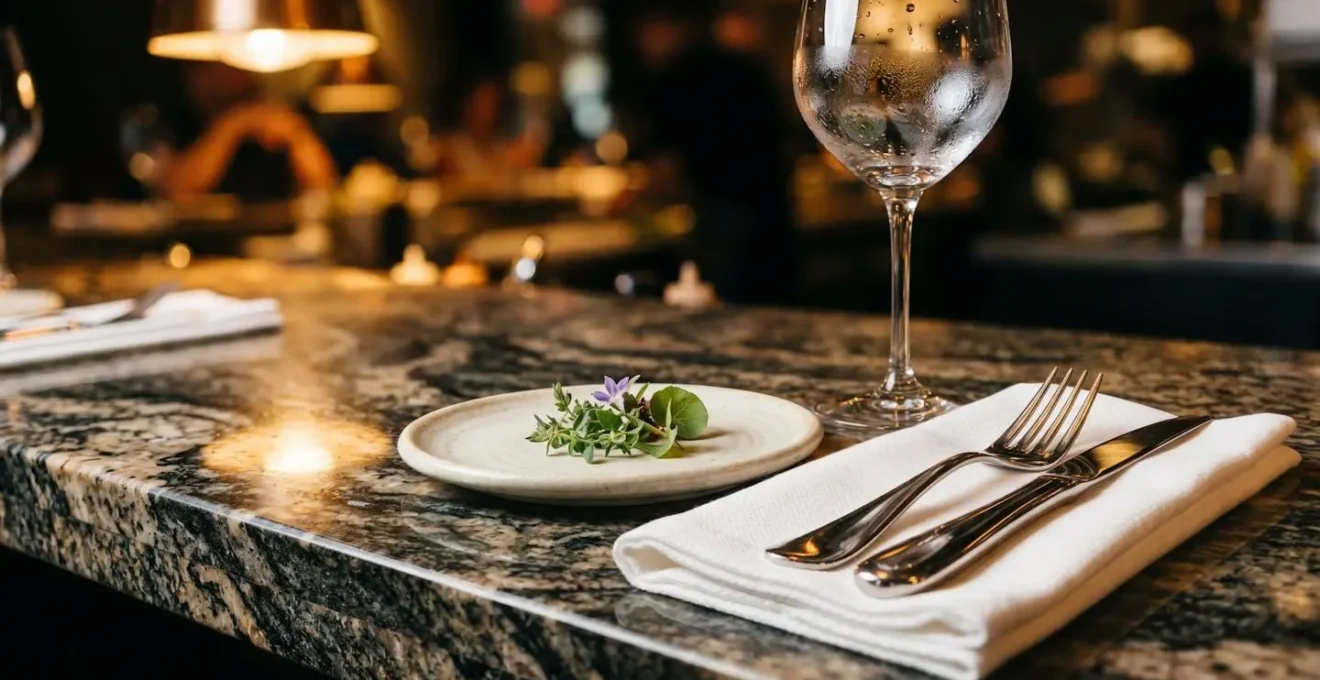
As the image suggests, bar seating in a fine dining establishment is not an afterthought. It is a curated experience in itself. To secure such a spot, or even a recently cancelled table, you must approach the situation with an insider’s playbook. Generic pleading will fail; a targeted approach demonstrates your respect for the establishment’s operations.
Action Plan: The Strategic Walk-In
- Master the Timing: Call between 3 PM and 4 PM on the day-of. This is the window when restaurants finalize their books and process same-day cancellations, offering the highest probability of securing last-minute tables.
- Target the Mid-Service Lull: If walking in, arrive during the 8:30-9:00 PM window. The initial rush has settled, and the host stand can more accurately assess no-shows and actual table availability.
- Use the Right Script: When speaking to the host, say, « We’re flexible and happy to wait for any opening, » rather than asking, « Do you have a table for two? » This signals your understanding of restaurant dynamics and makes you a solution, not a problem.
- Escalate Politely if Necessary: If the reservationist initially says no, politely ask if the general manager might have a moment to speak. Industry insiders note this strategy can be successful about one-third of the time.
- Be Prepared to Commit: If offered a spot, take it immediately. Hesitation can mean the opportunity is lost to the next person in line.
Tasting Menu or A La Carte: Which Offers the Best Culinary Narrative?
Once you’ve secured your table, you face a critical decision: the tasting menu or à la carte. This isn’t just about the amount of food; it’s about choosing your role in the evening’s story. The tasting menu is the chef’s intended culinary narrative—a curated journey with a distinct beginning, middle, and end. Each course is a chapter, designed to build upon the last, showcasing the chef’s philosophy, seasonal ingredients, and technical skill. Opting for this is an act of trust, surrendering control to experience the story exactly as the artist wrote it.
Conversely, ordering à la carte allows you to become the author of your own experience. You can curate a meal that speaks to your personal cravings, dietary preferences, or curiosity. You might choose to explore three different appetizers instead of a traditional main, or focus entirely on a restaurant’s famed seafood preparations. This path offers freedom and control, allowing for a more personalized, if less thematically unified, culinary adventure.
Neither choice is inherently better; the « best » option depends on your goal. Are you there to understand the singular vision of a world-renowned chef? Choose the tasting menu. Are you there to satisfy a specific desire or explore at your own pace? Choose à la carte. A MICHELIN Guide Inspector offers a crucial piece of advice on navigating this choice:
Fine dining may be indulgent, but it’s no sprint. When the courses start stacking up and the supplements come calling, it helps to know when to go all in and when to politely decline.
– MICHELIN Guide Inspector, Our Inspectors Share Their Best Fine Dining Tips
This highlights the importance of self-awareness. A lengthy tasting menu can be a marathon. If your appetite or schedule is limited, a focused à la carte selection can provide a more enjoyable and equally memorable experience, ensuring the quality of your evening is not diminished by its quantity.
The « Smart Casual » Trap That Gets You Rejected at the Host Stand
« Smart casual » is perhaps the most ambiguous and treacherous term in modern dress codes. It’s a trap that has led to countless awkward moments and rejections at the host stand. For high-end restaurants, your attire is the first signal you send about your respect for the establishment and the other diners. Misinterpreting this code is not a minor faux pas; it can genuinely cost you your table, especially on a busy night when the maître d’ is looking for any reason to manage a demanding crowd.
The key to avoiding the trap is to err on the side of « smart » over « casual. » Think polish, fit, and quality materials. It’s less about specific garments and more about the overall impression of being put-together. For men, this often means a collared shirt and avoiding athletic wear at all costs. For women, it means opting for tailored pieces over anything too revealing or overly casual. The details, like your footwear, are often the deciding factor. A great outfit can be instantly nullified by worn-out sneakers or flip-flops.
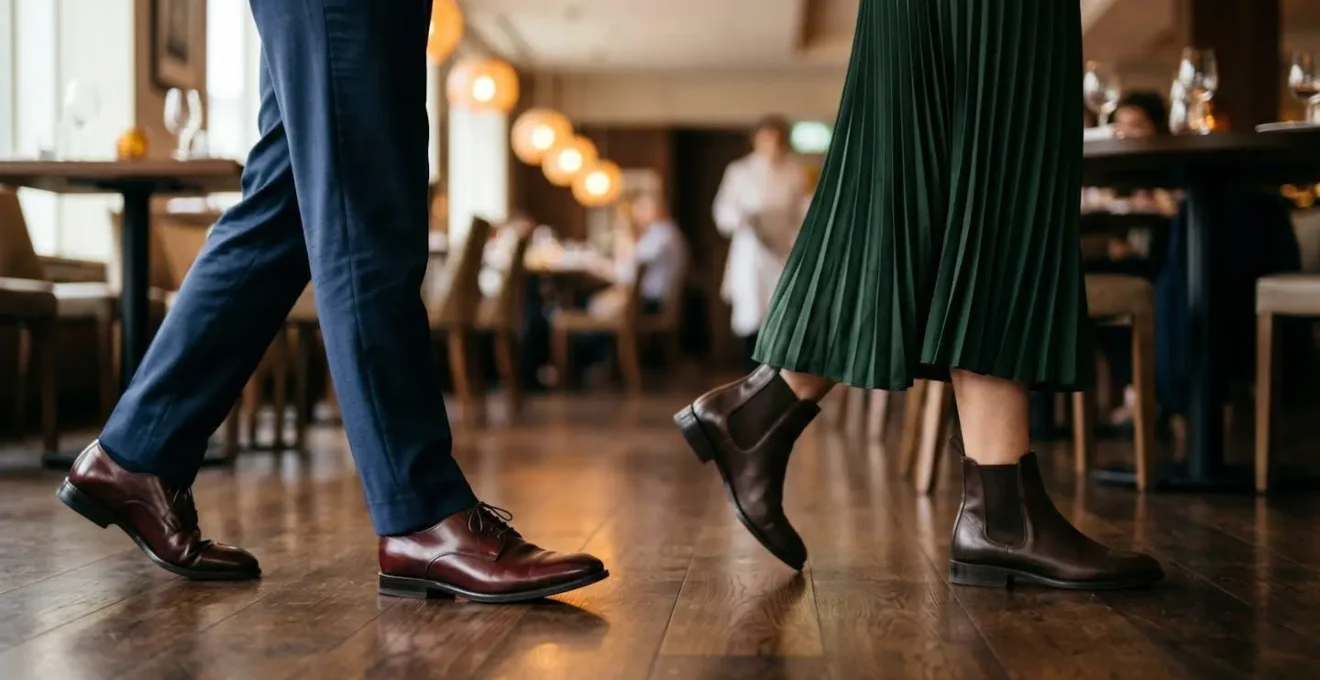
As shown here, polished footwear on both men and women immediately sets a sophisticated tone. Your shoes are a non-negotiable part of the smart casual equation. To demystify the code, follow this universal formula:
- For Men:
- Top: A collared shirt (button-down or a high-quality polo) is essential. A well-fitted blazer or a fine-knit sweater are excellent layering options.
- Bottom: Opt for well-fitted chinos, dress pants, or dark-wash jeans without any rips or distressing.
- Footwear: Leather loafers, dress shoes, or clean, minimalist sneakers in leather are acceptable. No athletic shoes.
- For Women:
- Top: A silk blouse, a crisp button-down shirt, or a fine-knit sweater. A blazer or elegant cardigan can complete the look.
- Bottom: Tailored trousers, a chic skirt (knee-length is always safe), or dark, fitted jeans.
- Footwear: Heels, elegant flats, loafers, or sophisticated boots are all appropriate.
- Universal Rule: Always avoid athletic wear, shorts, t-shirts with large logos, and flip-flops. When in doubt, dress up. It’s always better to be the most well-dressed person in the room than the most casual.
When to Book Lunch to Experience Top Chefs at Half the Price?
One of the most underutilized strategies for experiencing high-end cuisine is what can be termed « experience arbitrage »: booking a table for lunch instead of dinner. Many Michelin-starred and celebrity-helmed restaurants offer a lunch service that provides a significant portion of the dinner experience at a fraction of the cost. The menus are often shorter and the prices more accessible, yet the cooking still comes from the same kitchen, the same team, and the same creative mind.
This approach is not about getting a « cheap » meal; it’s about getting exceptional value. Lunch service is often less crowded, the atmosphere can be more relaxed, and natural daylight can offer a completely different, sometimes more revealing, perspective on the food and decor. For a foodie on a short trip, a world-class lunch can be a highlight that doesn’t consume an entire evening or an entire day’s budget, leaving more time and resources for other explorations.
This isn’t just a theoretical hack; it’s a practice endorsed by the most discerning critics in the industry. The value proposition of a fine dining lunch is a well-established insider secret.
The Lunch Service Advantage at MICHELIN-Starred Restaurants
An analysis from MICHELIN Guide Inspectors reveals that lunch service at starred restaurants offers a surprisingly rich experience with shorter menus, gentler lighting, and a less performative pace. While lunch menus are often simpler, they can still deliver exceptional quality and joy. For first-timers or time-pressed diners, lunch provides a smart entry point to experience a chef’s philosophy at more accessible price points. While dinner service typically carries more theatrical weight for special celebrations, the lunch experience often delivers a higher value-for-money ratio without compromising on the fundamental quality of the cuisine.
Therefore, when you find dinner reservations impossible to secure, immediately check for lunch availability. You may find an open table that provides not just a meal, but a smarter, more efficient way to access the culinary artistry you’re seeking. It’s the perfect strategy for the time- and budget-conscious connoisseur.
How Much to Tip for a Last-Minute Restaurant Reservation?
When a maître d’ performs the magic of creating a table out of thin air on a busy night, acknowledging this exceptional service is not just polite; it’s a crucial part of the social currency that governs the world of hospitality. This is not a standard tip for service; it is a « gratuity for accommodation, » a gesture that says « thank you for going above and beyond. » Knowing how and when to offer this tip can solidify your status as a gracious guest and can be invaluable for future visits.
For standard seating with a reservation, no tip for the maître d’ is required. However, when a special service has been rendered, a tip is appropriate. According to contemporary restaurant etiquette, a tip of $10 to $20 is a baseline for special services like securing a last-minute table. The amount should scale with the difficulty of the request and the size of your party. Securing a table for two on a Tuesday is different from a table for six on a Saturday night.
This gesture should be handled with discretion. The money, folded, should be passed in a handshake either upon being seated or discreetly on your way out. As one expert on the subject advises:
Unless you are a frequent patron, it is not necessary to tip the maitre d’. If you are a regular, you may want to give the host $10 to $20 every once to cultivate your relationship and to say ‘thank you’ for special services. A tip may be appropriate if the maitre d’ has gone out of his way to find a table for you on a busy night.
– Etiquette Scholar, Industry Insider’s Guide to Restaurant Tipping Etiquette
To remove any ambiguity, this detailed tipping scale by service level provides clarity for various scenarios. It helps translate the value of the service into a concrete and appropriate monetary acknowledgment.
| Service Scenario | Party Size | Recommended Tip Amount | When to Offer |
|---|---|---|---|
| Standard seating with reservation | Any | $0 (Not required) | N/A |
| Last-minute table on quiet weeknight | 2 people | $10-$20 | After seating or upon departure |
| Secured prime-time weekend table | 2-4 people | $20-$50 | Discreetly upon seating |
| Special accommodation (anniversary setup, dietary needs) | Any | $20-$40 | After seating |
| Last-minute large party (6+) on peak night | 6+ people | $50-$100+ | Upon seating, scaled by party size |
| Regular patron relationship cultivation | Any | $10-$20 periodically | Every few visits |
Why a $25 Cocktail is Worth It for the Skyline View?
The concept of value is often misunderstood in fine dining and upscale experiences. A $25 cocktail might seem exorbitant on the surface, but this is another scenario where experience arbitrage is a powerful lens. When you’re not just buying a drink, but also access to a multi-million-dollar view, a comfortable seat, and a sophisticated ambiance, the cost must be re-contextualized. Is it a $25 drink, or is it a $25 ticket to an exclusive experience?
To properly assess the value, you must compare it to the alternative. What is the cost of accessing a similar view through traditional means? This is where the true value of the premium cocktail becomes apparent, transforming it from an expense into a savvy investment in your travel experience.
Value Analysis: Premium Cocktail vs. Observation Deck Admission
A value analysis of premium cocktails from Frommer’s highlights a clear conclusion. Major city observation decks, like The Strat in Las Vegas or Top of the Rock in New York, often charge between $25 and $40 for admission alone. This fee grants you the view, but typically involves crowds, no seating, and no beverage service. In contrast, a $25 cocktail in a rooftop lounge provides the identical skyline view plus a comfortable seat, professional service, a handcrafted beverage, and a climate-controlled, curated environment. If you strategically time your visit for sunset or « golden hour, » the cocktail becomes a front-row seat to a spectacular natural event, effectively making it one of the best value entertainment tickets in the city.
When viewed this way, the cocktail isn’t an overpriced drink; it’s a discounted admission ticket with a complimentary beverage. It’s a way to bypass the tourist-heavy observation decks and enjoy a city’s best vista in comfort and style. This simple shift in perspective is the hallmark of a savvy traveler who knows how to find luxury and value in the same glass.
Key Takeaways
- Reservation apps show a limited, static inventory; the real availability is held by the restaurant for direct callers and strategic walk-ins.
- Your flexibility, politeness, and appropriate tipping are forms of « social currency » that can secure a table when advance booking has failed.
- Leverage « experience arbitrage » by choosing lunch over dinner or a skyline cocktail over an observation deck to access premium experiences at a higher value.
International Cuisines: How to Find Authentic Asian Food on the Strip?
Finding authentic international cuisine in a tourist-heavy area like the Las Vegas Strip can be a challenge. Many restaurants adapt their flavors to suit a broader, often Western, palate, resulting in a diluted and inauthentic experience. For the discerning foodie, the goal is to find the places that cater not to the tourists, but to the locals and international visitors who know the real deal. This requires looking past flashy marketing and identifying subtle but powerful authenticity signals.
The first rule is often to look just beyond the main thoroughfare. In Las Vegas, for example, the heart of authentic Asian dining is not on the Strip itself but on Spring Mountain Road, the city’s vibrant Chinatown. This is where you’ll find regional specialists, from Sichuan hot pot to Cantonese dim sum, that prioritize traditional recipes over mass appeal. However, even on the Strip, you can find gems if you know what to look for.
The most reliable indicators are often found by observing the environment and clientele, not just reading the menu. A dining room filled with families speaking the native language of the cuisine is the single strongest sign of authenticity. These are the places that have not compromised on their flavors. To further refine your search and avoid the « fusion » traps, use these specific indicators:
- Look for Multilingual Menus: Restaurants with menus printed in Chinese, Japanese, Korean, or Vietnamese alongside English are signaling that they cater to native speakers who expect authentic flavors.
- Observe the Demographics: A dining room busy with Asian families and local regulars is an undeniable stamp of approval. If it’s 90% tourists, the food is likely tailored to them.
- Identify Regional Specificity: Search for specific cuisines like « Cantonese dim sum » or « Japanese kaiseki » instead of the generic « Asian food. » True authenticity lies in specialization.
- Ask Concierges Targeted Questions: Instead of asking, « Where’s a good Asian restaurant? » ask, « Where do your VIP guests from China prefer to dine? » This accesses a higher tier of insider knowledge.
- Check for Home-Country Accolades: Photos on the wall with Asian celebrity chefs or food critics (not American ones) suggest the restaurant holds a strong reputation with its target audience back home.
By using these filters, you can cut through the noise and locate the genuine culinary experiences that offer a true taste of another culture, even in the most unexpected of places. Your palate will thank you for the extra diligence.
Now that you are equipped with the insider strategies to navigate the exclusive world of fine dining, the next logical step is to put them into practice. Approach your next culinary adventure not as a hopeful tourist, but as a knowledgeable connoisseur ready to unlock the best experiences any city has to offer.